
Minerals in Shower Water Effects on Skin and Hair
TL;DR:
- Minerals like calcium and magnesium in shower water cause dryness, irritation, and buildup on skin and hair. Using filters and chelating shampoos can effectively reduce mineral effects and improve skin and hair health. Addressing hard water quickly prevents long-term damage and alleviates symptoms in sensitive individuals.
Minerals in shower water, specifically calcium and magnesium, are the leading cause of dryness, dullness, and irritation that many people blame on their shampoo or moisturizer. These dissolved minerals define what plumbers and dermatologists call “hard water,” a condition affecting the majority of American households. The effects of hard water on your skin and hair are not cosmetic inconveniences. They are chemical reactions happening every time you shower. Understanding the minerals in shower water effects is the first step toward actually fixing the problem.
1. What minerals in shower water cause the most damage?
Calcium and magnesium are the two primary minerals responsible for hard water. Both dissolve naturally into groundwater as it passes through limestone and chalk deposits. The higher their concentration, the harder your water, and the more visible their effects become on your skin, hair, and shower surfaces.
These minerals do not harm you directly. The problem starts when they react with soap. Soap molecules bind to calcium and magnesium ions instead of washing away cleanly, forming an insoluble soap residue that sticks to your skin and hair rather than rinsing off. That residue is the root cause of most mineral-related skin and hair complaints.
Pro Tip: If your skin feels tight or filmy right after a shower, that sensation is almost always soap scum residue, not dry skin. The fix starts at the water, not the moisturizer.
Other minerals present in smaller amounts include iron, silica, and manganese. Iron leaves a faint orange or rust-colored tint on shower fixtures and can contribute to hair discoloration over time. Silica creates a hard, glassy scale on glass shower doors that resists standard cleaning products.
2. How minerals affect skin: dryness, irritation, and breakouts
Mineral deposits disrupt your skin’s moisture barrier in two ways. First, the soap residue left behind after rinsing pulls moisture out of the skin’s outer layer. Second, the minerals themselves alter your skin’s natural pH, which sits around 5.5. A higher pH weakens the barrier function that keeps moisture in and irritants out.
According to Dr. Eliana Zamora, insoluble soap residue from mineral-rich water is the primary driver of skin dryness and irritation, not the water temperature or shower duration. That insight shifts the focus from how you shower to what is in your water. People with eczema-prone or sensitive skin feel this most acutely, since their barrier function is already compromised.
Hard water strips natural moisture and oils from the skin’s surface, leaving it dehydrated and prone to redness. For people managing eczema flare-ups, mineral exposure can trigger or worsen symptoms within days of moving to a hard water area.
Common skin symptoms caused by shower water mineral content include:
- Tight, dry skin immediately after showering
- Persistent itching or redness, especially on the torso and legs
- Increased frequency of eczema or psoriasis flare-ups
- Clogged pores leading to breakouts on the back and chest
- Rough, flaky patches that do not respond to standard moisturizers
Pro Tip: After showering, apply a cream-based ointment rather than a lotion. Ointments create a physical seal over the skin that lotions cannot match, which matters most when your barrier is already weakened by mineral residue.
3. How minerals affect hair: buildup, dullness, and scalp problems
Mineral buildup on the hair shaft changes the texture and appearance of your hair in ways that no conditioner fully corrects. Calcium and magnesium coat each strand, making hair feel rough, look dull, and tangle more easily. The impact of minerals on hair is cumulative, meaning the longer you shower in hard water, the more noticeable the damage becomes.
The scalp suffers separately. Mineral deposits on the scalp disrupt its natural oil balance and can aggravate dandruff and seborrheic dermatitis. Seborrheic dermatitis is a chronic inflammatory condition that causes flaking and redness. Hard water does not cause it outright, but mineral buildup makes it significantly harder to manage.
Shower water mineral content also reduces how well your shampoo works. Calcium ions bind to shampoo surfactants the same way they bind to soap, reducing lather and leaving behind a film. You end up using more product to get the same result, which adds cost and increases the amount of residue left on your scalp.
Signs that minerals are affecting your hair specifically:
- Hair feels heavy or waxy after washing
- Color-treated hair fades faster than expected
- Increased tangling and breakage during combing
- Scalp feels itchy or flaky despite regular washing
- Blond or light hair develops a brassy or greenish tint
Pro Tip: Use a chelating shampoo containing tetrasodium EDTA once a week. Tetrasodium EDTA bonds directly to mineral ions and lifts them off the hair shaft, which standard clarifying shampoos cannot do.
4. How to identify if minerals are the problem
The most reliable sign of hard water is white, chalky residue on your showerhead, glass doors, or faucets. That residue is calcium carbonate, the same mineral depositing on your skin and hair. If you see it on your fixtures, it is landing on you too.
Hard water leaves white residue on glass shower enclosures and reduces soap lather noticeably. Both are easy to test at home. Fill a clear bottle with your shower water, add a few drops of liquid soap, and shake it. Soft water produces a thick, lasting foam. Hard water produces minimal foam and leaves a cloudy film.
Distinguishing mineral effects from medical skin or hair conditions matters before you spend money on solutions:
- Mineral effects improve within days of using filtered water. Medical conditions do not.
- Mineral-related dryness affects the whole body evenly. Eczema tends to appear in specific folds and creases.
- Hair damage from minerals is uniform across all strands. Breakage from heat styling is concentrated near the ends.
- Soap scum on fixtures confirms hard water. Clear fixtures suggest another cause.
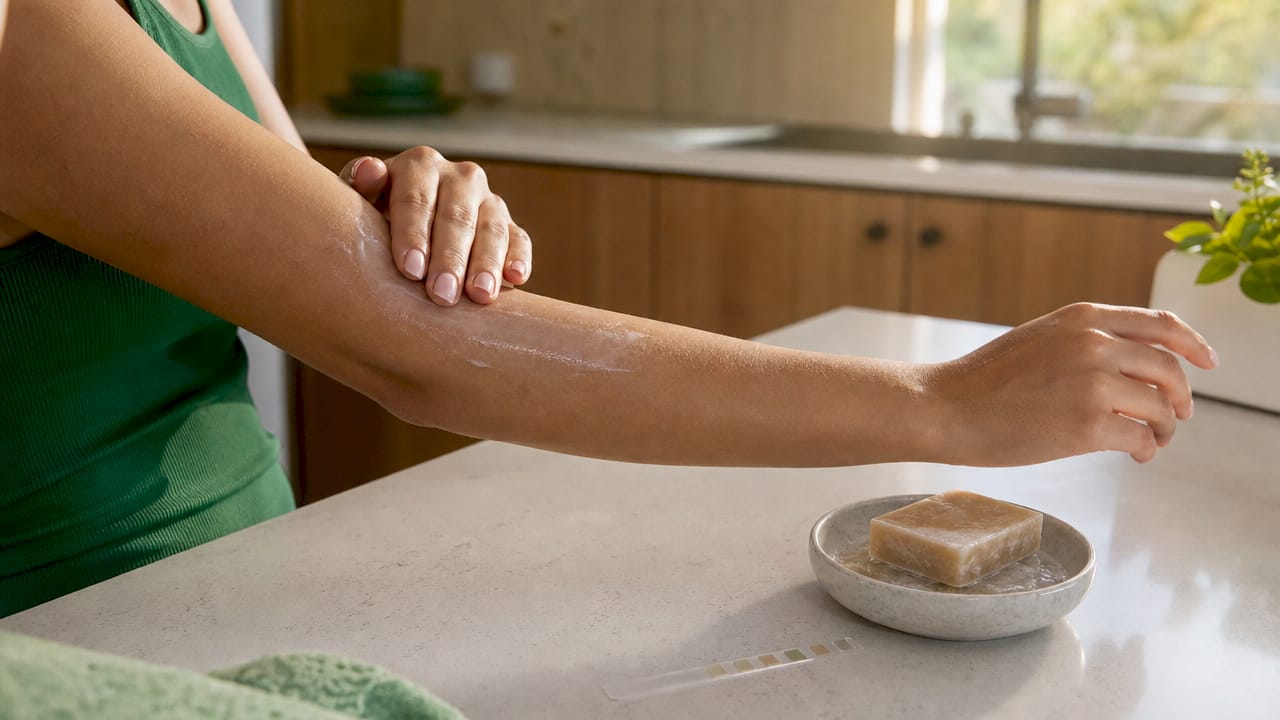
You can also buy an at-home water hardness test kit from most hardware stores. These use test strips that change color based on mineral concentration, measured in grains per gallon or milligrams per liter. Water above 7 grains per gallon is classified as hard by the Water Quality Association.
5. Practical solutions to reduce mineral effects in shower water
The most cost-effective starting point is a shower head filter. Dedicated shower head filters cost between $30 and $40 and reduce mineral-induced dryness and irritation on both skin and hair. They attach directly to your existing shower arm and require no plumbing work. Most use a combination of KDF media, activated carbon, and ceramic balls to reduce mineral concentration and neutralize chlorine.
Whole-home water softeners are the most thorough solution. Whole-home softener installation averages $1,472 and removes minerals from every tap in the house. That cost makes sense for homeowners with severe hard water and multiple people affected. For renters or those with moderate hard water, a shower filter delivers most of the benefit at a fraction of the price.
Shower habit changes also reduce mineral impact without any equipment:
- Take shorter showers, ideally under 10 minutes
- Use lukewarm water rather than hot, since heat opens pores and increases mineral absorption
- Limit soap use to underarms, groin, and feet rather than lathering the entire body
- Rinse thoroughly to remove as much residue as possible before drying
| Solution | Cost | Coverage | Best for |
|---|---|---|---|
| Shower head filter | $30–$40 | Shower only | Renters, budget-conscious |
| Whole-home softener | ~$1,472 | Entire home | Homeowners with severe hard water |
| Chelating shampoo | $10–$25 | Hair only | Targeted hair mineral removal |
| Shower habit changes | $0 | Skin and hair | Anyone as a first step |
Pro Tip: If skin or scalp symptoms persist after four weeks of using a shower filter and adjusting your routine, consult a board-certified dermatologist. Persistent symptoms may indicate an underlying condition that mineral reduction alone will not resolve.
6. What mineral buildup does to your shower itself
Mineral buildup does not stop at your skin and hair. Soap scum from hard water is harder to break down than regular dirt and can clog drains over time. The same calcium deposits that coat your hair shaft also coat your showerhead nozzles, reducing water pressure and altering spray patterns.
A clogged showerhead concentrates mineral-rich water into fewer streams, which increases the mineral load hitting your skin per square inch. Soaking your showerhead in white vinegar monthly dissolves calcium buildup and restores even water flow. This is a free maintenance step that also indirectly benefits your skin and hair by restoring proper water distribution.
Glass shower doors with hard water scale are a visible record of how much mineral exposure you are getting. If standard glass cleaner does not cut through the white film, the mineral concentration in your water is high enough to warrant a filter.
Key Takeaways
Minerals in shower water, primarily calcium and magnesium, cause dryness, irritation, and buildup by reacting with soap to form residue that disrupts the skin’s moisture barrier and coats the hair shaft.
| Point | Details |
|---|---|
| Calcium and magnesium are the main culprits | These minerals react with soap to create residue that sticks to skin and hair. |
| Soap residue disrupts skin pH | The resulting film weakens the moisture barrier, causing dryness and eczema flare-ups. |
| Hair buildup is cumulative | Mineral coating on the hair shaft causes dullness, tangling, and reduced shampoo effectiveness. |
| Shower filters cost $30–$40 | They reduce mineral exposure at the source without requiring plumbing changes. |
| Chelating shampoos remove buildup | Ingredients like tetrasodium EDTA bond to minerals and lift them off the hair shaft. |
What I’ve learned from years of watching people blame the wrong thing
Most people I talk to have spent months cycling through new shampoos, prescription creams, and expensive serums before anyone suggests testing their water. The frustration is real, and it is also completely avoidable. The skin and hair problems caused by hard water are not subtle once you know what to look for, but they mimic so many other conditions that they get misdiagnosed constantly.
The thing that surprises people most is how fast the improvement comes once they address the water. A shower filter is not a dramatic intervention. It is a $35 attachment that takes five minutes to install. But within one to two weeks, the skin tightness after showering softens, the hair feels lighter, and the showerhead stops crusting over. That speed of change tells you the problem was always the water.
My honest recommendation is to start with the filter and the chelating shampoo before spending money on dermatology appointments or premium skincare. If symptoms clear up, you have your answer. If they do not, you have already ruled out the most common cause and can pursue medical evaluation with better information.
Prevention beats treatment here. Mineral damage to hair is reversible in the early stages but becomes structural over time. Waiting until your hair breaks or your eczema is severe makes the recovery longer and more expensive. The benefits of purified shower water are not theoretical. They show up in the mirror within weeks.
— Sara
Better shower water, healthier skin and hair with Vitacleanhq
If your skin feels tight after every shower and your hair never quite looks as good as it did before you moved, your water is likely the cause. Vitacleanhq builds shower filtration products specifically for this problem.

The Vitamin C shower filter shots neutralize chlorine and reduce mineral load in every shower, with replaceable cartridges that take seconds to swap out. The ceramic filter range targets mineral reduction for people who want a longer-lasting filtration option. Both lines install without tools and fit standard shower arms. Vitacleanhq also offers a filter refill subscription so you never shower through an expired cartridge. Cleaner water is a one-time setup decision with daily results.
FAQ
What minerals in shower water cause dry skin?
Calcium and magnesium are the primary minerals responsible. They react with soap to form an insoluble residue that disrupts the skin’s moisture barrier and causes dryness and irritation.
How do I know if hard water is affecting my hair?
Hair that feels heavy, looks dull, or tangles more than usual after washing is a strong sign. White scale on your showerhead or glass doors confirms hard water is present.
Do shower filters actually reduce mineral effects?
Yes. Shower head filters at $30–$40 effectively reduce mineral-induced dryness and irritation on skin and hair, making them the most cost-effective first solution.
What is a chelating shampoo and do I need one?
A chelating shampoo contains ingredients like tetrasodium EDTA that bond to mineral ions and remove them from the hair shaft. It is the most targeted solution for mineral buildup in hair.
Can hard water make eczema worse?
Hard water minerals and the soap residue they create can trigger and worsen eczema flare-ups, particularly in people with already-sensitive or compromised skin barrier function.