
How Tap Water Affects Beauty: Skin and Hair Guide
TL;DR:
- Tap water’s minerals, chlorine, and pH levels cause significant skin and hair damage, especially in hard water regions. Installing multi-stage filters that target both chlorine and heavy metals can mitigate these effects and improve cosmetic outcomes. Testing water quality and using proper filtration are essential steps to maintain healthier skin and hair.
Tap water is one of the most overlooked causes of skin dryness, hair breakage, and barrier damage in daily beauty routines. Understanding how tap water affects beauty starts with what’s actually in your water: calcium, magnesium, chlorine, heavy metals, and an alkaline pH that works against your skin and hair at every shower. The water quality impact on beauty is not a minor variable. For the 85% of U.S. households living with hard water, it is the primary driver of persistent skin and hair problems that no moisturizer or conditioner fully corrects.
How does hard water affect skin and hair?
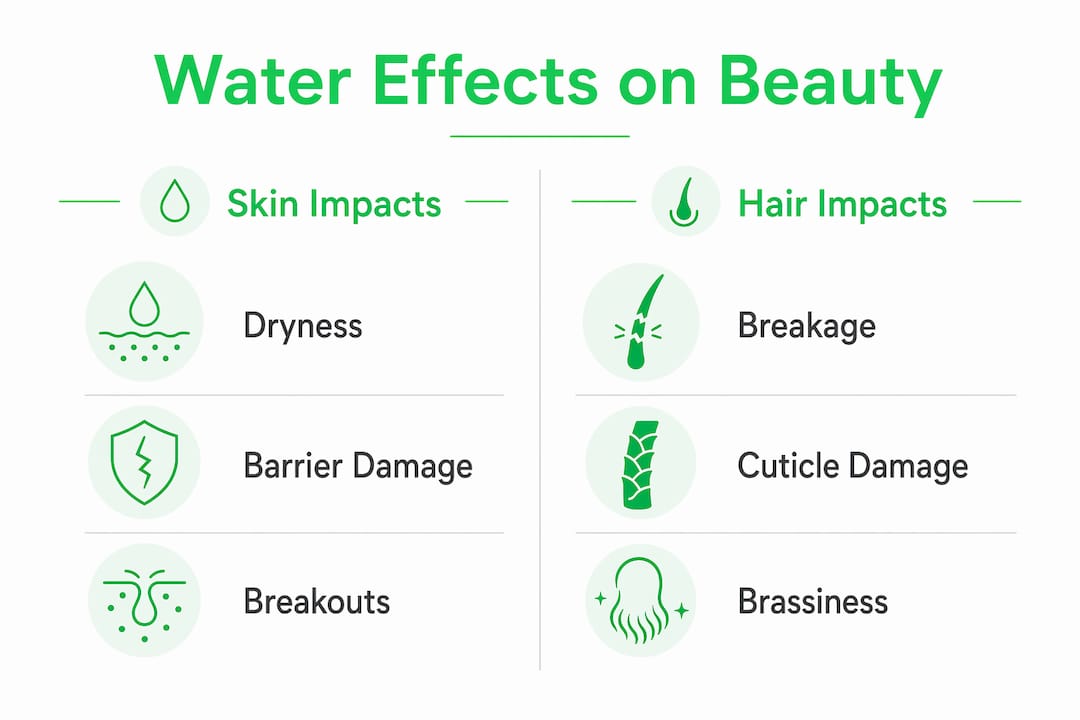
Hard water is defined as water containing dissolved calcium and magnesium above 120–180 mg/L. At those concentrations, minerals react with soap and shampoo to form a sticky residue that coats hair shafts and clogs pores. The result is dull hair, rough skin texture, and a compromised skin barrier that lets irritants in and moisture out.
The science is direct. Hard water above 200 mg/L deposits calcium and magnesium that increase hair breakage and disrupt the skin’s acid mantle, worsening eczema and chronic dryness. A 2016 study confirmed measurable hair and skin damage from hard water and documented benefits after switching to softened water. That finding matters because it rules out product quality as the primary cause when the water itself is the problem.
Chemically treated hair is especially vulnerable. Hair cuticle damage under hard water is amplified in color-treated or bleached hair because existing damage creates more mineral binding sites. More binding sites mean faster buildup and faster deterioration.
| Water hardness level | Classification | Typical skin and hair symptoms |
|---|---|---|
| 0–60 mg/L | Soft | Minimal irritation, good lather |
| 61–120 mg/L | Moderately hard | Slight dryness, reduced lather |
| 121–180 mg/L | Hard | Dry skin, dull hair, soap scum |
| 180+ mg/L | Very hard | Eczema flares, brittle hair, clogged pores |
People who travel between cities often notice the difference immediately. Travelers report smoother skin and shinier hair when moving from hard water regions to soft water areas. That shift is not placebo. It reflects how directly mineral content governs skin and hair condition.
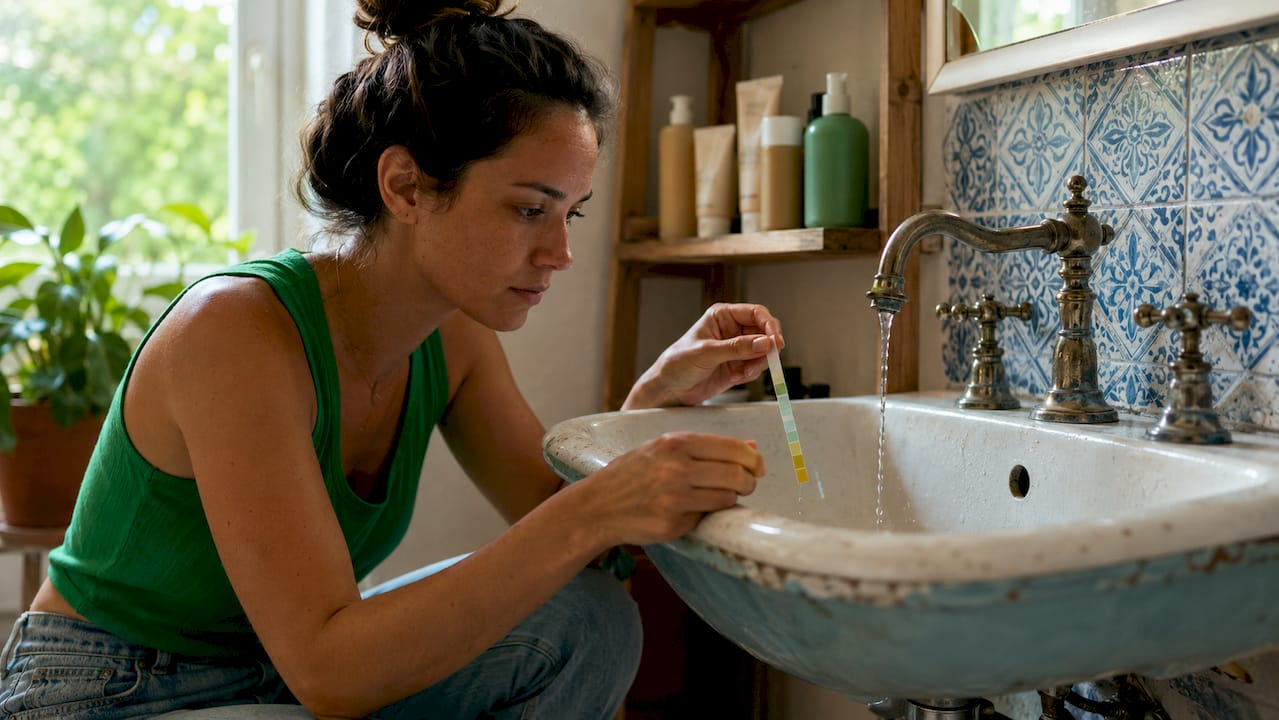
Pro Tip: Test your home’s water hardness with an inexpensive strip kit available at most hardware stores. Knowing your baseline hardness level tells you exactly which filter media to prioritize before spending money on new skincare products.
What role does chlorine in tap water play in skin and hair health?
Chlorine is added to municipal water as a disinfectant, and the EPA permits up to 4 mg/L in tap water. That ceiling sounds safe, but chlorine concentrations as low as 0.5 mg/L reduce water-holding capacity in sensitive skin. For people with eczema, rosacea, or naturally dry skin, daily shower exposure at even moderate chlorine levels causes measurable harm.
Chlorine strips the skin’s natural lipid layer. That layer is the skin’s first defense against water loss and environmental irritants. When chlorine removes it repeatedly, the result is increased transepidermal water loss (TEWL), a clinical term for the skin losing moisture faster than it can retain it. Redness, tightness, and breakouts follow.
The tap water and hair health connection is equally clear. Chlorine oxidizes the hair cuticle, the outermost protective layer of each strand. An oxidized cuticle lifts and roughens, causing frizz, color fading in dyed hair, and brittleness over time. Swimmers who spend hours in chlorinated pools see accelerated versions of what daily shower exposure causes more slowly.
Chlorine’s documented effects on skin and hair include:
- Stripping natural oils from the scalp and skin surface
- Increasing skin sensitivity and inflammatory responses
- Fading hair color by oxidizing dye molecules
- Roughening the hair cuticle, leading to frizz and breakage
- Worsening eczema and psoriasis through barrier disruption
- Drying out the scalp and triggering flaking
Chlorine is a variable people can test directly by installing a filter and observing skin changes over several weeks. Most people see a difference within two to four weeks of consistent filtered shower use.
Pro Tip: Multi-stage shower filters that combine activated carbon with KDF-55 media target both chlorine and heavy metals simultaneously. Single-stage carbon filters handle chlorine well but miss metals. Match your filter to your water’s actual contaminant profile for the best results.
How does tap water pH and heavy metals affect beauty?
Tap water typically runs at a pH of 7.5–8.5. Your skin’s ideal pH sits between 4.5 and 5.5, a range that supports the acid mantle, the thin protective film that keeps bacteria out and moisture in. Repeated alkaline water exposure disrupts this acid mantle, increasing susceptibility to irritants, dryness, and inflammatory conditions. Every shower with high-pH water pushes your skin further from its natural balance.
Hair cuticles respond to pH the same way. Alkaline water causes cuticle scales to lift rather than lie flat. Lifted cuticles produce frizz, reduce shine, and make hair more porous, meaning it absorbs more contaminants with each wash. The impact compounds over months of daily exposure.
Heavy metals add another layer of damage. Iron above 0.3 mg/L and copper above 1.3 mg/L cause aesthetic hair damage including brassiness in blonde or gray hair and greenish tints in light-colored hair. Older plumbing in homes built before the 1980s frequently exceeds these EPA thresholds.
| Heavy metal | EPA threshold | Common source | Cosmetic effect |
|---|---|---|---|
| Iron | 0.3 mg/L | Old pipes, well water | Orange or brassy hair tones |
| Copper | 1.3 mg/L | Copper plumbing | Green tints in light hair |
| Lead | 0.015 mg/L | Pre-1986 plumbing | Oxidative scalp damage |
| Manganese | 0.05 mg/L | Groundwater | Dull, discolored hair |
Water temperature amplifies all of these effects. Hot water opens pores and hair cuticles, expanding absorption of metals and chemicals compared to lukewarm or cool water. A hot shower feels relaxing but accelerates mineral and chemical uptake into skin and hair. Lowering shower temperature by even a few degrees reduces contaminant absorption meaningfully.
For metal removal, KDF-55 filtration media is the recognized standard. KDF-55 targets heavy metals while activated carbon handles chlorine, which is why multi-stage filters outperform single-media options for people dealing with both problems.
Pro Tip: If your hair has developed unexpected brassiness or a greenish cast, test your water for iron and copper before changing your hair color products. The problem is likely in your pipes, not your shampoo.
What practical steps can you take to protect your skin and hair?
Cosmetic products alone cannot fully correct hair damage when water quality issues like hardness and mineral buildup persist. This is the core reason why people cycle through expensive shampoos and conditioners without seeing lasting results. Fixing the water source produces improvements that no topical product can replicate.
Here are five practical steps to reduce tap water’s impact on your skin and hair:
- Test your water first. Order a home water test kit or use municipal water quality reports to identify your specific contaminants. Hardness, chlorine, and metal levels each require different filter media.
- Install a multi-stage shower filter. Multi-stage filters combining activated carbon and KDF-55 effectively reduce chlorine and heavy metals, with dermatologists recommending filters matched to known contaminants.
- Use filtered water for face washing. If your tap water is high in minerals or chlorine, washing your face with filtered water reduces daily barrier disruption significantly.
- Reinforce your skin barrier with the right products. After filtering your water, use moisturizers containing ceramides, niacinamide, or lactic acid to restore the acid mantle. These ingredients work best when the water stripping them is no longer a daily factor.
- Use chelating shampoo periodically. Chelating shampoos with specific agents reduce calcium and magnesium buildup on hair shafts. Follow with an acidic conditioner to close the cuticle and protect the hair shaft after treatment.
Certified multi-stage filters pose no downside for sensitive skin and benefit most people by reducing chlorine and pH disruptions simultaneously. The investment in a quality filter pays off faster than most people expect, typically within the first month of consistent use.
You can also explore a step-by-step filtration guide to match your specific water issues with the right filter approach. For a broader look at how filtration improves skin and hair health, the shower filter benefits breakdown at Vitacleanhq covers the science in plain terms.
Pro Tip: Replace filter cartridges on schedule, not when you notice a decline in water quality. Clogged or expired filters can release trapped contaminants back into your shower water, reversing the benefits you have built up.
Key takeaways
Tap water quality directly determines skin and hair health, and filtration addresses the root cause that topical products cannot fix alone.
| Point | Details |
|---|---|
| Hard water causes real damage | Calcium and magnesium above 120 mg/L disrupt the skin barrier and increase hair breakage. |
| Chlorine strips protective oils | Even low chlorine levels increase transepidermal water loss and roughen the hair cuticle. |
| pH and metals compound the problem | Alkaline tap water and heavy metals like iron and copper cause frizz, brassiness, and barrier breakdown. |
| Filter media must match contaminants | Use KDF-55 for metals and activated carbon for chlorine; multi-stage filters address both. |
| Products work better with clean water | Ceramides, niacinamide, and chelating shampoos deliver stronger results when water quality is no longer working against them. |
What I’ve learned after years of watching people blame their products
Most people I talk to have spent years switching shampoos, trying new moisturizers, and consulting dermatologists without ever testing their water. The frustration is real. The products are not failing. The water is undermining them before they have a chance to work.
I have seen this pattern repeatedly: someone moves to a new city, their skin clears up or their hair suddenly feels softer, and they credit the new climate or a new product they started using. The actual variable is almost always the water. Regional water chemistry governs skin and hair condition more than most topical products in many cases, and that is a fact the beauty industry has little incentive to advertise.
My honest advice is to test your local water before changing anything else. A basic hardness strip and a chlorine test take five minutes and cost almost nothing. If your water tests hard or high in chlorine, install a filter and give it four weeks before evaluating your skin and hair. You will likely find that the products you already own start working the way they were supposed to.
— Sara
Upgrade your shower with Vitacleanhq’s filtration systems
If your skin feels tight after every shower or your hair looks dull despite good products, your water is the most likely cause. Vitacleanhq designs shower filters specifically to address the chlorine, minerals, and metals that standard tap water delivers daily.
Vitacleanhq’s Vitamin C shot shower filters neutralize chlorine on contact, while the ceramic filter collection targets mineral and metal contaminants that cause hair brassiness and skin dryness. Both systems are easy to install, require no tools, and use replaceable cartridges so your filtration stays effective year-round. If you are ready to stop guessing and start seeing results, Vitacleanhq’s full product range is built to match your water’s specific problems.
FAQ
Does tap water cause skin breakouts?
Hard water and chlorine in tap water disrupt the skin’s natural barrier, clog pores with mineral residue, and strip protective oils, all of which contribute to breakouts and irritation.
How does hard water damage hair?
Hard water deposits calcium and magnesium on hair shafts, roughening the cuticle and increasing breakage. Hair damage from hard water is measurably worse in chemically treated hair due to increased mineral binding sites.
What is the best shower filter for skin and hair health?
Multi-stage filters combining activated carbon and KDF-55 media are the most effective option. Activated carbon removes chlorine and KDF-55 targets heavy metals, addressing the two most common water quality threats to skin and hair.
Can filtered water improve my beauty routine?
Yes. Removing chlorine, minerals, and metals from shower water reduces barrier disruption, improves moisture retention, and allows skincare and haircare products to perform as intended. Most people notice visible improvements within two to four weeks.
Does water temperature affect how much damage tap water causes?
Hot water opens pores and hair cuticles, increasing absorption of chlorine and heavy metals. Showering at lukewarm temperatures reduces contaminant uptake and limits the severity of tap water’s effects on skin and hair.