
Why Skin Reacts to Tap Water: Causes and Fixes
TL;DR:
- Tap water damages skin by disrupting its barrier through minerals like calcium and magnesium and disinfectants such as chlorine. Hard water raises skin pH and leaves mineral deposits that block moisture, while chlorine strips natural oils and damages the microbiome, leading to dryness, breakouts, and eczema flare-ups. Using a shower filter and testing water quality can help mitigate these effects and improve skin health.
Tap water causes skin reactions because minerals like calcium and magnesium and chemical disinfectants like chlorine disrupt the skin’s natural protective barrier. Hard water raises skin pH, degrades barrier proteins, and leaves mineral deposits that block moisture. Chlorine strips natural oils and damages the skin microbiome. Together, these effects produce dryness, tightness, breakouts, and eczema flare-ups that many people mistakenly attribute to their skincare products. Understanding why skin reacts to tap water is the first step toward fixing it.
Why does skin react to tap water? The core causes explained
Skin reacts to tap water primarily because of two factors: hard water minerals and chemical disinfectants. Most municipal water supplies contain both. Hard water carries dissolved calcium and magnesium. Treated water carries chlorine or chloramine. Each one damages skin through a different mechanism, and together they compound the problem significantly.
Hard water is the more widespread issue. The U.S. Geological Survey estimates that roughly 85% of American homes receive hard water. That scale means most people experiencing unexplained skin irritation are showering and washing their faces in water that actively works against their skin barrier. The effects of tap water on skin are rarely discussed by dermatologists at first consultation, yet water quality is often the hidden variable.
Chlorine is added to municipal water to kill bacteria. It does that job well. The problem is that chlorine does not distinguish between harmful bacteria and the beneficial microorganisms living on your skin. It strips both, along with the natural oils that keep your skin hydrated and resilient.
How hard water minerals damage your skin barrier and pH
Hard water raises skin pH from its healthy range of around 4.7 up to near 7.0. That shift matters because the enzymes responsible for maintaining the skin barrier function optimally at low pH. When pH rises, those enzymes become overactive and begin degrading filaggrin, a protein that holds skin cells together and retains moisture. Damaged filaggrin is a well-documented trigger for eczema flare-ups and chronic dryness.
The skin pH balance is not just a cosmetic concern. A disrupted pH weakens the acid mantle, the thin film of fatty acids on the skin surface that acts as the first line of defense against bacteria, allergens, and environmental irritants. Once that defense is compromised, skin becomes reactive to products and environmental triggers it would otherwise tolerate.
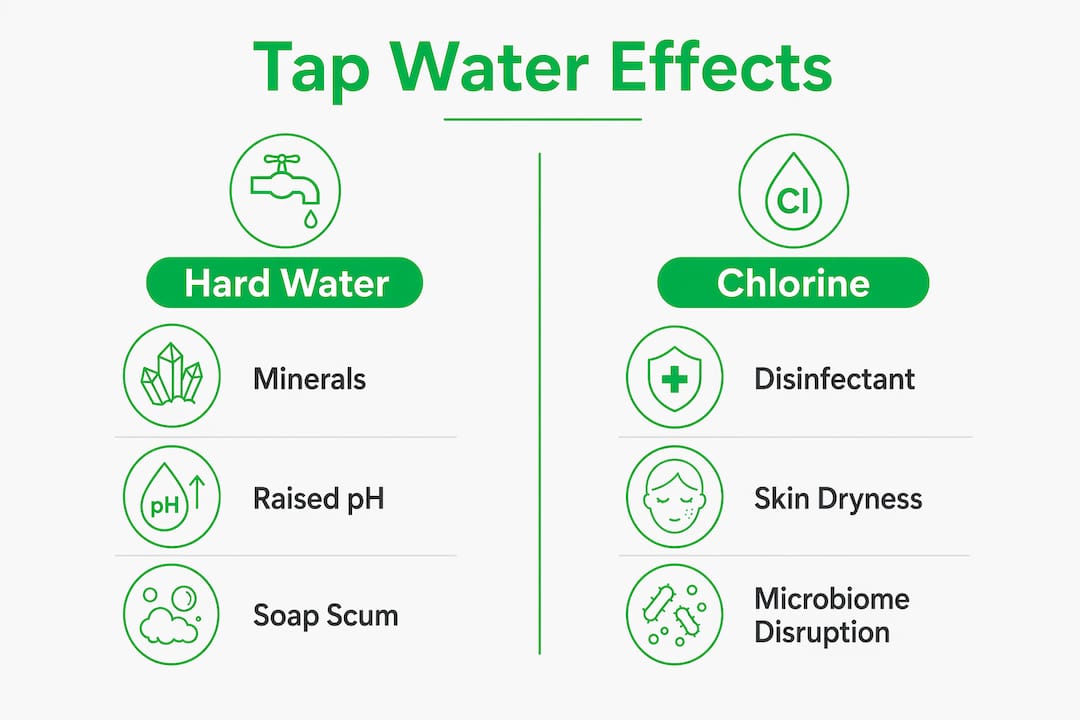
Mineral deposits create a second problem. Calcium and magnesium react with fatty acids in bar soap to form insoluble compounds called calcium and magnesium stearate. These compounds adhere to skin as soap scum. That residue blocks moisturizer absorption and clogs pores, which directly contributes to breakouts.
Pro Tip: That “squeaky clean” feeling after washing with hard water is actually soap scum buildup on your skin, not a sign of cleanliness. It signals that your skin barrier is being compromised.
Normal vs. hard water effects on skin
| Factor | Normal (soft) water | Hard water |
|---|---|---|
| Skin surface pH | ~4.5–5.5 (healthy acid mantle) | Raised toward 7.0, disrupting barrier enzymes |
| Filaggrin integrity | Maintained, skin stays supple | Degraded, increasing dryness and eczema risk |
| Soap interaction | Lathers cleanly, rinses fully | Forms soap scum that clogs pores |
| Moisturizer absorption | Normal penetration | Blocked by mineral and soap residue |
| Pore health | Clear | Increased risk of clogging and breakouts |
What does chlorine in tap water do to your skin?
Chlorine is the most common disinfectant in American tap water, and its effects on skin oils and microbiome are well documented. It breaks down the natural lipid layer on the skin surface, increasing transepidermal water loss. That means skin loses moisture faster after every shower, leaving it dry and tight.
Hot showers make this worse. Chlorine exposure during hot showers increases both absorption through the skin and inhalation, compounding the irritation effect. Many people notice their skin feels worse after a long, hot shower compared to a quick, cooler one. The temperature is not the only culprit. The chlorine concentration your skin absorbs increases with heat and duration.
Chloramine is a related disinfectant that many water utilities now use instead of or alongside chlorine. Chloramine does not evaporate easily from water, unlike chlorine. It also increases skin permeability, meaning skin becomes more vulnerable to absorbing other irritants. That is a significant problem for people with sensitivity to tap water, because their skin barrier is already weakened.
Common skin symptoms linked to chlorine and chloramine exposure include:
- Tightness or dryness immediately after showering
- Itching or redness on the chest, back, or face
- Worsening eczema or psoriasis flare-ups
- Increased sensitivity to skincare products applied after showering
- A faint chlorine smell lingering on skin after drying off
Pro Tip: Switching to shorter, cooler showers reduces chlorine absorption significantly. Pair this with a shower filter for the most noticeable improvement in skin comfort.
How to tell if tap water is causing your skin irritation
Skin that feels tight or itchy immediately after showering is the clearest early signal that tap water may be the cause. The timing matters. If irritation appears within minutes of contact with water and improves hours later, water quality is a strong suspect. Reactions to skincare products typically appear more slowly.
A useful self-test is to track your skin when you travel. People with eczema or sensitive skin often notice clear improvement when they visit cities or regions with naturally soft water. If your skin consistently improves away from home, your local water supply is likely a contributing factor.
Confirming the cause at home is straightforward. Follow these steps:
- Buy a water hardness test kit. These are available at hardware stores and online. They measure calcium and magnesium concentration in parts per million. Water above 120 ppm is considered hard.
- Test for chlorine. Aquarium test strips measure free chlorine in tap water accurately and cost very little. A reading above 0.5 mg/L is enough to irritate sensitive skin.
- Keep a skin diary for two weeks. Note skin condition each morning and evening, shower duration, water temperature, and any products used.
- Shower with bottled or filtered water for three days. Use a large container or a basic shower filter. If skin improves noticeably, tap water is confirmed as a trigger.
- Consult a dermatologist with your results. Bringing water test data to an appointment gives your doctor concrete information to work with rather than guesswork.
This process takes less than three weeks and gives you clear, actionable data about your skin’s specific triggers.
What are the best solutions for tap water skin irritation?
The most direct fix for tap water skin irritation is a shower filter for sensitive skin. Vitamin C filters neutralize chlorine and chloramine through a chemical reaction at the point of use. Carbon filters adsorb chlorine and some organic compounds. Both options reduce the primary irritants before water contacts your skin.
Vitamin C and carbon shower filters neutralize chlorine effectively when properly maintained. Filter cartridges need regular replacement, typically every one to three months depending on water usage and local chlorine levels. A filter that is past its service life stops working and may even release trapped contaminants back into the water.
Skincare product choices matter alongside filtration. Soap-free cleansers and syndet bars do not react with hard water minerals to form soap scum. Switching from traditional bar soap to a syndet cleanser eliminates one of the main causes of pore clogging from hard water. Applying a moisturizer within two minutes of stepping out of the shower locks in residual moisture before transepidermal water loss accelerates. Skin hydration after showering is most effective when the skin is still slightly damp.
Pro Tip: Look for moisturizers containing ceramides or niacinamide. These ingredients actively support barrier repair, which is especially useful when your skin has been exposed to hard water or chlorine.
Filtration options compared
| Filter type | Chlorine removal | Mineral reduction | Best for |
|---|---|---|---|
| Vitamin C shower filter | Excellent (neutralizes chlorine and chloramine) | Minimal | Chlorine sensitivity, eczema, daily use |
| Carbon block filter | Good (adsorbs chlorine) | Minimal | General chlorine reduction |
| Ceramic filter | Moderate | Moderate | Reducing sediment and some minerals |
| Whole-house softener | None (separate system needed) | Excellent | Severe hard water across all taps |
| Point-of-use softener | None | Good | Kitchen or bathroom sink use |
Whole-house water softeners address hard water most thoroughly but require professional installation and ongoing salt costs. Point-of-use shower filters are the practical choice for renters and anyone who wants a fast, affordable fix. They install in minutes and require no plumbing changes.
Key Takeaways
Tap water skin irritation is caused by hard water minerals and chlorine disinfectants that disrupt the skin barrier, and both can be addressed with the right filter and skincare routine.
| Point | Details |
|---|---|
| Hard water raises skin pH | Elevated pH degrades filaggrin and weakens the acid mantle, triggering dryness and eczema. |
| Chlorine strips skin oils | Daily chlorine exposure increases water loss and damages the skin microbiome with every shower. |
| Soap scum blocks moisture | Mineral and soap residue on skin prevents moisturizers from absorbing and clogs pores. |
| Self-testing confirms the cause | Water hardness kits and a short skin diary identify tap water as a trigger within two weeks. |
| Shower filters reduce irritation | Vitamin C and carbon filters neutralize chlorine at the point of use and are easy to maintain. |
What I’ve learned after years of watching people blame their skincare
Most people I talk to who struggle with chronic skin irritation have already cycled through three or four cleansers, two moisturizers, and at least one prescription. They blame fragrance. They blame stress. They blame diet. Almost none of them have tested their water.
Water quality is rarely the sole cause of skin problems. It is almost always a contributing factor that compounds irritation alongside other triggers like harsh soaps, low humidity, or seasonal changes. That nuance matters because it means you do not have to solve everything at once. Filtering your shower water is one concrete step that removes a daily, repeated stressor from your skin.
What I find most telling is the travel observation. When someone tells me their skin was noticeably better for an entire week in a different city, and they changed nothing else about their routine, that is not a coincidence. That is data. Soft water cities like Portland, Oregon consistently produce that effect for people who live in hard water areas.
The fix is not complicated. A quality shower filter, a syndet cleanser, and a ceramide moisturizer applied immediately after showering addresses the three main mechanisms of tap water skin damage. None of those steps require a dermatologist visit or a prescription. They require awareness and a small change in routine. The people who see the most improvement are the ones who treat water quality as part of their skincare routine, not separate from it.
— Sara
Vitacleanhq’s shower filters for cleaner, gentler water
If your skin has been reacting to your daily shower and you have ruled out your products as the cause, the water itself is worth addressing directly.
Vitacleanhq’s vitamin C shower filter shots neutralize chlorine and chloramine at the point of use, before water contacts your skin. The filters use a replaceable cartridge system designed specifically for people with sensitive skin, eczema, and scalp irritation. Installation takes under five minutes and requires no tools. Vitacleanhq also offers a filter refill plan so your filter stays effective without the hassle of remembering to reorder. Cleaner water is one of the most consistent changes people make when they finally get their skin under control.
FAQ
What minerals in tap water irritate skin?
Calcium and magnesium are the primary minerals that cause tap water skin irritation. They raise skin pH, degrade barrier proteins, and react with soap to form pore-clogging residue.
Can tap water cause acne breakouts?
Yes. Hard water minerals react with soap to form soap scum that clogs pores, and chlorine disrupts the skin microbiome. Both effects contribute directly to breakouts.
Does a shower filter actually help sensitive skin?
Vitamin C and carbon shower filters reduce chlorine and chloramine effectively, which removes a major daily irritant. People with eczema and sensitive skin report noticeable improvement after switching to filtered shower water.
How do I know if my water is hard?
Buy a water hardness test kit at any hardware store or online. Water above 120 parts per million is considered hard and is likely affecting your skin barrier with daily use.
Is chlorine or hard water worse for skin?
Both cause significant damage through different mechanisms. Chlorine strips oils and harms the skin microbiome. Hard water raises pH and blocks moisture. Most municipal water supplies contain both, so the combined effect is greater than either alone.