
Why Rainfall Showerheads Differ from Standard Models
TL;DR:
- Rainfall showerheads are large overhead fixtures that create a wide, gentle water canopy for a spa-like experience. They require higher water pressure and flow rates than standard showerheads, which are smaller and mount on walls for targeted sprays. Combining rainfall heads with handheld units and water filters offers both immersive relaxation and efficient rinsing.
Rainfall showerheads are defined as large-diameter overhead fixtures that deliver water vertically in a wide, gentle canopy designed to simulate natural rain. Standard showerheads, by contrast, are smaller wall-mounted units built for focused, adjustable spray and efficient rinsing. Understanding why rainfall showerheads differ from standard ones goes beyond aesthetics. The two types operate on different pressure requirements, flow rates, installation demands, and user experiences. Knowing those differences before you buy protects your budget and your plumbing.
Why rainfall showerheads differ from standard: size, design, and coverage
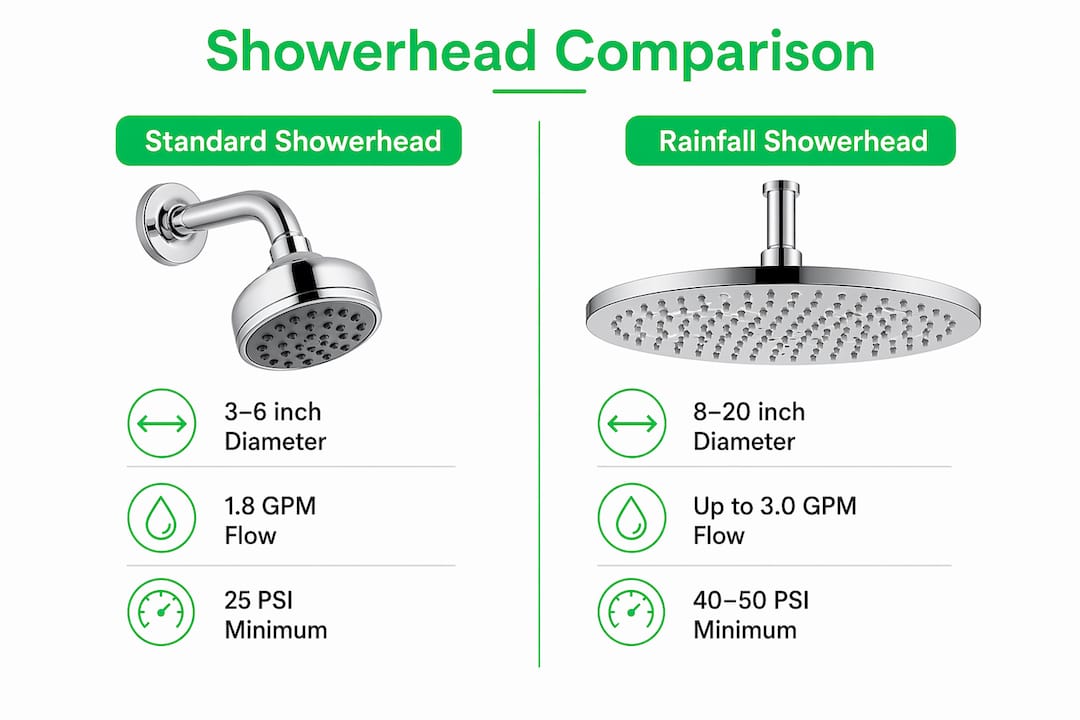
The most fundamental difference between rainfall and standard showerheads is physical size. Standard heads measure 3–6 inches in diameter, while rainfall heads range from 8 inches up to 20 inches or more. That size gap changes everything about how water reaches your body.
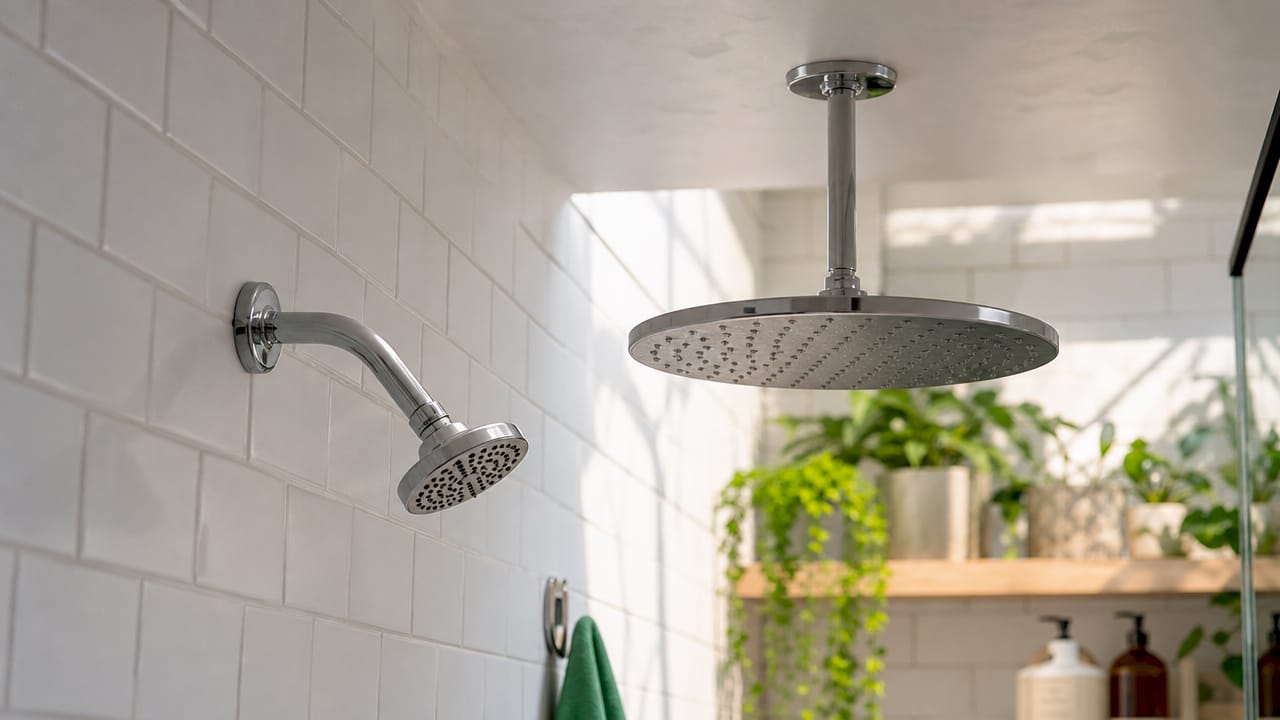
A standard showerhead concentrates its spray into a defined zone. You move under it, angle it, and adjust the pattern to target your hair or back. A rainfall head spreads water across a broad overhead canopy. You stand under it and let the water fall around you, much like standing in a warm summer rain.
The wider the head, the more nozzles distribute the same water volume. That means each nozzle delivers less force per square inch. The result is a gentler, more immersive feel, but noticeably lower pressure intensity compared to a focused standard spray.
| Feature | Standard showerhead | Rainfall showerhead |
|---|---|---|
| Diameter | 3–6 inches | 8–20 inches |
| Spray direction | Angled, wall-mounted | Vertical, overhead |
| Coverage area | Targeted zone | Wide body canopy |
| Pressure feel | Concentrated, strong | Gentle, diffused |
| Spray patterns | Multiple adjustable | Typically single fixed |
| Mounting position | Wall arm | Ceiling or extended arm |
The mounting position also matters. Rainfall heads mount on the ceiling or on a long extension arm that positions the head directly above you. Standard heads mount on a short wall arm at shoulder height. That overhead angle is what creates the signature “rain falling from above” sensation that defines the rainfall experience.
What are the water pressure and flow rate requirements?
Pressure is where many homeowners get surprised after installation. Rainfall showerheads need 40–50 PSI of water pressure for optimal performance. Standard showerheads work well at pressures as low as 25 PSI. That 15–25 PSI gap is significant in older homes or apartments with aging plumbing.
Homeowners with water pressure below 40 PSI often find that rainfall heads produce a weak, mist-like trickle rather than a satisfying flow. That experience is the opposite of the spa feel you paid for. Checking your home’s water pressure with an inexpensive gauge before purchasing a rainfall head is the single most important step most buyers skip.
Flow rate is the other key number. Luxury rainfall models consume up to 3.0 GPM, while eco-standard showerheads average around 1.8 GPM. That difference adds up fast on your water bill, especially when rainfall showers tend to run longer because they feel more relaxing.
| Specification | Standard showerhead | Rainfall showerhead |
|---|---|---|
| Minimum PSI needed | 25 PSI | 40–50 PSI |
| Typical flow rate | 1.5–2.0 GPM | 2.0–3.0 GPM |
| Pressure feel | Strong, focused | Gentle, wide |
| Low-pressure result | Acceptable performance | Weak mist or drip |
Ceiling-mounted rainfall heads lose additional pressure due to gravity and pipe friction compared to wall-mounted arms. If your home already sits near the 40 PSI threshold, a ceiling mount may push performance below acceptable levels without a pressure booster or pipe upgrade.
Pro Tip: Test your home’s water pressure before buying any rainfall showerhead. Hardware stores sell pressure gauges for under $15 that attach directly to a hose bib. If your reading falls below 45 PSI, budget for a pressure booster or choose a wall-arm rainfall mount instead of a ceiling install.
How do functional differences affect showering efficiency?
Standard showerheads win on versatility. Most rainfall heads provide only a single, fixed spray pattern, while standard heads offer massage, mist, jet, and wide settings. That flexibility matters for rinsing thick hair, targeting sore muscles, or giving kids a quick rinse.
Rainfall heads are slower at rinsing. The gentle, diffused flow takes longer to work shampoo out of hair than a concentrated jet. For people with long or thick hair, this can add several minutes to every shower. That is not a minor inconvenience when you are running late on a weekday morning.
Combining a rainfall head with a handheld unit is the industry-recommended solution for this problem. A dual setup gives you the immersive overhead experience for relaxation and the targeted control of a handheld for efficient rinsing. Many homeowners who install rainfall heads add a handheld within six months because they miss the rinsing power. You can explore double vs. rain shower head setups to find the right combination for your routine.
Rainfall showerhead pros and cons at a glance:
- Pro: Wide, immersive coverage creates a spa-like, relaxing experience
- Pro: Gentle pressure is soothing for sensitive skin and scalp
- Pro: Aesthetic upgrade that adds perceived luxury to any bathroom
- Con: Single spray pattern limits versatility for targeted rinsing
- Con: Requires higher water pressure (40–50 PSI) to perform well
- Con: Higher flow rate (up to 3.0 GPM) increases water and energy costs
- Con: Slower hair rinsing compared to focused standard spray
Pro Tip: If you love the look of a rainfall head but need rinsing power, install a dual shower system with a ceiling-mounted rainfall head and a wall-mounted handheld unit on a separate valve. You get both experiences without compromise.
What are the installation, maintenance, and cost considerations?
Installation is where rainfall systems separate themselves most sharply from standard heads in terms of cost and complexity. Rainfall system installation costs range from $150 to over $800, depending on whether you need ceiling plumbing work, new valves, or extended arms. Standard showerheads cost $30–$200 and most homeowners install them in under 20 minutes with a wrench and plumber’s tape.
Here is what a rainfall installation typically involves:
- Assess your water pressure. Confirm you have at least 40–50 PSI before purchasing. A plumber can test this accurately if you are unsure.
- Choose your mount type. Wall-arm mounts are simpler and cheaper. Ceiling mounts require opening walls or ceilings to run new pipe.
- Upgrade your valve. Large rainfall heads require thermostatic mixing valves to prevent temperature fluctuations and scald risk. Standard pressure-balance valves are often insufficient.
- Check your water heater capacity. Large diameter rainfall heads increase hot water demand, which can stress undersized heaters and cause cold water interruptions mid-shower.
- Plan for mineral buildup maintenance. Rainfall heads have more nozzles spread across a larger surface area. Hard water deposits clog those nozzles faster. Soaking the head in white vinegar monthly keeps flow even and prevents buildup. Read more about showerhead buildup management to protect your investment.
Standard heads require almost no maintenance beyond occasional nozzle cleaning. Their smaller surface area and fewer nozzles make them far less vulnerable to mineral buildup than rainfall models.
How do rainfall and standard showerheads affect wellness and bathroom aesthetics?
The psychological and aesthetic value of rainfall showers provides wellness benefits that go beyond functional rinsing. Standing under a wide, warm overhead flow lowers perceived stress and mimics the sensory experience of standing in natural rain. That is not marketing language. Sensory immersion in warm water is a recognized relaxation trigger, and the overhead delivery angle amplifies it compared to a side-angled spray.
Standard heads focus on function. They do the job efficiently, but they do not create the same ambient, enveloping sensation. For homeowners who treat their shower as a stress-relief ritual rather than a quick hygiene task, that difference in experience is real and meaningful.
Wellness trends in 2026 reflect this shift. More homeowners are treating their showers as daily wellness rituals, investing in water quality, temperature control, and sensory experience alongside fixture upgrades. Rainfall heads fit naturally into that mindset.
Wellness benefits associated with rainfall showerheads:
- Broad, warm coverage supports muscle relaxation and stress reduction
- Gentle pressure is less irritating for sensitive or reactive skin
- Overhead flow creates a meditative, immersive environment
- Aesthetic upgrade contributes to a calming bathroom atmosphere
- Wide coverage distributes filtered water more evenly across skin and scalp
Water quality matters here too. A rainfall head delivers more water across more skin surface, which means chlorine and mineral exposure increases proportionally. Pairing a rainfall head with a quality shower filter addresses that directly and amplifies the wellness benefit of the broader coverage.
Key Takeaways
Rainfall showerheads deliver a fundamentally different experience from standard models because their size, pressure needs, and water delivery method are built around immersion rather than efficiency.
| Point | Details |
|---|---|
| Size drives the difference | Rainfall heads (8–20 inches) cover far more area than standard heads (3–6 inches). |
| Pressure requirements are higher | Rainfall heads need 40–50 PSI; standard heads perform well at 25 PSI. |
| Flow rates increase water costs | Rainfall heads use up to 3.0 GPM versus 1.8 GPM for eco-standard models. |
| Installation costs more | Rainfall systems cost $150–$800+; standard heads install for $30–$200. |
| Dual setups solve versatility gaps | Combining a rainfall head with a handheld unit covers both relaxation and rinsing needs. |
What I actually think about choosing between these two
I have seen homeowners spend $600 on a ceiling-mounted rainfall system only to discover their building’s water pressure tops out at 35 PSI. The result is a glorified drizzle. The fixture looks stunning. The shower feels underwhelming. That outcome is entirely avoidable.
My honest view is that rainfall showerheads are worth the investment for the right home and the right person. If you take long, relaxing showers and your plumbing supports the pressure demand, the experience is genuinely different from anything a standard head delivers. The overhead coverage, the ambient warmth, the way it quiets a stressful day. Those things are real.
But if you are a five-minute shower person, or if you have thick hair that needs serious rinsing power, a rainfall-only setup will frustrate you within a week. The single spray pattern is not a minor limitation. It is a daily friction point.
The setup I recommend most often is a wall-arm rainfall head paired with a filtered handheld unit. You get the aesthetic and the relaxation without sacrificing function. And adding a quality water filter to either setup is the upgrade most people overlook entirely. Chlorine and hard water affect your skin and hair regardless of which fixture delivers the water.
— Sara
Better water quality for any showerhead you choose
Choosing between a rainfall and standard showerhead is only half the equation. The water coming through either fixture matters just as much as the fixture itself.
Vitacleanhq’s Vitamin C shower filter shots neutralize chlorine and reduce impurities before water reaches your skin and scalp, whether you are using a wide rainfall head or a focused standard spray. For homeowners who want filtered water with the flexibility of a handheld unit, the filtered handheld shower head pairs with both rainfall and standard setups without any plumbing changes. Vitacleanhq also offers a ceramic filter option for deeper water purification, and a convenient filter refill plan so your filtration never lapses. Better water makes every shower better, regardless of which head you choose.
FAQ
Why do rainfall showerheads need more water pressure?
Rainfall heads spread water across a much larger surface area (8–20 inches), requiring 40–50 PSI to maintain adequate flow through all nozzles. Standard heads perform well at 25 PSI because their smaller diameter concentrates pressure into a tighter spray zone.
Are rainfall showerheads less efficient than standard ones?
Yes, in terms of water use. Rainfall heads use up to 3.0 GPM compared to 1.8 GPM for eco-standard models, and their relaxing feel tends to extend shower duration, adding thousands of gallons of water use per year.
Can I install a rainfall showerhead without a plumber?
Wall-arm rainfall heads are often DIY-friendly if your existing plumbing supports the pressure. Ceiling-mounted systems typically require a licensed plumber to run new pipe and install a thermostatic mixing valve for safe temperature control.
Do rainfall showerheads work for rinsing hair effectively?
Rainfall heads rinse hair more slowly than standard heads because their single, gentle spray pattern lacks the concentrated force of a jet or massage setting. A dual system with a handheld unit solves this problem for most homeowners.
What is the main wellness benefit of a rainfall showerhead?
The wide, overhead water delivery creates a sensory immersion experience that supports relaxation and stress reduction. Pairing a rainfall head with a shower filter enhances that benefit by removing chlorine and impurities from the water that contacts your skin and scalp. Learn more about shower head benefits for skin and hair health.