
Family-Friendly Water Filter Guide for Parents
TL;DR:
- Many household contaminants, such as lead, PFAS, chlorine, and nitrates, pose significant health risks to children and require specific filters for removal. Testing your water and verifying filter certifications ensure you select effective solutions tailored to your family’s needs and budget. Proper installation, maintenance, and routine testing are essential to keep your water safe and your filtration system functioning correctly.
Most parents assume tap water is safe if it runs clear. It rarely tells the whole story. This guide to family-friendly water filters breaks down what’s actually in your household water, which contaminants put young children at the highest risk, and how to choose a filter that genuinely works for your family’s needs and budget. From pitcher filters to whole-home reverse osmosis systems, you’ll find specific, practical guidance here. No marketing language, no vague promises. Just what you need to make a confident, informed decision for your household.
Table of Contents
- Key takeaways
- Guide to family-friendly water filters: contaminants to know
- Types of water filters for families
- How to choose the right water filter for your family
- Installation, maintenance, and verifying your filter works
- My honest take after years of living with home water filters
- How Vitacleanhq supports healthier water for your whole family
- FAQ
Key takeaways
| Point | Details |
|---|---|
| Know your contaminants first | Test your water or read your Consumer Confidence Report before choosing any filter. |
| Certifications over marketing claims | Look for NSF/ANSI 53 or 58 certification to confirm PFAS and contaminant removal. |
| Budget includes replacement costs | Factor in cartridge costs annually, not just the upfront price of the unit. |
| Match filter type to family size | Pitcher filters suit small needs; under-sink or whole-home filters work better for larger households. |
| Maintenance determines effectiveness | A filter past its replacement date offers little protection and may do more harm than good. |
Guide to family-friendly water filters: contaminants to know
Not every contaminant looks or smells dangerous. Lead, for example, is completely colorless and tasteless, yet it causes irreversible neurological damage in children even at low exposure levels. PFAS (per- and polyfluoroalkyl substances) are a group of thousands of synthetic chemicals that have migrated into water supplies across the country, linked to immune disruption, developmental delays, and certain cancers. Chlorine, while used intentionally to disinfect municipal water, can irritate skin and airways, particularly in young children with sensitive systems.
Here is what families should watch for in their water supply:
- Lead: Found in older plumbing and service lines, particularly in homes built before 1986. No safe level exists for children.
- PFAS: Present in water supplies near manufacturing facilities, military bases, and certain agricultural areas. The EPA’s updated June 2025 standards set new, stricter limits that most existing certified filters have not yet caught up to.
- Chlorine and chloramines: Added by water utilities, but can dry out skin and contribute to scalp irritation after bathing.
- Sediment and heavy metals: Include arsenic, mercury, and copper, which leach from corroded pipes and affect young nervous systems.
- Nitrates: Common in areas with agricultural runoff and particularly dangerous for infants under six months.
Your local water utility sends out an annual Consumer Confidence Report (CCR), which lists detected contaminants and whether they fall within legal limits. Reading it is a smart first step, but CCRs inform filtration needs without capturing what happens inside your specific home’s plumbing. Your pipes can add lead or copper that the utility report won’t catch. For that, a home water test kit or a certified lab test is worth the investment.
When you look for certifications, NSF/ANSI 53 covers health-based contaminants including lead and certain VOCs. NSF/ANSI 58 applies to reverse osmosis systems and includes PFAS reduction. Both are third-party verified, meaning a manufacturer can’t simply claim compliance without independent testing. That distinction matters enormously when you’re choosing family safe water filters for a household with young children.
Types of water filters for families
Choosing the right filter type depends on three things: what you’re filtering out, how much water your household uses, and what your budget actually covers long-term.
| Filter Type | Best For | Limitations | Approximate Cost |
|---|---|---|---|
| Pitcher filter | Taste, odor, basic chlorine | Limited PFAS/lead removal | $20–$40 upfront |
| Faucet-mounted | Drinking and cooking water | Slows flow, limited capacity | $20–$50 upfront |
| Countertop/under-sink | Contaminant reduction | Requires some installation | $100–$400 |
| Reverse osmosis | Broad contaminant removal | Wastes water, removes minerals | $150–$600+ |
| Whole-home system | All water in the home | Costly, may reduce pressure | $500–$3,000+ |
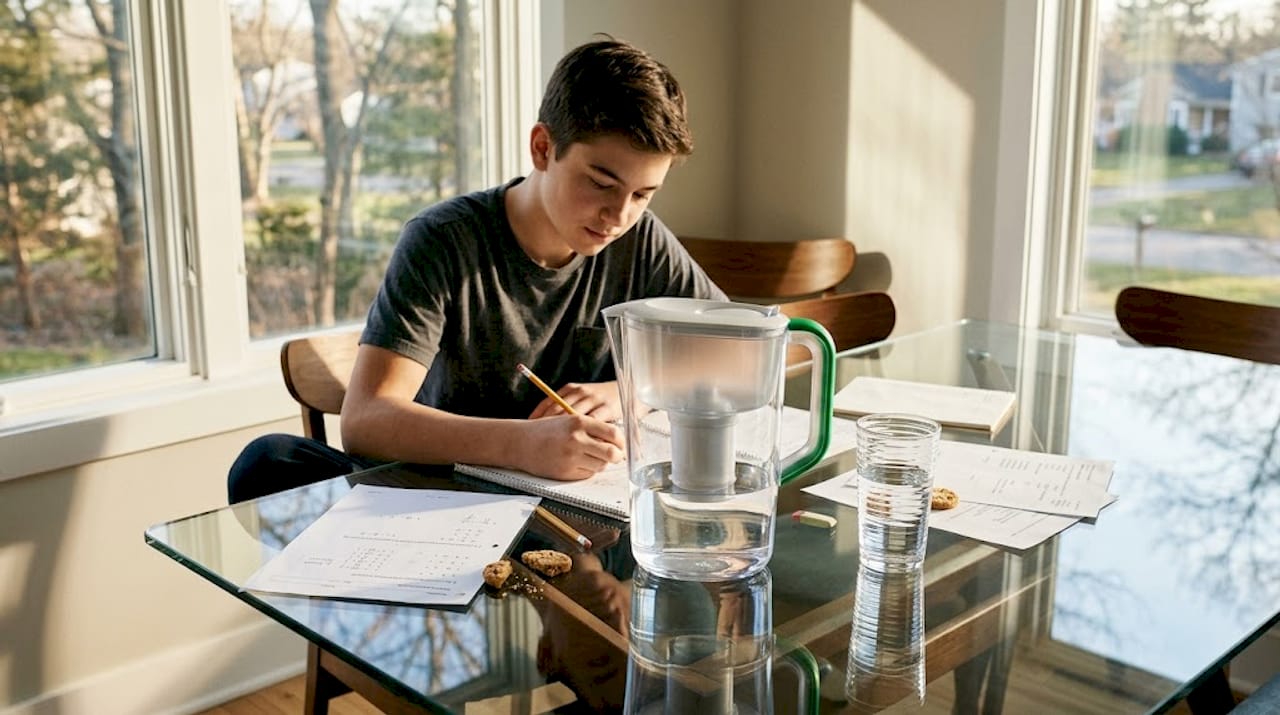
Pitcher filters are the easiest entry point. They’re affordable and portable, and they genuinely improve taste and odor. The tradeoff is real, though. Pitcher filters improve taste but fall short against PFAS and lead compared to under-sink or reverse osmosis options. If your main concern is the flavor of your drinking water, a pitcher filter works fine. If you have detected lead or PFAS in your water, you need something more capable.
Faucet-mounted filters are a smart middle ground for renters or families who want filtered water at the kitchen tap without plumbing work. One useful feature to look for: a diverter lever that switches between filtered and unfiltered flow. Use filtered water only for drinking and cooking, and the cartridge lasts significantly longer.
Under-sink reverse osmosis systems offer the broadest contaminant removal. Activated carbon and reverse osmosis are the two workhorses of home filtration. Carbon traps chemicals and chlorine. RO removes heavy metals, nitrates, and PFAS, though it does produce wastewater in the process and strips beneficial minerals along with the contaminants.
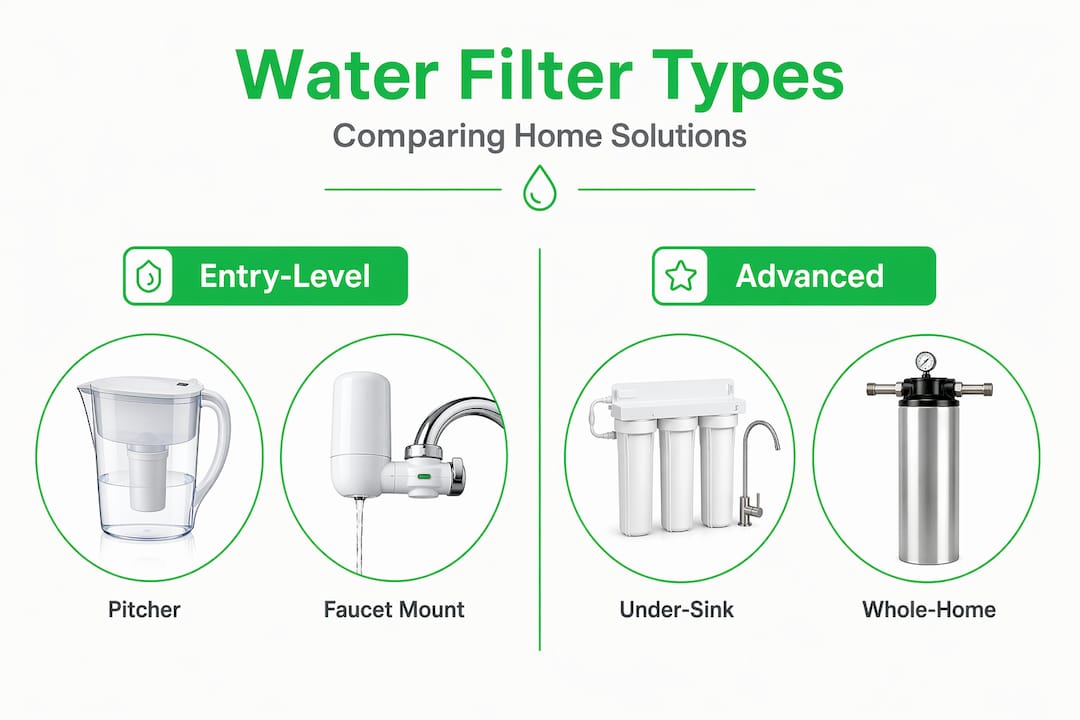
Whole-home systems treat water at the point it enters the house, which means every tap, shower, and appliance benefits. This is the most thorough approach and the most expensive. It also introduces a practical issue that many families don’t anticipate.
Pro Tip: Before buying a whole-home filter, measure your water pressure at the main line. Whole-home filters can reduce water pressure enough to affect showers, laundry cycles, and dishwashers. A pressure and flow check before installation saves you from a frustrating surprise after the fact.
How to choose the right water filter for your family
This is where most parents get stuck. There are dozens of filters on the market, all making impressive claims. Here is a straightforward process to cut through the noise.
-
Test your water first. Request a home test kit from your local health department or buy a certified lab test online. Knowing what’s actually in your water removes the guesswork from every decision that follows.
-
Read your CCR. It won’t tell you everything, but it gives you the starting point for contaminants present in your municipal supply.
-
Set your filtration goal. Is this about taste? Lead removal? PFAS reduction? Your goal determines the filter technology you need. Not all water filter buying guide advice gets this specific, but it’s the most important step.
-
Check NSF certification. The EPA’s guidance is clear: match filter certification to the specific contaminants you need removed. An NSF 42 filter only covers taste and odor. NSF 53 and 58 address health-based contaminants.
-
Calculate total cost of ownership. Water filter costs vary widely: pitcher filters run $20 to $40 upfront, but faucet and countertop filter replacements can cost $85 to $145 annually. A cheap upfront unit with expensive replacement cartridges adds up fast for a family of four.
-
Consider installation requirements. Whole-home and under-sink systems may require a plumber. Factor that into your budget and timeline.
-
Check replacement frequency. Some filters need changing every two months. Others last six months or more. Families with busy schedules need a filter that fits their actual maintenance habits, not an ideal version of them.
Pro Tip: If your household includes children with eczema, psoriasis, or sensitive skin, consider a filter that addresses chlorine and heavy metals in your shower water too. The link between filtered water for sensitive skin and reduced skin irritation is worth exploring alongside your drinking water solution.
Installation, maintenance, and verifying your filter works
Buying the right filter is step one. Making it work consistently is what actually protects your family.
For most pitcher, faucet, and countertop filters, installation is genuinely DIY. You don’t need tools or plumbing knowledge. Under-sink systems are a step up in complexity but typically come with clear instructions and can be done in an afternoon. Whole-home systems are a different story. Whole-home filters may reduce water pressure enough to require a plumber’s assessment, particularly in older homes with existing pressure issues. Skipping that evaluation can result in weak showers, slow-filling appliances, and frustrated family members.
Once installed, here’s how to keep your filter effective:
- Follow the manufacturer’s replacement schedule exactly. Most families wait too long. An expired filter doesn’t just stop filtering. It can harbor bacteria and leach accumulated contaminants back into your water.
- Track filter changes with a calendar reminder. Set a recurring alert on your phone the day you install a new cartridge. You’ll never guess at timing again.
- Retest your water after installation. This confirms the filter is actually working as expected and gives you a baseline to compare against future tests.
- Watch for changes in taste, odor, or flow. These are your early warning signs that a filter is failing or needs replacement.
“The best water filter is the one that’s properly maintained. An expired or neglected filter can become a contamination source, not a protection against one.”
One common mistake families make is over-relying on a single filter technology. If your primary concern is PFAS, confirm that your filter is certified to address it. Most filters only guarantee PFAS removal to previous EPA limits, not the stricter 2024 standards. Cross-check manufacturer claims against accredited certifier directories like NSF International or the Water Quality Association before trusting a product’s label.
My honest take after years of living with home water filters
I’ve gone through three different filter setups in my own home, and the biggest lesson I’ve learned is that marketing claims are almost always ahead of the actual performance. I bought our first whole-home system based on a compelling product page and a five-star average. Six months later, I discovered the unit had never been certified for lead reduction, which was our primary concern given our home’s age.
The second lesson is about maintenance fatigue. We all intend to replace filters on schedule. Life gets in the way. The families I’ve spoken with who have the best outcomes are the ones who either set up a subscription for automatic replacements or chose a filter with a longer service life. Convenience wins over good intentions every single time.
What I wish someone had told me earlier: don’t assume your drinking water filter handles your shower water. Chlorine and its byproducts absorb through skin during bathing, and children spend a lot of time in the bath. Looking at hair and skin benefits of shower filtration opened my eyes to a gap I hadn’t considered. Drinking water filters and shower filters solve different problems. Your household may need both.
The families who get this right aren’t necessarily spending the most money. They tested their water, matched their filter to verified contaminants, and built a replacement routine they could actually stick to. That combination beats an expensive, unmaintained system every time.
— Sara
How Vitacleanhq supports healthier water for your whole family
Your family’s water quality doesn’t stop at the kitchen faucet. Every shower your children take exposes them to whatever is in your tap water, including chlorine that dries out skin and irritates sensitive scalps. Vitacleanhq specializes in shower filtration that fills exactly this gap. The Vitamin C shower filter shots neutralize chlorine on contact, and the cartridges are designed to be replaced quickly without tools. For families who want durability and easy upkeep, the ceramic filter collection offers long-lasting filtration for everyday use. If staying on top of filter replacements is a challenge with a busy household, the filter refill subscription delivers replacements on your schedule so nothing slips through. Vitacleanhq also offers guidance on maintaining your filters for best results over time.
FAQ
What contaminants should families prioritize filtering?
Lead, PFAS, chlorine, and nitrates pose the highest risks for children. Testing your water first tells you which contaminants are actually present so you can choose the right filter technology.
How do I know if a water filter actually removes PFAS?
Look for NSF/ANSI 53 or 58 certification and cross-check the product against accredited certifier directories. The EPA clarifies that most current certified filters meet previous PFAS limits, not the stricter 2024 standards.
Are pitcher filters safe enough for families with young children?
Pitcher filters work well for taste and odor improvement but have limitations with PFAS and lead. If your water contains either contaminant, an under-sink filter or reverse osmosis system is a more reliable choice.
How often should a family replace water filter cartridges?
Replacement frequency varies by filter type and household water use, but most manufacturers recommend every two to six months. Check your specific product and set a calendar reminder on installation day.
Do shower filters matter for family health?
Yes. Chlorine and its byproducts absorb through skin during bathing, particularly in young children. Shower filters that neutralize chlorine can reduce skin dryness, scalp irritation, and hair damage, especially for family members with sensitive skin conditions.