
What Is Mineral Filtration: Benefits and How It Works
TL;DR:
- Mineral filtration retains beneficial minerals like calcium and magnesium while removing harmful contaminants from water. It offers a natural way to enhance taste, support hydration, and promote skin and hair health without sacrificing essential minerals. Proper system choice and maintenance ensure balanced, mineral-rich water that benefits overall wellness.
Most people researching water filtration assume the goal is to strip everything out. The reality is more nuanced. Understanding what is mineral filtration means recognizing that the best water isn’t necessarily the most “pure” by conventional definitions. Minerals like calcium, magnesium, and potassium belong in your water. They improve taste, support hydration, and contribute to everyday wellness in ways that stripped-down water simply cannot. This article breaks down exactly how mineral filtration works, what it removes, what it keeps, and how to choose the right system for your needs.
Table of Contents
- Key takeaways
- What mineral filtration actually is
- The mineral filtration process explained
- Health and taste benefits of mineral filtration
- Choosing the right mineral filtration system
- What mineral filtration removes vs. what it keeps
- My take on mineral filtration in 2026
- Upgrade your water with Vitacleanhq
- FAQ
Key takeaways
| Point | Details |
|---|---|
| Mineral filtration preserves health | Beneficial minerals like calcium and magnesium are retained or restored to support hydration and bone health. |
| Not all filters are the same | Reverse osmosis removes beneficial minerals; mineral filtration specifically protects or adds them back. |
| Contaminants are still removed | Mineral filters eliminate chlorine, heavy metals, and microplastics while keeping minerals intact. |
| Remineralization fills the gap | Post-RO mineral cartridges restore pH balance and mineral content within seconds of filtration. |
| Maintenance matters | Remineralization cartridges typically last 6 to 12 months and need separate replacement from main filters. |
What mineral filtration actually is
Mineral filtration refers to any water treatment process that either retains naturally occurring beneficial minerals during filtration or actively adds them back after heavy filtration has removed them. It stands apart from methods that treat all dissolved solids as a problem to be eliminated.
To understand why that matters, consider what standard filtration methods actually do:
| Filtration Type | Removes Contaminants | Removes Minerals | Adds Minerals |
|---|---|---|---|
| Activated carbon | Yes (chlorine, VOCs, odor) | No | No |
| Reverse osmosis | Yes (heavy metals, PFAS, TDS) | Yes | No |
| Distillation | Yes (most dissolved solids) | Yes | No |
| Mineral retention filter | Yes (chlorine, some metals) | No | No |
| Remineralization filter | Yes (when combined) | No | Yes |
Activated carbon filters generally do not remove dissolved minerals like calcium and magnesium, which is one reason they remain popular for everyday tap water improvement. Reverse osmosis and distillation, on the other hand, are so thorough that they pull out beneficial minerals along with contaminants.
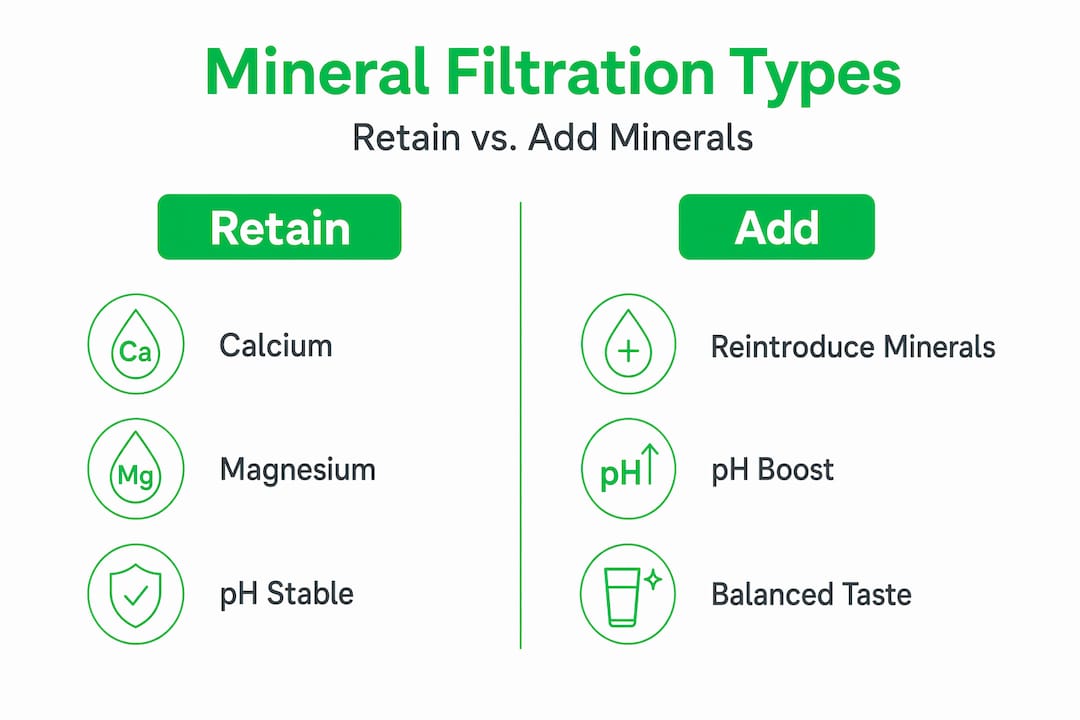
Mineral filtration takes two main approaches. The first is mineral retention filtration, where the filter is designed to target only harmful contaminants while leaving calcium, magnesium, and other beneficial minerals untouched. The second is remineralization filtration, where water goes through aggressive filtration first, then passes through a mineral stage that adds minerals back. Both approaches result in water that contains the minerals your body actually uses.
Water pH is closely linked to mineral content. Mineral media can raise pH to produce alkaline water with a noticeably smoother taste. That’s a direct sensory benefit most people notice within days of switching.
The mineral filtration process explained
The mineral filtration process is not a single-stage event. Most quality systems run water through multiple media types in sequence, each with a specific job.
Here’s how a typical mineral filtration system works from inlet to outlet:
- Sediment pre-filter: Captures larger particles like rust, dirt, and sand before they reach finer media.
- Activated carbon stage: Adsorbs chlorine, volatile organic compounds, and odors that affect taste.
- Mineral-specific media: Passes water through materials like Maifan stone, calcium and magnesium beads, or calcite. These either release trace minerals into the water or create conditions that stabilize existing mineral content.
- Post-filter stage (in some systems): Polishes the water for clarity and final taste refinement.
The mineral media stage is where the real differentiation happens. Maifan stone is a naturally occurring mineral composite that has been used in Asian wellness traditions for centuries. Modern mineral filtration systems use processed forms of this stone to add trace minerals and slightly adjust pH. Calcite, made of calcium carbonate, dissolves slowly in water to raise pH and add calcium ions. These aren’t artificial additives. They’re natural mineral sources doing exactly what they do in well water or spring water.
Remineralization after reverse osmosis restores mineral balance and pH within seconds using mineral cartridges or drops, which makes post-RO remineralization one of the fastest ways to rehabilitate stripped water.
Pro Tip: Remineralization cartridges degrade separately from your main filter. Track them on a different replacement schedule so you’re not accidentally drinking mineralized water from a depleted cartridge.
Remineralization cartridges typically last 6 to 12 months, and skipping that replacement window is the most common reason people notice their filtered water tasting flat or slightly acidic over time.
Health and taste benefits of mineral filtration
Here’s where the practical payoff becomes clear. Water that retains or restores its mineral content does things for your body that pure, stripped water simply doesn’t.
The minerals most relevant in filtered water are calcium, magnesium, and potassium. Calcium supports bone density and muscle function. Magnesium is involved in over 300 enzymatic reactions in the body, including energy production and nervous system regulation. Potassium helps regulate fluid balance and blood pressure.
Users who switched to mineral-rich filtered water reported real-world benefits across multiple categories: improved hydration (75%), bone strength (70%), skin health (65%), digestion (60%), and cognitive function (50%). These aren’t minor quality-of-life tweaks. For health-conscious consumers, they represent meaningful daily improvements.
Mineral-free water like RO or distilled can increase mineral loss from the body due to lack of electrolytes, which impacts hydration especially for active individuals. Drinking demineralized water consistently can actually work against your hydration goals.
Taste is equally affected. Water that has been fully demineralized often tastes flat, slightly metallic, or just wrong to people accustomed to spring or mineral water. The presence of calcium and magnesium creates a natural roundness and softness that makes water noticeably more pleasant to drink. That palatability difference matters because it affects how much water you actually drink throughout the day.
Skin health deserves specific attention here. Mineral filtration in shower systems, not just drinking water, directly affects how skin and hair respond to daily exposure. If you’ve ever noticed dryness, dullness, or scalp irritation without a clear cause, your shower water’s mineral and chemical composition is worth investigating. The benefits for skin and hair from filtered shower water are well documented, and mineral balance plays a significant role in that improvement.

Consumers often overlook that pH enhancement in water filtration is achieved primarily through mineral content adjustments, not chemical additives. If alkaline water is on your radar, mineral filtration is the most natural way to get there.
Choosing the right mineral filtration system
Matching the right system to your actual water situation makes a significant difference in results. There’s no single answer, but the decision tree is straightforward.
- Test your tap water first. Know what’s in it before you filter it. If your municipal supply already has good mineral content and your concern is mainly chlorine and taste, a mineral retention filter like an activated carbon block with mineral media is sufficient.
- If you already use reverse osmosis, add remineralization. RO systems are effective for heavy contaminant loads, but reverse osmosis membranes target dissolved solids including beneficial minerals, which makes post-filtration remineralization necessary for balanced water.
- Consider your pH goals. If you want alkaline water above pH 7.5, look specifically for systems that use calcite or mineral bead media rated for pH adjustment.
- Calculate the real cost. Switching to at-home mineral filtration cuts costs from dollars per gallon to cents per gallon compared to bottled mineral water. A quality home system pays for itself within weeks for regular users.
- Plan your maintenance schedule. Budget for filter replacement annually. Skipping replacements is the fastest way to undo the investment.
Pro Tip: If you notice your water tasting increasingly flat or sharp over time, the mineral cartridge is usually the culprit. Replace it before the main filter and see if taste improves before assuming a bigger issue.
For shower applications specifically, mineral filtration systems that combine vitamin C filtration with ceramic mineral media offer a practical way to address both chlorine neutralization and mineral balance in a single unit. The gold standard approach removes harmful contaminants while preserving or restoring beneficial minerals to maintain both hydration and taste quality.
What mineral filtration removes vs. what it keeps
This is the section that tends to surprise people most. Mineral filtration is not a compromise between clean and healthy. It is specifically engineered to remove harmful substances while leaving the beneficial ones untouched.
What mineral filtration removes:
- Chlorine and chloramines (the disinfectants most municipal suppliers use)
- Lead, mercury, and other heavy metals
- PFAS compounds (commonly called “forever chemicals”)
- Microplastics
- Sediment, rust, and particulates
- Volatile organic compounds
Mineral water filters remove contaminants like chlorine, lead, heavy metals, and PFAS while preserving beneficial minerals. The technology is selective by design, not by accident.
What mineral filtration retains or adds back:
- Calcium and magnesium (structural and metabolic minerals)
- Potassium and trace minerals from mineral media
- Bicarbonate alkalinity that buffers pH
- The natural mineral profile that makes water taste clean and complete
One important clarification: some filters only retain existing minerals while others add minerals back after filtration. A filter marketed as “mineral” is not automatically adding anything. Read the product specs carefully and confirm whether the system uses retention media, remineralization media, or both.
Reverse osmosis lowers water pH because it strips out the minerals that create alkalinity. Mineral filtration either maintains or raises pH depending on the media used. That difference is especially relevant for anyone monitoring their body’s acid-alkaline balance or managing conditions where hydration quality matters.
My take on mineral filtration in 2026
I’ve spent a lot of time looking at how people approach water filtration, and the same mistake keeps showing up. People chase the most aggressive filtration they can find, assume that “more filtered” equals “healthier,” and end up drinking water that tastes hollow and lacks the mineral content their body actually needs.
In my experience, reverse osmosis is genuinely useful for households with contaminated water or high dissolved solids from industrial runoff. But for most city dwellers drinking treated municipal water, the mineral filtration approach strikes a much better balance. You get the chlorine out. You keep the calcium and magnesium in. You don’t need remineralization drops or a secondary system to fix what the filter broke.
What I’ve also seen is that people underestimate how much water quality affects their skin and scalp. Filtered shower water with retained minerals and neutralized chlorine produces noticeably different results within a few weeks. The skin feels less tight. Hair has more texture and less breakage. These aren’t placebo effects. They’re direct outcomes of reducing daily chemical exposure while maintaining mineral contact.
My honest recommendation: stop treating mineral content as a side issue and start treating it as a core filter selection criterion. The filters that get this right give you genuinely better water without complexity or compromise.
— Sara
Upgrade your water with Vitacleanhq

If this article has you rethinking what your current filter is actually doing to your water, Vitacleanhq has products built around exactly this principle. The ceramic filter collection uses mineral-preserving ceramic media to deliver cleaner water without stripping the minerals that matter for your skin and hair. For shower use, the vitamin C filter shots neutralize chlorine on contact while supporting your skin’s natural balance. Every product is designed for easy installation with no tools required, and the filter refill plan keeps your system performing at its best year-round. Better water quality shouldn’t require a plumber or a chemistry degree. Vitacleanhq makes it straightforward.
FAQ
What is mineral filtration in simple terms?
Mineral filtration is a water treatment method that removes harmful contaminants like chlorine and heavy metals while retaining or restoring beneficial minerals like calcium and magnesium. It produces cleaner water without stripping the minerals your body uses.
How does mineral filtration differ from reverse osmosis?
Reverse osmosis removes virtually all dissolved solids, including beneficial minerals, producing very pure but mineral-free water. Mineral filtration is designed to protect those minerals, either by retaining them during filtration or adding them back through remineralization media.
What does mineral filtration remove from water?
Mineral filters remove chlorine, lead, heavy metals, PFAS compounds, microplastics, and sediment while keeping calcium, magnesium, and potassium intact. The goal is selective removal of harmful substances without eliminating the minerals that improve taste and health.
How long do mineral filtration cartridges last?
Most remineralization cartridges last between 6 and 12 months, though this varies by water volume and initial water quality. They should be tracked and replaced on a separate schedule from your main filter to maintain consistent water taste and mineral content.
Can mineral filtration improve skin and hair health?
Yes, particularly in shower applications. Filtered water that neutralizes chlorine and retains mineral balance reduces dryness, scalp irritation, and hair breakage caused by daily exposure to untreated tap water.