
Your Travel Shower Filter Routine: A Traveler's Guide
TL;DR:
- Using a portable shower filter effectively reduces skin irritation from chlorine and chloramines during travel. Installing simple inline filters takes minutes, and regular replacement maintains their performance for healthier hair and skin. Proper selection, installation, and maintenance ensure optimal benefits across diverse water conditions worldwide.
You step into the hotel shower after a long flight, and within days your scalp is itchy, your skin is tight, and your hair feels like straw. This is not bad luck. It’s unfiltered water doing exactly what unfiltered water does. A solid travel shower filter routine can stop that from happening on your next trip. This guide covers how to pick the right portable shower filter, install it in minutes, use it correctly, and keep it working whether you’re in a Bangkok guesthouse or a Colorado campground.
Table of Contents
- Key takeaways
- What to know before starting your travel shower filter routine
- Installing and using a portable filter while traveling
- Troubleshooting common filter problems on the road
- What a travel shower filter routine actually does for skin and hair
- My honest take on the travel shower filter routine
- Vitacleanhq’s portable filter options for travelers
- FAQ
Key takeaways
| Point | Details |
|---|---|
| Filter media determines performance | Choose KDF-55 or catalytic carbon for chloramine removal; stage count alone is not a reliable indicator. |
| Installation is genuinely simple | Most inline filters take under 10 minutes to install with no tools required. |
| Certification matters more than marketing claims | Look for NSF/ANSI 177 certification, not just “tested to NSF standards,” which is not the same thing. |
| Filters have real but limited benefits | Filtered water reduces skin irritation from chlorine but cannot cure eczema or soften hard water. |
| Replace filters on schedule | Most travel filters need replacement every 3 to 6 months to maintain effective filtration. |
What to know before starting your travel shower filter routine
Choosing the right filter type
Not every portable shower filter travels well. Three main formats exist, and each suits different trip styles.
- Inline filters attach between the shower arm and the existing showerhead. They are the most universal option for hotel and rental showers, they require zero tools to install, and most weigh under two ounces. Popular travel filters weigh around 1.7 ounces and use universal G1/2 thread connections that fit the vast majority of showers worldwide.
- Showerhead combo units replace the existing showerhead entirely. They offer better flow control but require you to remove and reinstall the original head each time, which adds friction in a hotel setting.
- Handheld filtered showerheads are great for camping or Airbnb stays where you have more control over the setup. They double as a regular handheld wand, which is useful when showering over a tub.
For most travelers, the inline filter wins on convenience. It packs flat, threads on in seconds, and leaves the hotel showerhead exactly as you found it.
What the filter is actually made of matters
This is the piece of advice most travel shower filter reviews skip over entirely. Filter media type outperforms stage count every time. A simple filter packed with high-concentration KDF-55 will do more for your skin and hair than a “15-stage” filter loaded with inert ceramic beads and marketing language.
KDF-55 is the standard for removing both chlorine and chloramines. That second point is critical. Many cities now treat water with chloramines instead of plain chlorine because they’re harder to eliminate, and standard activated carbon filters cannot touch them. Before your next trip, check whether your destination uses chloramine-treated water. If you’re unsure, assume it does and bring a KDF-55 filter.
Pro Tip: Before you leave home, look up your destination city’s annual water quality report online. Most municipal water authorities publish these free. Knowing whether the local supply uses chlorine or chloramine helps you confirm your filter media is the right choice before you arrive.
Certifications and pricing
NSF/ANSI 177 is the only certification that objectively validates chlorine reduction claims for shower filters. Many brands market products as “tested to NSF 177 standards,” which is not a certification. It’s a phrase that means nothing verifiable. Look for the actual NSF mark before purchasing.
Pricing in 2026 is accessible. Basic filters retail under $20, while premium wellness-tier options land between $40 and $80. Subscription refill programs average $27 to $39. For frequent travelers, a subscription removes the hassle of remembering when to order replacement cartridges.
A good reference point on what filtered water actually does for your hair and skin is worth reading before you buy.
Installing and using a portable filter while traveling
Getting your travel shower filter routine up and running at a new location takes less time than unpacking your toiletry bag.
- Inspect the shower arm. Before doing anything, check that the shower arm is not cracked or corroded. A damaged arm can leak regardless of filter quality.
- Remove the existing showerhead. Turn it counterclockwise by hand. Most hotel showerheads unscrew without tools. If it’s stiff, wrap a small towel around it for grip.
- Thread on the inline filter. Screw the filter clockwise onto the shower arm. Hand-tight is firm enough. Over-tightening can crack the housing.
- Reattach the showerhead. Thread the original showerhead onto the outlet side of the filter the same way it came off.
- Run the water for 30 seconds. This flushes any loose media dust from a new filter and checks for drips at the connection points.
- Check the connections. A small bead of plumber’s tape (PTFE tape) from any hardware store stops minor drips if the threads don’t seat perfectly. Pack a short roll in your toiletry bag.
- Adjust your water temperature. Hot water reduces filter lifespan faster than warm water. Showers at or below 104°F get more use out of each filter.
Pro Tip: Take a 10-second phone video when you remove the original showerhead. This gives you a reference for reinstalling it correctly before checkout, and it confirms you left the bathroom exactly as you found it.
For camping setups with portable shower bags or gravity feeds, inline filters work just as well. Connect the filter between the bag outlet and your shower nozzle using the same threading steps.

A broader look at shower water filtration steps walks through how filtered water interacts with your skin and hair over time if you want the full picture.
Troubleshooting common filter problems on the road
Even a good travel shower filter routine hits snags. Knowing what to watch for saves you from showering through a filter that stopped working two weeks ago.
Signs your filter needs replacement:
- Chlorine smell returns to the water. This is the clearest signal.
- Skin feels dry or tight again after showers, returning to pre-filter baseline.
- Water pressure drops noticeably. Reduced flow indicates sediment buildup inside the media.
- Hair starts feeling brittle or shows increased shedding after showering.
Common mistakes travelers make:
- Using a chlorine-only filter in a city with chloramine water. It won’t work. Chloramines require KDF-55 or catalytic carbon media specifically.
- Ignoring the replacement schedule. Filters need replacement every 3 to 6 months or after roughly 8,000 to 10,000 gallons. On a long trip, a filter you packed at the start may be exhausted before you return.
- Expecting the filter to soften water. It won’t. Shower filters don’t remove hardness minerals like calcium and magnesium. That requires a whole-home water softener, which is not a travel option.
“Shower filters reduce chlorine and heavy metals but do not address water hardness. For hard water concerns, additional measures like topical moisturizers or chelating shampoos are recommended alongside filtration.”
If you’re seeing leaks at the connection, retighten the filter by hand and add PTFE tape. If pressure issues persist, the filter housing may have cracked from over-tightening or a rough drop in your bag. Carry a spare cartridge if you’re traveling for more than six weeks.
For a deeper look at what to do when things go wrong, Vitacleanhq’s troubleshooting and maintenance guide covers the most common filter problems travelers encounter.
What a travel shower filter routine actually does for skin and hair
Setting the right expectations keeps you from abandoning a good habit after one week because it didn’t cure a skin condition overnight.
What you can realistically expect:
- Less skin tightness and dryness after showers within the first week of consistent use.
- Reduced scalp itching and irritation, particularly if you’re moving through cities with heavily chlorinated water.
- Hair that holds moisture better and feels less brittle between washes.
- A noticeable drop in chlorine smell from the water almost immediately.
Filtered shower water reduces dryness and can decrease hair shedding, but it does not cure pre-existing conditions like eczema or psoriasis. Dermatologists are consistent on this point. Filters reduce the irritants that make sensitive skin worse. They don’t replace medical treatment or moisturizers.
For travelers with sensitive or reactive skin, dermatologist insights on shower filters and sensitive skin provide a grounded view of what filtration can and cannot do. For broader skin health context, science-backed skin renewal research offers useful framing on how environmental irritants like chlorine affect skin over time.
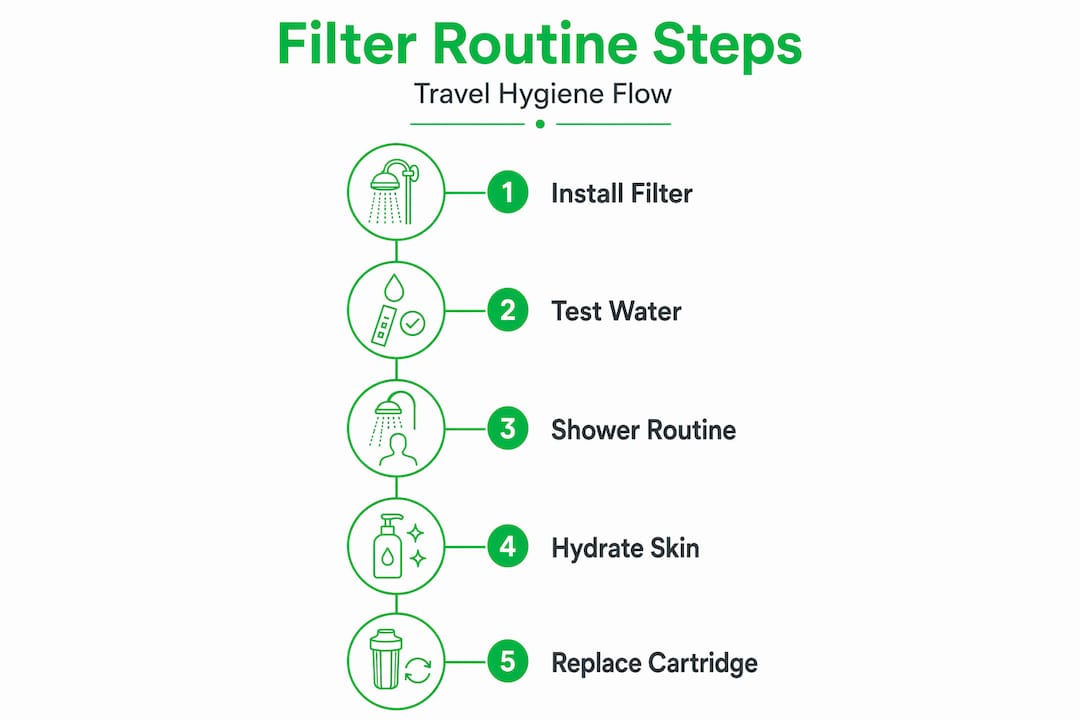
Your filter works best as part of a full travel hygiene routine, not as a standalone fix. Pair it with a hydrating cleanser, a leave-in conditioner, and a basic moisturizer. Best practices for sensitive skin while traveling apply directly here: gentle products plus filtered water add up to noticeably better results than either approach alone.
The sign that your routine is working is simple. Your skin stops feeling worse after every shower in a new location. That baseline shift is the real win.
My honest take on the travel shower filter routine
I avoided portable shower filters for years because the marketing around them felt exaggerated. Every product promised transformative results, and none of them told you what the filter media actually was. That skepticism cost me a few trips’ worth of dry, unhappy skin before I started paying attention.
What I’ve learned is that the routine works when you treat it like any other piece of travel gear. You pick the right tool for the conditions, you maintain it properly, and you don’t expect it to do things it was never designed to do. A KDF-55 inline filter in a city with chloramine-treated water is a genuinely different experience than nothing. A poorly chosen activated carbon filter in the same water is money wasted.
The simplicity is what surprised me most. I carry a single compact filter and a short strip of PTFE tape. Installation takes under five minutes at any hotel with a standard shower arm, which covers 95% of the places I stay. On camping trips, it threads onto a portable shower bag just as easily.
The honest limitation I’d share is this: if your destination has severe hard water, the filter helps with the chemical irritants but not the mineral buildup. Your hair may still feel different there. Combine the filter with a chelating shampoo once a week and you’ll cover most of what hard water does.
The peace of mind is real. I no longer arrive at a new destination wondering whether the local water is going to wreck my skin for the next week. That predictability is worth more than the cost of the filter.
— Sara
Vitacleanhq’s portable filter options for travelers
Vitacleanhq makes it straightforward to build a travel shower filter routine without overcomplicating your packing list. Their Vitamin C shower filter shots are designed specifically for portability, neutralizing chlorine at the point of contact while adding a skin-supportive vitamin C dose to each shower. They’re compact, easy to swap, and effective across a wide range of water conditions.
For travelers who want a longer-lasting option, Vitacleanhq’s ceramic filter collection offers consistent impurity removal without the bulk. Their filter refill subscription handles the replacement schedule automatically so you’re never showering through an exhausted cartridge. Browse the full range of shower accessories to find compatible travel-friendly additions to your setup.
FAQ
What is a travel shower filter routine?
A travel shower filter routine is the practice of installing and using a portable shower filter at every accommodation to remove chlorine, chloramines, and heavy metals from shower water, protecting skin and hair from irritation and dryness while traveling.
How long does a portable shower filter last on the road?
Most travel shower filters need replacement every 3 to 6 months, or after approximately 8,000 to 10,000 gallons, whichever comes first. Heavy daily use on long trips can shorten that interval.
Does a travel shower filter work for camping showers?
Yes. Inline portable shower filters use universal G1/2 thread connections and attach directly to portable shower bag outlets or campsite shower arms, making them a practical shower filter for camping setups.
Will a shower filter fix dry skin and hair from hard water?
A shower filter reduces chemical irritants like chlorine and heavy metals, which can noticeably improve dryness. However, filters don’t soften water or remove hardness minerals. Pair filtration with a chelating shampoo and moisturizer for hard water destinations.
How do I know if my travel shower filter is still working?
The clearest sign is the return of a chlorine smell in the water. You may also notice reduced water pressure or the return of skin tightness after showers. Practical indicators like odor and pressure are the most reliable on-the-road checks.