
What Is Micro Filtration and How Does It Work?
TL;DR:
- Microfiltration is a low-pressure, energy-efficient membrane process that removes bacteria and suspended particles but not viruses or dissolved chemicals. It is ideal for pre-treating water, especially for residential filtration and shower systems, when paired with additional treatments like activated carbon or UV. Proper maintenance and understanding your water quality ensure optimal performance and safe, clean water.
Microfiltration is a pressure-driven membrane filtration process that physically separates particles and microorganisms from water by size, targeting particles between 0.1 and 10 micrometers with a bacterial removal efficiency of 99.9%. The industry standard term is microfiltration (MF), and it sits at the coarsest end of the membrane filtration spectrum alongside ultrafiltration, nanofiltration, and reverse osmosis. Unlike chemical treatments, MF uses no additives and operates at low pressures, making it one of the most energy-efficient options available for water purification. Technologies like Pentair X-Flow hollow-fiber membranes and systems from manufacturers like Koch Separation Solutions have made MF a standard tool in both municipal water treatment and residential wellness products. Understanding what micro filtration does and where its limits lie is the first step toward choosing the right water quality solution for your home or health routine.
What is micro filtration and how does it work?
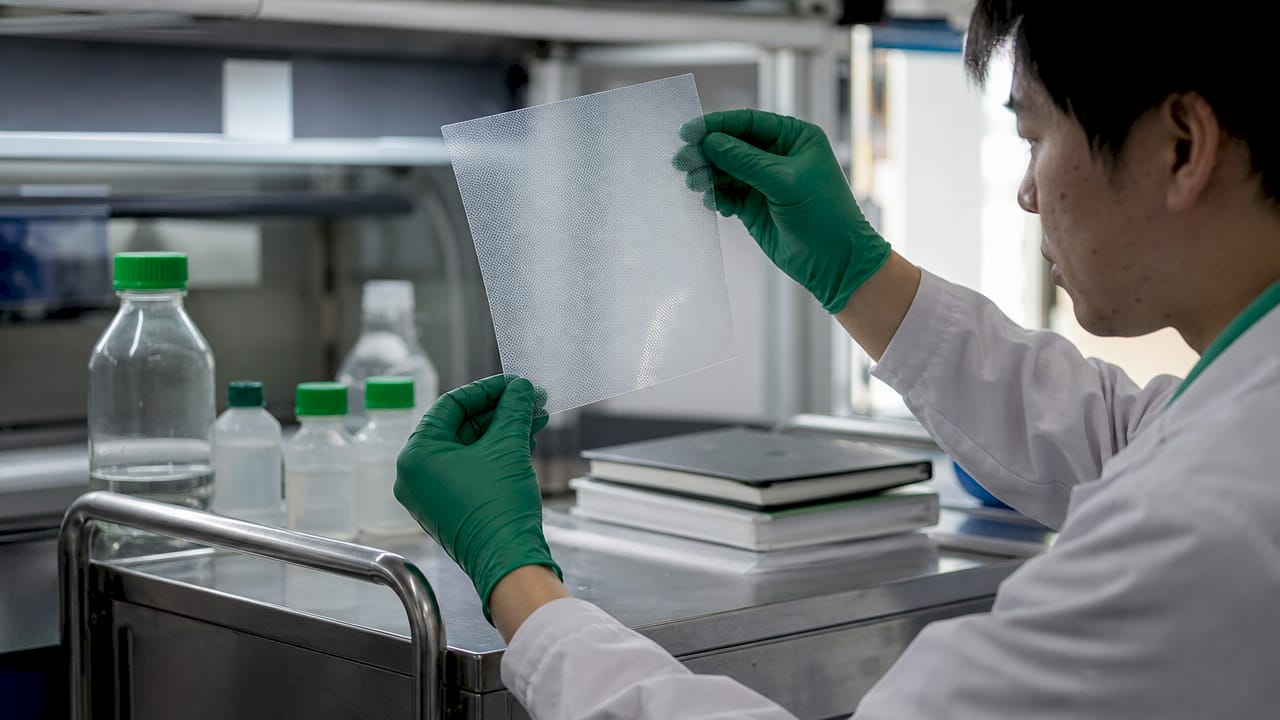
Microfiltration works by forcing water through a microporous membrane under low pressure, physically blocking particles larger than the membrane’s pore size while allowing water and dissolved molecules to pass through freely.
The mechanics of membrane filtration
The driving force is transmembrane pressure, typically between 0.1 and 2 bar. That is far lower than the pressures required for nanofiltration or reverse osmosis, which translates directly into lower energy costs and simpler system designs. Water that passes through the membrane is called the permeate. The concentrated stream of retained particles is called the retentate. In most residential and municipal systems, the retentate is periodically flushed away to prevent buildup.
Surface filters vs. depth filters
Microfiltration membranes fall into two structural categories. Surface filters, also called screen filters, trap particles at the membrane’s outer face based on a precise pore size cutoff. Depth filters capture particles throughout a graded matrix of fibers or granules, catching a range of particle sizes at different layers. Surface filters deliver more consistent pore size control and are easier to backwash. Depth filters handle higher particle loads before clogging, making them common in pre-filtration stages.
The most common membrane materials include polyvinylidene fluoride (PVDF), polyethersulfone (PES), and cellulose acetate. Each material offers different chemical resistance and cleaning tolerance, which matters when you are selecting a filter for long-term residential use.
- Pore size range: 0.1 to 10 micrometers, targeting bacteria, protozoa, and suspended solids
- Operating pressure: 0.1 to 2 bar, far lower than reverse osmosis systems
- Membrane types: hollow fiber, flat sheet, and tubular configurations
- Flow direction: dead-end filtration (all water passes through) or cross-flow filtration (a portion sweeps the membrane surface to reduce fouling)
- Permeate output: clean water free of particles above the pore size cutoff
Pro Tip: Residential filters optimized at 0.2 µm pore size deliver the best balance between bacterial reduction and adequate flow rate. Filters at 0.1 µm remove more bacteria but noticeably reduce water pressure in home systems.
What does microfiltration remove, and what does it miss?
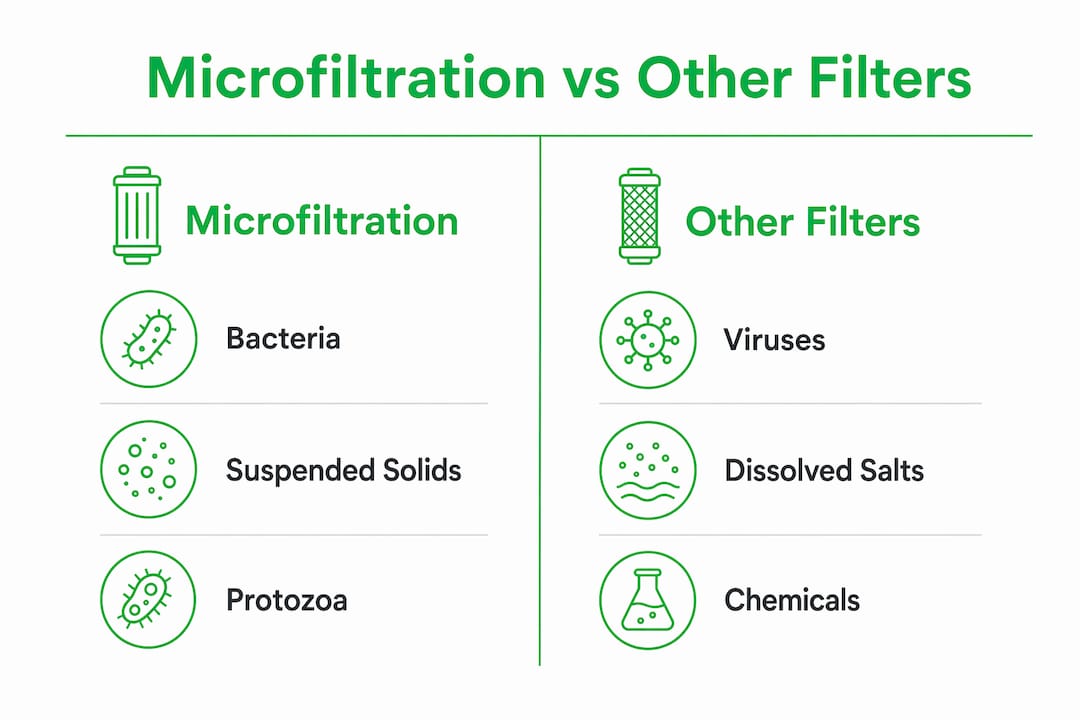
Microfiltration removes suspended solids, bacteria, protozoa, algae, and turbidity. It does not remove dissolved salts, minerals, or viruses, and that distinction matters enormously when you are evaluating it for drinking water or shower use.
What MF effectively removes
Microfiltration is effective against Cryptosporidium and Giardia, two protozoan parasites responsible for widespread waterborne illness outbreaks in the United States. It clears turbidity caused by sediment, clay, and organic matter. It removes bacteria including E. coli and Legionella at a 99.9% efficiency rate. For shower water, this means visibly cleaner, softer-feeling water with fewer microbial contaminants reaching your skin and scalp.
Where microfiltration falls short
Viruses measure between 0.01 and 0.1 µm, placing them well below the pore size cutoff of even the finest MF membranes. They pass through freely. Dissolved substances like chlorine, chloramines, heavy metals, nitrates, and fluoride are also unaffected by MF alone. This is not a flaw in the technology. It is a design boundary. Microfiltration is built to handle particle-sized contaminants, not molecular or ionic ones.
The table below shows how microfiltration compares to adjacent filtration technologies by contaminant type:
| Filtration type | Pore size range | Removes bacteria | Removes viruses | Removes dissolved salts |
|---|---|---|---|---|
| Microfiltration (MF) | 0.1–10 µm | Yes (99.9%) | No | No |
| Ultrafiltration (UF) | 0.01–0.1 µm | Yes | Partial | No |
| Nanofiltration (NF) | 0.001–0.01 µm | Yes | Yes | Partial |
| Reverse osmosis (RO) | Less than 0.001 µm | Yes | Yes | Yes |
The most common misconception about MF is that it provides complete water purification. It does not. Pairing MF with activated carbon or UV treatment covers the chemical and viral gaps that MF leaves open, which is why multi-stage filtration systems consistently outperform single-stage solutions.
Applications of micro filtration in water treatment, health, and wellness
Microfiltration technology serves a wide range of applications, from large-scale municipal water treatment plants to the shower head in your bathroom. Its chemical-free operation and low energy consumption make it adaptable across contexts where adding chemicals is undesirable or impractical.
Drinking water and municipal treatment
Municipal water utilities use MF as a pre-treatment stage before disinfection, removing turbidity and microbial load before chlorine or UV treatment finishes the job. This reduces the amount of disinfectant required, which in turn lowers the formation of disinfection byproducts like trihalomethanes. Cities including Los Angeles and Singapore have integrated MF into large-scale water reclamation facilities.
Shower water filtration and skin health
Shower water filtered through MF membranes delivers measurably cleaner water to your skin and hair. Suspended particles, sediment, and bacteria that contribute to scalp irritation, clogged pores, and dull hair are physically blocked before they reach you. The benefits for skin and hair from filtered shower water include reduced dryness, fewer breakouts, and improved scalp health over time. For anyone dealing with sensitive skin or hard water issues, MF-based shower filters represent a direct, chemical-free intervention.
Industrial and environmental uses
- Wastewater treatment: MF removes suspended solids and bacteria before discharge or reuse
- Food and beverage processing: Used in dairy, brewing, and juice clarification to remove microbes without heat
- Biotechnology: MF precedes ultrafiltration in bioprocessing trains for cell harvest and clarification
- Pre-filtration: Protects downstream RO or NF membranes from fouling by removing large particles first
Pro Tip: Fouling is the primary cause of premature membrane failure in residential MF systems. Running a pre-screen filter to catch large sediment before it reaches the MF membrane, and following a regular backwash or cartridge replacement schedule, can extend filter life from weeks to over a year.
Micro filtration vs reverse osmosis and other membrane technologies
Choosing between microfiltration, ultrafiltration, nanofiltration, and reverse osmosis depends on what you need to remove from your water and how much pressure and cost you are willing to accept.
How the four technologies differ
Each membrane filtration technology is defined by its pore size, and pore size determines what gets removed. Microfiltration handles the largest particles. Reverse osmosis handles the smallest, including dissolved ions. The gap between them is not trivial. RO membranes operate at pressures between 5 and 15 bar, compared to MF’s 0.1 to 2 bar. That pressure difference translates into significantly higher energy costs and more complex system maintenance for RO.
Ultrafiltration (UF) sits one step below MF, with pore sizes between 0.01 and 0.1 µm. UF removes viruses and large organic molecules that MF misses, while still preserving dissolved minerals. Nanofiltration (NF) removes multivalent ions like calcium and magnesium, which is why it softens water. Reverse osmosis removes virtually everything, including beneficial minerals, which is why RO-treated water often tastes flat and requires remineralization.
| Technology | Pressure required | Energy use | Removes minerals | Best for |
|---|---|---|---|---|
| Microfiltration | 0.1–2 bar | Very low | No | Bacteria, turbidity, sediment |
| Ultrafiltration | 1–5 bar | Low | No | Viruses, colloids, bacteria |
| Nanofiltration | 3–10 bar | Medium | Partial | Hardness, color, organics |
| Reverse osmosis | 5–15 bar | High | Yes | Full dissolved solids removal |
When microfiltration is the right choice
MF is the right choice when your primary concern is bacterial contamination, turbidity, or suspended solids, and you want to preserve the natural mineral content of your water. It is also the right choice when energy efficiency and low maintenance matter, as in residential shower filtration. If your water source contains significant viral contamination or high levels of dissolved chemicals, MF alone is insufficient. Pairing it with activated carbon for chlorine removal and UV for viral disinfection covers those gaps without the cost and complexity of a full RO system. Understanding how water filtration works at each stage helps you build a system that matches your actual water quality needs rather than over-engineering the solution.
Key takeaways
Microfiltration is the most energy-efficient membrane technology for removing bacteria, turbidity, and suspended solids while preserving dissolved minerals, making it ideal for residential water and shower filtration when paired with carbon or UV treatment for chemical and viral gaps.
| Point | Details |
|---|---|
| Core removal capability | MF removes 99.9% of bacteria and all suspended particles above 0.1 µm. |
| Known limitations | Viruses and dissolved chemicals pass through MF membranes and require additional treatment stages. |
| Energy and cost advantage | MF operates at 0.1 to 2 bar, making it far less energy-intensive than nanofiltration or reverse osmosis. |
| Maintenance priority | Fouling is the top cause of membrane failure; pre-screening and regular cartridge replacement extend filter life significantly. |
| Best application fit | MF suits shower filtration, drinking water pre-treatment, and industrial pre-filtration where mineral preservation matters. |
Why most people are using the wrong filter for the wrong reason
I have spent years reading water quality reports, testing filtration products, and talking to people who are genuinely confused about what their filter actually does. The most common mistake I see is people buying reverse osmosis systems for shower use because they assume “more filtration equals better.” RO strips water of everything, including the minerals your skin and hair benefit from, and it requires far more pressure and maintenance than any shower system can reasonably sustain.
Microfiltration hits the practical sweet spot for most home wellness applications. It removes what actually irritates your skin and scalp, including bacteria, sediment, and particulate matter, without altering the water chemistry in ways that leave it feeling harsh or stripped. The 2026 shower filtration trends point clearly toward MF-based systems combined with vitamin C neutralization for chlorine, and that combination makes more sense than any single-stage solution.
What I find most underappreciated is the fouling issue. People install a filter, forget about it for 18 months, and then wonder why their skin is still reacting. A neglected MF membrane becomes a breeding ground for the very bacteria it was designed to block. Replacing cartridges on schedule is not optional maintenance. It is the entire point of the system working correctly.
My honest recommendation: understand what your specific water supply contains before choosing a filter. If your municipal report shows high bacterial counts and turbidity, MF is your primary tool. If chlorine and chloramines are the main concern, pair MF with a vitamin C or activated carbon stage. Knowing the limits of any technology is what makes you a smarter consumer, not a more anxious one.
— Sara
Upgrade your shower with Vitacleanhq’s filtration technology

Vitacleanhq builds shower filters that combine microfiltration technology with vitamin C neutralization to address both particulate contaminants and dissolved chlorine in a single, easy-to-install system. The result is water that is cleaner, gentler, and noticeably better for your skin and hair from the first shower. The Vitamin C filter shots are replaceable cartridges designed for zero-tool swaps, and a subscription option keeps your filter on schedule without the guesswork. If you want a filtration system that works with your water chemistry rather than stripping it entirely, Vitacleanhq’s range is built precisely for that purpose.
FAQ
What is microfiltration in simple terms?
Microfiltration is a physical water filtration method that uses a microporous membrane to block particles, bacteria, and suspended solids sized between 0.1 and 10 micrometers while allowing water and dissolved minerals to pass through freely.
Does microfiltration remove chlorine from shower water?
No. Microfiltration does not remove dissolved chemicals like chlorine or chloramines. Chlorine molecules are far smaller than MF pore sizes, so a separate stage such as vitamin C neutralization or activated carbon is needed to address chlorine in shower water.
How does micro filtration differ from reverse osmosis?
Microfiltration operates at 0.1 to 2 bar and removes bacteria and suspended solids while preserving dissolved minerals. Reverse osmosis operates at 5 to 15 bar and removes virtually all dissolved substances, including beneficial minerals, at significantly higher energy cost.
How often should a microfiltration filter be replaced?
Replacement frequency depends on water quality and usage, but fouling and particle buildup are the primary causes of reduced performance. Most residential MF cartridges perform optimally when replaced every one to three months under regular household use.
Is microfiltration safe for drinking water?
Microfiltration removes 99.9% of bacteria and protozoa, making it highly effective for reducing microbial risk in drinking water. For complete safety against viruses and chemical contaminants, MF should be combined with UV disinfection or activated carbon filtration as part of a multi-stage system.