
Chlorine Residual in Tap Water: What You Need to Know
TL;DR:
- Chlorine residual is the leftover disinfectant in tap water that prevents microbial recontamination during distribution. Testing and using vitamin C filters at the shower can reduce chlorine’s impact on skin and hair health. Most tap water levels are safe, but understanding your water type helps address personal comfort concerns effectively.
Chlorine residual in tap water is defined as the trace amount of chlorine that remains after water treatment, acting as a continuous disinfectant to keep water safe from microbes as it travels through distribution pipes to your tap. The U.S. Environmental Protection Agency sets a Maximum Residual Disinfectant Level (MRDL) of 4.0 mg/L for chlorine, while most utilities target a working range of 0.5–2.5 mg/L at consumer taps. That balance protects public health, but it also raises real questions about taste, odor, and what chlorine does to your skin and hair every time you shower.
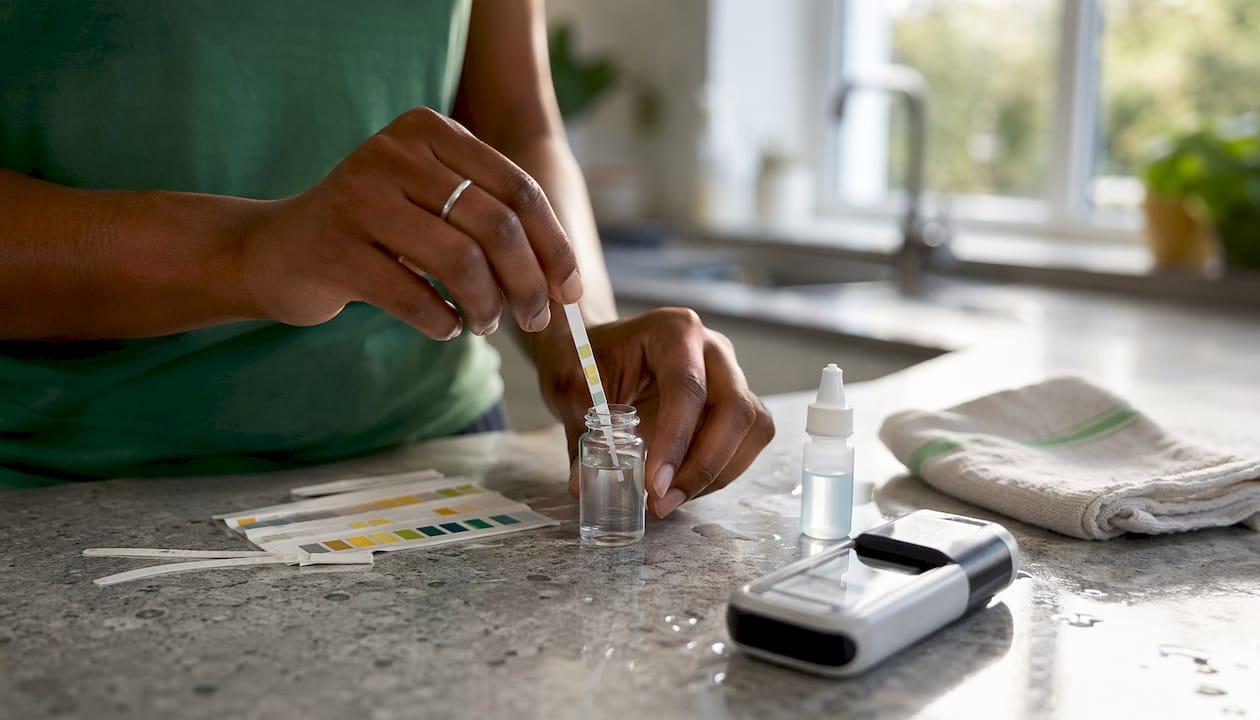
What is chlorine residual in tap water and why does it matter?
Chlorine residual is the amount of chlorine left over after the water’s initial chlorine demand is met. Chlorine demand refers to the chlorine consumed by reacting with organic matter, bacteria, and other substances in the water. Whatever chlorine survives that reaction becomes the residual, and it keeps working as a disinfectant all the way to your faucet.
This ongoing protection is the whole point. A water treatment plant can purify water perfectly, but that water still travels through miles of pipes before reaching your home. Without a residual disinfectant, bacteria and other pathogens could reenter the water supply through pipe cracks, pressure drops, or cross-connections. The residual chlorine acts as a safety net against that recontamination.
“Chlorine residual is essential as a safety net beyond point-of-treatment, uniquely preventing disease-causing microorganisms during water transport through distribution systems.”
Regulators draw a clear line between two types of limits. The MRDL governs disinfectants like chlorine that are intentionally added to water. The Maximum Contaminant Level (MCL) governs harmful contaminants. Consumers often confuse these two categories, which leads to unnecessary alarm. Chlorine is regulated as a disinfectant additive under the MRDL framework, not as a contaminant under the MCL framework. That distinction matters for understanding how safe your water actually is.
Key factors that define chlorine residual behavior in distribution systems:
- Chlorine dose equals chlorine demand plus chlorine residual. Utilities calculate this precisely for every treatment cycle.
- Minimum residual of 0.2 mg/L is required at all points in the distribution system to maintain microbial safety.
- Distance from the treatment plant reduces residual levels, so homes at the far end of a distribution network often receive lower chlorine concentrations.
- Temperature and flow rate both accelerate or slow chlorine decay, requiring utilities to adjust dosing seasonally.
How to test chlorine in water at home
Three testing methods cover most consumer needs: test strips, DPD reagent kits, and digital colorimeters. Test strips are the fastest and cheapest option. You dip a strip into a water sample, wait a few seconds, and compare the color change to a reference chart. DPD (N,N-diethyl-p-phenylenediamine) reagent kits are more accurate. You add a reagent tablet to a water sample and measure the resulting color with a comparator. Digital colorimeters give the most precise readings and are used by water professionals, though they cost more than the other two methods.
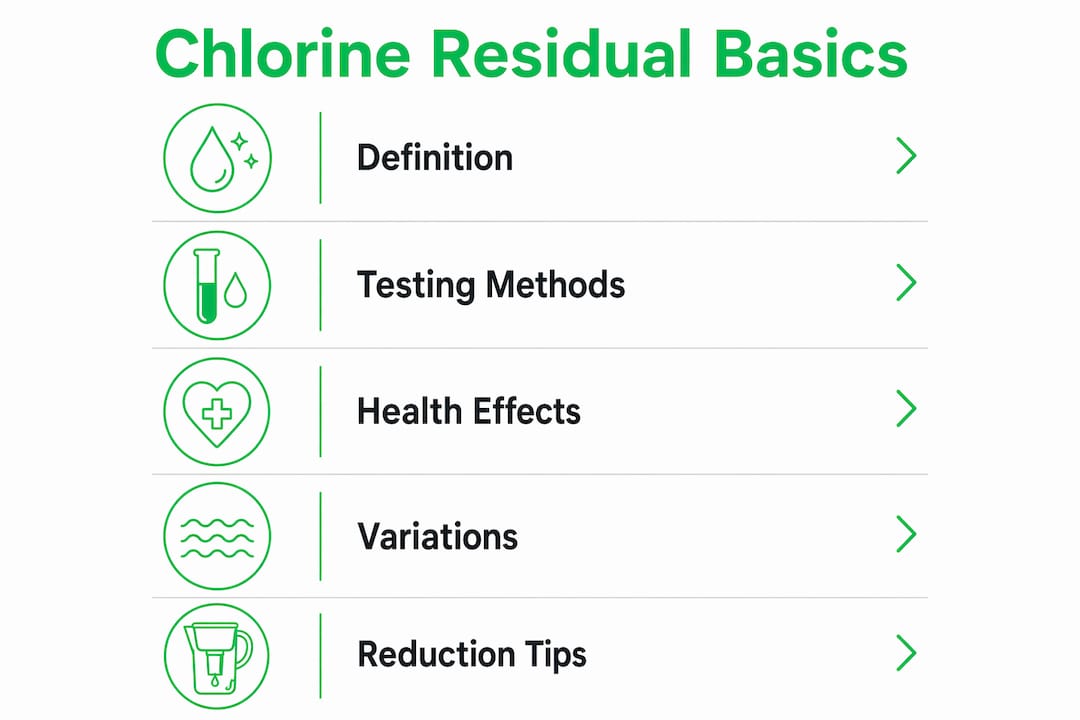
Sample preparation makes or breaks your results. Flushing your tap for 30–60 seconds before collecting a sample is non-negotiable. Water sitting in your home’s plumbing has already lost much of its chlorine residual through contact with pipe surfaces and air. If you skip the flush, you will measure stale plumbing water, not the actual distribution system water.
Pro Tip: Test your water at the same time of day each session. Chlorine levels fluctuate with utility dosing schedules, so morning readings may differ from evening readings. Consistency gives you a more accurate picture over time.
Follow these steps for a reliable home test:
- Run cold water from the tap for 30–60 seconds to flush stale plumbing water.
- Fill a clean, dry container with fresh tap water. Avoid touching the inside of the container.
- Insert your test strip or add your DPD reagent immediately. Chlorine dissipates quickly once exposed to air.
- Read results within the time window specified by your kit. Most strips require a reading within 15–30 seconds.
- Compare your result to the EPA MRDL of 4.0 mg/L. Results between 0.2 and 4.0 mg/L are within the regulated safe range.
Experts recommend testing every six months under normal conditions, or immediately if you notice a sudden change in your water’s taste, smell, or appearance.
What are the health and skin effects of chlorine residual?
Chlorine levels in drinking water below 4.0 mg/L are considered safe by public health standards. The Minnesota Department of Health notes that municipal chlorine levels are far lower than those found in swimming pools and are considered very safe by public health experts. That context matters, because many people assume tap water chlorine is as harsh as pool water. It is not.
That said, safety and comfort are two different things. Chlorine in shower water strips natural oils from skin and hair. People with sensitive skin often notice dryness, tightness, or mild irritation after showering in chlorinated water. Scalp irritation and increased hair brittleness are also commonly reported. These are comfort issues, not toxicity issues, but they are real and worth addressing.
The more significant health concern involves disinfection byproducts (DBPs). When chlorine reacts with naturally occurring organic matter in water, it forms compounds called trihalomethanes (TTHMs) and haloacetic acids (HAA5). The EPA regulates these: the TTHM limit is 80 parts per billion (ppb), and the HAA5 limit is 60 ppb. Long-term exposure to DBPs above these limits is associated with increased health risks, which is why utilities monitor them closely.
Common effects of chlorine residual on skin and hair include:
- Skin dryness and tightness, particularly after showering, due to chlorine disrupting the skin’s natural moisture barrier
- Scalp irritation, including flaking or itching, especially in people with existing scalp conditions
- Hair damage, including increased brittleness and color fading in chemically treated hair
- Eye and respiratory irritation in people with chemical sensitivities, particularly during hot showers when chlorine vaporizes more readily
For a deeper look at chlorine’s effects on skin, the interaction between chlorinated water and your skin barrier is more nuanced than most people realize.
How do chlorine levels vary at your tap?
Chlorine residual is not a fixed number. It changes constantly based on where you live relative to the treatment plant, the season, and how your utility manages its distribution network. Chlorine dissipates over distance and time as it reacts with pipe materials and organic matter in the water. Homes at the far end of a distribution system consistently receive lower residual levels than homes close to the treatment plant.
Temperature plays a major role. Warm water accelerates chlorine decay, so utilities increase dosing during summer months to maintain safe residuals throughout the network. That means your tap water may actually contain higher chlorine concentrations in summer, even though the residual reaching distant homes may still be lower than in winter.
The type of disinfectant your utility uses also affects what you measure at home. About 20% of U.S. water systems use chloramines (a combination of chlorine and ammonia) instead of free chlorine. Chloramines persist longer in distribution pipes and produce fewer DBPs, but they are significantly harder to remove at home. Standard carbon filters remove free chlorine effectively but require catalytic carbon to address chloramines.
| Factor | Effect on chlorine residual |
|---|---|
| Distance from treatment plant | Residual decreases with greater pipe distance |
| Water temperature | Higher temperatures accelerate chlorine decay |
| Disinfectant type | Chloramines persist longer than free chlorine |
| Pipe material | Older iron or corroded pipes consume more chlorine |
| Seasonal dosing | Utilities increase chlorine in summer to compensate for faster decay |
What can you do to reduce chlorine exposure for healthier skin and hair?
Reducing chlorine exposure at the point of use is practical and does not require replacing your entire plumbing system. The most direct approach for shower water is a vitamin C shower filter, which neutralizes chlorine through a chemical reaction rather than simply filtering it out. Vitamin C (ascorbic acid) reacts with free chlorine and converts it into a harmless compound, making it one of the most effective neutralization methods available for shower use.
Pro Tip: If your utility uses chloramines instead of free chlorine, check that your filter is rated for chloramine removal. Standard carbon filters will not work. Look for catalytic carbon or vitamin C-based options specifically labeled for chloramine reduction.
Practical steps to reduce chlorine exposure at home:
- Install a shower filter rated for your disinfectant type. Vitamin C filters work for free chlorine. Catalytic carbon filters address both free chlorine and chloramines.
- Shorten hot showers. Hot water increases chlorine vaporization, raising inhalation exposure. Cooler or shorter showers reduce this effect.
- Moisturize immediately after showering to restore the skin’s moisture barrier before it fully dries out.
- Use a point-of-use carbon filter on your kitchen tap for drinking water. Standard activated carbon removes free chlorine effectively and improves taste.
- Follow a healthy shower routine that includes gentle, pH-balanced cleansers to minimize additional stripping of skin oils.
For people with chlorine sensitivity, the combination of a shower filter and a consistent post-shower skincare routine addresses most of the comfort issues associated with chlorinated water. You do not need to eliminate chlorine from your entire water supply. Targeting the shower, where skin and hair exposure is highest, delivers the most noticeable benefit.
Key Takeaways
Chlorine residual in tap water is a regulated safety measure, not a contaminant, and managing its effects on skin and hair requires testing, understanding your disinfectant type, and using the right filtration at the point of use.
| Point | Details |
|---|---|
| Regulatory limit | The EPA sets the MRDL for chlorine at 4.0 mg/L; most utilities target 0.5–2.5 mg/L. |
| Residual purpose | Chlorine residual prevents microbial recontamination as water travels through distribution pipes. |
| Testing frequency | Test tap water every six months, or immediately after any change in taste, smell, or appearance. |
| Skin and hair effects | Chlorine can cause dryness, scalp irritation, and hair brittleness at typical tap water levels. |
| Best mitigation | Vitamin C shower filters neutralize free chlorine at the point of use without compromising water safety. |
Why I think most people are asking the wrong question about chlorine
Most people who worry about chlorine in their tap water ask, “Is it safe?” The answer is almost always yes, and that answer ends the conversation before it should. The better question is, “What is chlorine doing to my skin and hair every day, and what can I reasonably do about it?”
I have spent years looking at how water quality intersects with personal care, and the pattern is consistent. People with dry skin, brittle hair, or scalp irritation often cycle through products looking for a solution, never considering that their shower water is the variable they have not changed. Chlorine at 1.0 mg/L is not going to harm your health. But it will strip your skin’s lipid barrier and your hair’s cuticle layer, shower after shower, in ways that accumulate over months.
The other thing most articles miss is the chloramine issue. If your utility switched to chloramines, which many have over the past two decades, a standard carbon shower filter is doing almost nothing for you. You need to know what is actually in your water before you buy a filter. A simple test kit costs a few dollars and takes five minutes. That information changes everything about which solution actually works for your situation.
The science on chlorine safety is settled. The science on daily chlorine exposure and skin health is more nuanced, and that nuance is where most consumers deserve better information. Test your water, know your disinfectant type, and choose a filter that matches what you actually have. That is the practical path forward.
— Sara
How Vitacleanhq addresses chlorine residual in your shower
Knowing your tap water contains chlorine residual is one thing. Doing something about it at the shower, where your skin and hair absorb the most exposure, is another.
Vitacleanhq’s vitamin C shower filter shots neutralize free chlorine through direct chemical reaction, converting it into a harmless compound before the water reaches your skin. The replaceable shots fit directly into Vitacleanhq’s shower head systems and require no tools to swap out. For people who want a consistent, low-effort solution, the filter refill plan keeps your filtration current without having to remember to reorder. If you are dealing with dry skin, scalp irritation, or dull hair and have not yet looked at your shower water, this is the most direct place to start.
FAQ
What is chlorine residual in tap water?
Chlorine residual is the amount of chlorine remaining in tap water after the initial disinfection process, maintained to prevent microbial contamination as water travels through distribution pipes. The EPA sets the MRDL at 4.0 mg/L, with most utilities targeting 0.5–2.5 mg/L at consumer taps.
Is chlorine in tap water safe to drink?
Yes. Chlorine at levels below the EPA’s MRDL of 4.0 mg/L is considered safe by public health standards, and municipal tap water chlorine levels are far lower than those found in swimming pools.
How do I test chlorine levels in my tap water?
Use test strips, a DPD reagent kit, or a digital colorimeter. Flush your tap for 30–60 seconds before collecting a sample, and test every six months or whenever you notice a change in taste or odor.
What are disinfection byproducts and should I be concerned?
Disinfection byproducts (DBPs) like TTHMs and HAA5 form when chlorine reacts with organic matter in water. The EPA limits TTHMs to 80 ppb and HAA5 to 60 ppb. Utilities monitor these levels closely, and water within regulated limits poses no acute health risk.
Do vitamin C shower filters actually remove chlorine?
Yes. Vitamin C (ascorbic acid) chemically neutralizes free chlorine on contact, making it one of the most effective methods for reducing chlorine in shower water and its effects on skin and hair.