
Chlorine Rash Relief Guide for Sensitive Skin
TL;DR:
- Rinsing with water and applying hydrocortisone cream can soothe chlorine rash but do not address the source of irritation. Neutralizing chlorine with Vitamin C filters before exposure prevents ongoing skin damage and speeds healing. Proper post-shower care and filtered water are essential to break the cycle of recurring rash.
A 48-hour at-home protocol — rinse thoroughly, apply 1% hydrocortisone cream two to four times daily if needed, take an oral antihistamine for itch, and neutralize residual chlorine in your shower with a Vitamin C point-of-use filter — both soothes an active chlorine rash and stops it from coming back.
Act now (next 60 minutes):
- Rinse the affected skin with cool, clean water for several minutes
- Wash gently with a fragrance-free, non-stripping cleanser
- Pat dry and apply 1% hydrocortisone cream to irritated areas (skip the face)
- Take an oral antihistamine (cetirizine for daytime, diphenhydramine at night) if itching is significant
- Remove and rinse any swimwear or clothing that contacted chlorinated water
Next 48 hours:
- Repeat hydrocortisone up to four times daily; moisturize with a ceramide-rich emollient within minutes of each rinse
- Avoid hot showers, scrubs, and fragranced products
- Switch to filtered shower water, or at minimum pre-saturate skin with clean water before any pool exposure
- Monitor for red flags: spreading redness, pus, fever, or swelling
Table of Contents
- What are the best first-aid steps for chlorine rash relief?
- Why does shower chlorine keep your rash from healing?
- How do Vitamin C shower filters compare to other filter types for preventing chlorine rash?
- How do you choose and install a shower filter that fits your living situation?
- What’s the right post-shower skincare routine after chlorine exposure?
- When does a chlorine rash need a doctor?
- Key Takeaways
- Why the shower filter step is the one most people skip
- Vitacleanhq Vitamin C shower filters: the practical prevention step
- Useful sources and further reading
What are the best first-aid steps for chlorine rash relief?
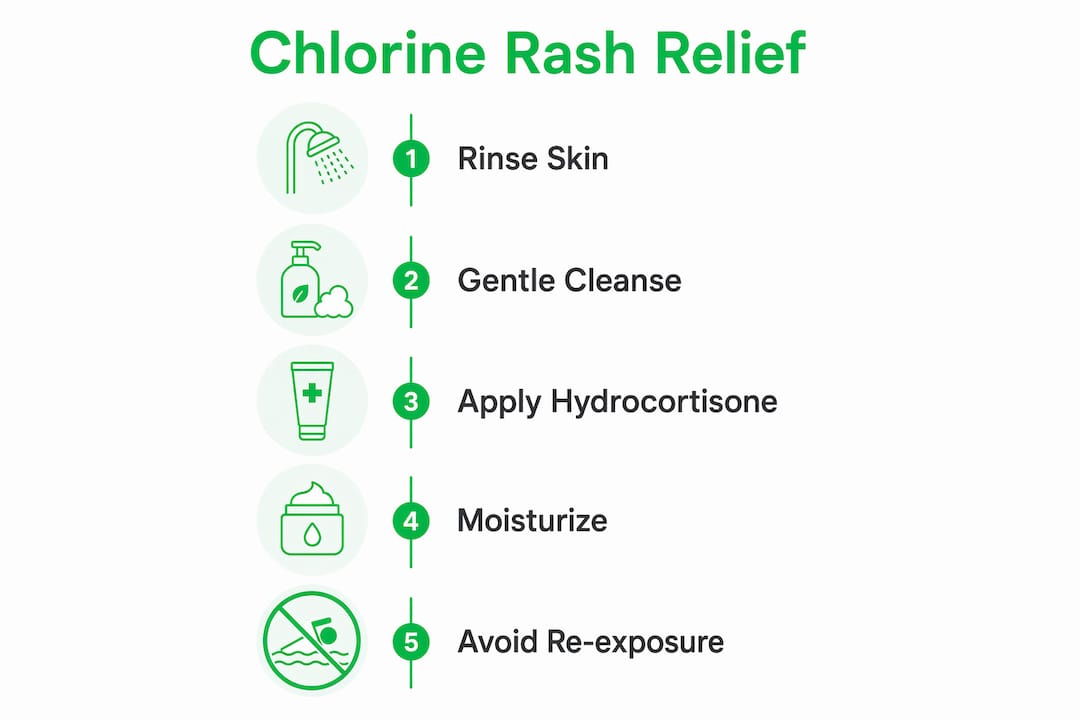
Rinsing is step one, but water alone often isn’t enough. Chlorine binds to skin proteins and lipids, so a plain water rinse leaves residual chlorine continuing to dry and inflame the skin. Use a gentle, sulfate-free cleanser to actually lift bound chlorine off the surface.
The 48-hour protocol, in order:
- Rinse immediately with cool water for at least five minutes to dilute surface chlorine.
- Cleanse gently with a fragrance-free, non-drying body wash. Avoid anything with alcohol, strong acids, or exfoliating beads.
- Pat dry with a soft towel. No rubbing — the skin barrier is already compromised.
- Apply 1% hydrocortisone cream to red, inflamed areas two to four times daily. For severe hives or itch, a topical antihistamine cream containing diphenhydramine can be added up to four times daily. Skip hydrocortisone on the face; it can thin facial skin with repeated use.
- Take an oral antihistamine if topical options aren’t controlling the itch. Non-drowsy cetirizine (Zyrtec) works well during the day; diphenhydramine (Benadryl) can help at night when itching disrupts sleep.
- Apply a fragrance-free emollient within two to three minutes of rinsing to lock in moisture before the skin dries out completely.
- Cool compresses (a clean cloth soaked in cool water, applied for 10–15 minutes) reduce acute inflammation between treatments.
Avoid harsh exfoliation on a chlorine rash. Scrubbing compromises the skin barrier further, increases inflammation, and raises the risk of secondary infection. Gentle hydration and avoiding re-exposure are the two non-negotiables until the skin heals.
For mild cases, symptoms typically improve within a day or two once chlorine exposure stops. Repetitive exposure without a break can push contact dermatitis into a weeks-long cycle.
Why does shower chlorine keep your rash from healing?
Most people associate chlorine rash with pools. The overlooked part: your daily shower may be doing the same damage, just more slowly.

Municipal tap water in the U.S. is routinely treated with chlorine or chloramine to kill pathogens. That’s appropriate for drinking water safety, but it means every shower exposes your already-irritated skin to the same chemical that caused the rash in the first place. Chlorine strips the skin’s natural lipid layer and disrupts the moisture barrier, making it harder for any topical treatment to do its job.
Pool exposure is typically intermittent. Shower exposure is daily, often twice daily, and at close range in a warm, steam-filled environment that opens pores and increases absorption. That’s a meaningful difference for someone trying to heal.
Neutralizing chlorine at the point of the shower is a critical, often overlooked recovery step. Topical treatments address symptoms; filtered water addresses the source.
Pro Tip: Pre-saturate your skin with clean, unchlorinated water for 30 seconds before entering a pool. Skin that’s already hydrated absorbs significantly less chlorinated water during the swim.
How do Vitamin C shower filters compare to other filter types for preventing chlorine rash?
Not all shower filters work the same way, and the differences matter for someone managing active skin irritation.
How Vitamin C neutralization works: Vitamin C (ascorbic acid) reacts with free chlorine in the water stream almost instantly, converting it to a harmless compound before it contacts your skin. It’s fast, effective, and doesn’t require high water pressure to work. Vitacleanhq’s Vitamin C filter shots are built around this chemistry, with documented workflows targeting 99% chlorine removal at point of use.
| Feature | Vitamin C neutralization | Activated carbon | Ceramic/microfiber capture |
|---|---|---|---|
| Chlorine removal speed | Immediate (chemical reaction) | Moderate (contact-time dependent) | Slow (physical filtration) |
| Effectiveness for free chlorine | High | Moderate to high | Low to moderate |
| Effect on water pressure | Minimal | Can reduce flow over time | Can reduce flow over time |
| Filter lifespan | Typically monthly replacement | 3–6 months | 3–6 months |
| Best for | Chlorine rash prevention, sensitive skin | Broader contaminant removal | Particulate and sediment capture |
| Renter-friendly | Yes (handheld, no tools) | Varies | Varies |
Practical trade-offs:
- Vitamin C filters are the fastest-acting option for free chlorine and the most practical for renters who can’t modify plumbing
- Carbon filters handle a broader range of contaminants (VOCs, some heavy metals) but are slower to act on chlorine in a short shower stream
- Ceramic and microfiber media excel at particulate capture and work well as a complement to Vitamin C, not a replacement
Pro Tip: If your primary concern is chlorine rash, Vitamin C neutralization is the right first choice. If you also want to address sediment or other contaminants, look for a multi-stage system that combines Vitamin C with ceramic or microfiber media.
How do you choose and install a shower filter that fits your living situation?
Buying criteria to check before you purchase:
- Chlorine-removal method: Vitamin C neutralization for speed and skin-focused results; carbon or ceramic as complementary stages
- Installation type: Handheld models attach to the existing hose connection with no tools; wall-mounted units require a wrench and a compatible arm
- Filter lifespan: Vitamin C shots typically need monthly replacement under normal use; carbon blocks last longer but vary by chlorine load
- Effect on water pressure: Check the product’s flow rate specs; a filter that cuts pressure significantly will frustrate daily use
- Maintenance convenience: Refill subscription plans remove the friction of remembering to reorder
- Renter suitability: Handheld units with standard fittings require zero permanent modification
Renter-friendly installation checklist:
- Confirm your existing shower hose has a standard ¾-inch fitting (most U.S. showers do)
- Unscrew the existing shower head by hand or with a cloth for grip
- Thread the filter unit on hand-tight, then a quarter-turn with a cloth to seal
- Insert the Vitamin C shot or filter cartridge per the product instructions
- Run water for 30 seconds to flush the new filter before use
Homeowners with wall-mounted setups have more options: a fixed wall-mount filter can be plumbed inline with the shower arm, and multi-stage systems (Vitamin C plus ceramic) are straightforward to install with basic tools. For swimmers who shower daily post-training, a handheld shower head with a built-in Vitamin C filter makes rinsing targeted areas fast and efficient.
Replacement cadence: A change in water flow or a faint chlorine smell after showering are the two clearest signals that the active medium is spent. For most households, monthly replacement of the Vitamin C shot keeps protection consistent.
What’s the right post-shower skincare routine after chlorine exposure?
Timing is everything. The two-minute window after you step out of the shower is when your skin is most receptive to locking in moisture.
The sequence:
- Pat skin dry with a soft towel. Leave it slightly damp.
- Apply any medicated cream (1% hydrocortisone) to affected areas first, while skin is still slightly moist.
- Follow immediately with a fragrance-free emollient. Look for ceramides, glycerin, and petrolatum or a plant oil occlusive to seal the barrier.
- Avoid layering fragranced products, alpha-hydroxy acids, or retinoids over irritated skin until fully healed.
Ceramides are worth seeking out specifically. They’re the lipids that make up a healthy skin barrier, and chlorine depletes them. An antioxidant body lotion with ceramides and antioxidant actives can support barrier repair beyond basic moisturization.
What to avoid while healing: hot baths, physical scrubs, fragranced detergents on clothing, and any product with alcohol as a primary ingredient. Drink enough water. Chronic dehydration makes barrier repair slower, and it’s an easy variable to control.
When does a chlorine rash need a doctor?
Most cases resolve at home. Mild chlorine rash typically clears within 48 hours once exposure stops and OTC treatment begins. Contact dermatitis from repetitive exposure can persist for two to four weeks without proper management.
See a clinician if you notice:
- Redness or rash spreading beyond the original area
- Pus, crusting, or warmth that suggests secondary infection
- Fever or swollen lymph nodes
- Severe facial swelling or any difficulty breathing (seek emergency care immediately)
- No improvement after 48–72 hours of consistent OTC treatment with no further chlorine exposure
When you go, bring: a photo of the rash at its worst, a list of products used (cleanser, moisturizer, OTC meds), your exposure history (pool, shower, cleaning products), and your response to hydrocortisone. That information helps a dermatologist or primary care provider distinguish contact dermatitis from a true chlorine allergy or an unrelated skin condition.
Prescription-strength corticosteroid creams or oral steroids are typically considered when inflammation persists despite OTC treatment, or when secondary infection requires an antibiotic.
Key Takeaways
Neutralizing chlorine in your shower water is as important as any topical treatment — stopping daily re-exposure is what breaks the cycle.
| Point | Details |
|---|---|
| Start relief within the hour | Rinse, cleanse gently, apply 1% hydrocortisone up to four times daily, and take an oral antihistamine for itch. |
| Moisturize immediately after rinsing | Apply a ceramide-rich emollient within two to three minutes of stepping out to seal the skin barrier. |
| Shower chlorine delays healing | Daily unfiltered shower water strips the lipid layer and prevents barrier repair, even when topical treatment is consistent. |
| Vitamin C filtration is the fastest fix | Vitamin C neutralization removes free chlorine almost instantly at the showerhead, with no plumbing changes needed for renters. |
| Vitacleanhq for ongoing prevention | Vitacleanhq’s Vitamin C filter shots and refill plan provide continuous chlorine neutralization with monthly maintenance. |
Why the shower filter step is the one most people skip
The dermatology guidance on chlorine rash is solid and consistent: rinse, apply hydrocortisone, moisturize, avoid re-exposure. What most guides leave out is that “avoid re-exposure” is nearly impossible if your shower water contains the same chlorine that caused the problem.
People spend real money on ceramide creams and prescription-strength treatments, then step into an unfiltered shower twice a day and wonder why the rash keeps coming back. The topical protocol is necessary. The filter is what makes it work. Those two things together are what actually break the cycle, and the clinical guidance implicitly supports that even when it doesn’t say “buy a filter” outright.
Vitacleanhq’s refill plan and Vitamin C shots make the maintenance side genuinely low-effort, which matters for people who are already managing an irritated skin condition and don’t need another complicated routine. If you’ve been treating a chlorine rash for more than a week with no improvement, the first question worth asking is whether your shower water is filtered.
Vitacleanhq Vitamin C shower filters: the practical prevention step
Chlorine rash treatment handles the symptom. Filtered shower water handles the cause. Vitacleanhq’s Vitamin C filter shots neutralize free chlorine in the shower stream before it contacts your skin, with no permanent plumbing changes required.
Renters can start with a handheld shower head that installs in minutes on any standard fitting. Homeowners can go wall-mounted for a fixed setup. Either way, the Vitamin C shot is the active medium that does the work, and the filter refill plan ships a fresh one on a schedule so you never have to remember to reorder. Pick your starter kit, set up the refill subscription, and your shower stops being part of the problem.
Useful sources and further reading
- Cleveland Clinic: Chlorine Rash — Why It Happens and How to Treat It — Clinical guidance on OTC dosing, hydrocortisone use, and barrier repair
- USA Today: How Long Does Chlorine Rash Last? — Consumer health explainer on recovery timeline and repetitive exposure
- Verywell Health: Chlorine Rash Symptoms and Treatment — Practical rinsing and moisturizing guidance
- Health.com: Chlorine Rash Causes, Symptoms, and Prevention Tips — Pre-swim barrier strategies and prevention overview
- WebMD: What to Know About a Chlorine Rash — Pool chemistry context and irritation risk factors
- Medical News Today: Chlorine Rash Appearance, Treatment, Prevention — Comprehensive overview including when to see a doctor
- Vitacleanhq: How to Reduce Chlorine in Water for Healthier Skin — Filter method comparison and installation guidance
- Vitacleanhq: 99% Chlorine Removal Workflow — Practical steps for high-removal point-of-use setups