
Why Hydration Is Vital for Skin: Your 2026 Guide
TL;DR:
- Skin hydration maintains water within skin cells and layers, which is essential for skin health and resilience. Drinking water supports circulation and metabolic processes but cannot directly fix skin barrier damage without topical aid. Using humectants like hyaluronic acid and barrier lipids such as ceramides forms an effective strategy to hydrate and protect the skin.
Skin hydration is defined as the process of maintaining optimal water content within skin cells and layers, and it is the single most critical factor in skin flexibility, resilience, and barrier protection. Water constitutes 70% of skin cell volume, enabling the metabolic and ion diffusion processes that keep your skin functioning. Without adequate hydration, the skin cannot renew itself, defend against irritants, or maintain the smooth texture most people associate with healthy skin. Understanding why hydration is vital for skin means understanding what happens at the cellular level when water levels drop.
Why hydration is vital for skin at the cellular level
Skin cells depend on water for nearly every biological process they perform. Intracellular water activates enzymes called kallikreins that regulate skin cell renewal and the shedding of dead cells, a process known as desquamation. When those enzymes slow down, dead cells accumulate on the surface, causing the dullness, flaking, and rough texture that no topical product can fully fix after the fact.
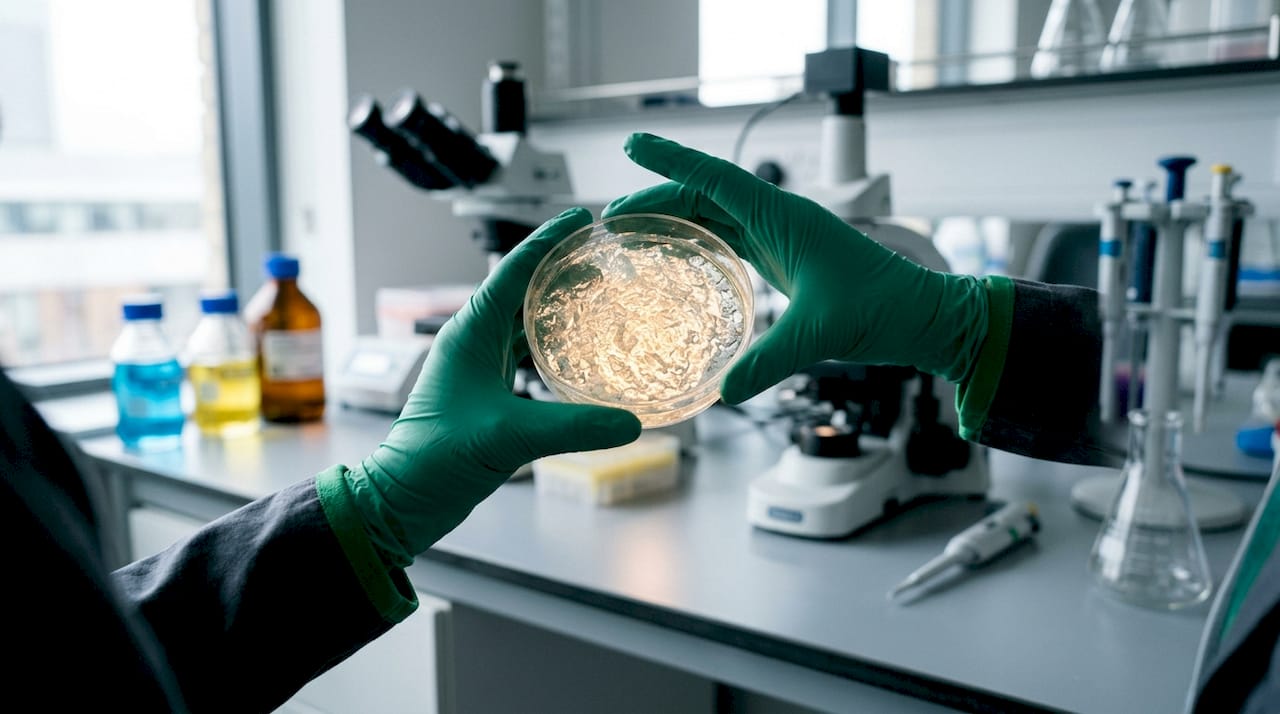
Water also carries biochemical signals between cells, supporting the skin’s immune response to pathogens and environmental irritants. Dehydrated skin impairs cellular metabolism, which triggers a cascade of visible problems including inflammation, tightness, and increased sensitivity. The skin essentially loses its ability to repair itself efficiently when it is starved of water at the cellular level.
The practical consequence is real and measurable. Well-hydrated skin shows firmness, smoothness, and improved barrier strength against irritants. That barrier strength is what prevents everyday aggressors like pollution, harsh cleansers, and temperature changes from causing chronic irritation.
Pro Tip: If your skin looks dull even after applying moisturizer, the problem is likely cellular dehydration, not surface dryness. Focus on humectant-based serums applied to damp skin before sealing with a moisturizer.
What is the difference between hydration and moisturization?
Hydration and moisturization are two distinct processes that most people treat as interchangeable. Hydration increases water content inside skin cells, while moisturization seals the skin surface to prevent water loss. Both are necessary. Relying on only one leaves a gap that shows up as persistent dryness, tightness, or breakouts.
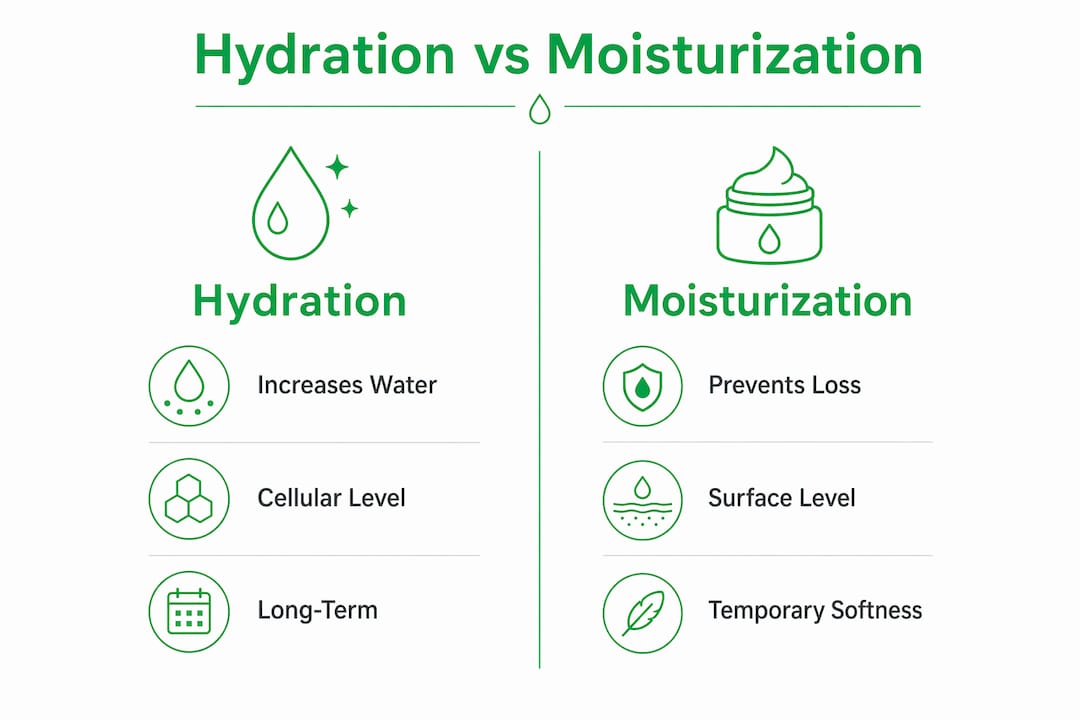
Think of it this way: hydration fills the cells like water filling a sponge, and moisturization wraps that sponge in plastic wrap so the water stays in. Skip the wrap, and the water evaporates. Skip the water, and the wrap just sits on an empty sponge.
The benefits of hydrating skin and moisturizing it together include:
- Improved elasticity. Hydrated cells plump up, reducing the appearance of fine lines caused by dehydration.
- Stronger barrier function. Combining humectants with barrier lipids reduces transepidermal water loss (TEWL), the rate at which water escapes through the skin’s outer layer.
- Reduced irritation. A well-sealed, well-hydrated barrier is less reactive to environmental triggers like wind, cold, and chlorinated water.
- Balanced oil production. Dehydrated skin often overproduces sebum as a compensatory response, leading to breakouts even in people who do not consider themselves oily.
- Faster cell turnover. Adequate intracellular water keeps the enzymatic processes that renew skin running at full speed.
Focusing on moisturization alone without addressing cellular water content produces temporary softness without lasting skin health and hydration improvements.
How does drinking water actually affect your skin?
Internal hydration supports skin health, but not in the direct way most people assume. Drinking water enhances blood circulation, delivering oxygen and nutrients to skin cells and aiding detoxification. That improved circulation benefits skin indirectly by keeping the cellular environment healthy enough to support repair and renewal.
The nuance matters here. Water intake improves skin hydration most significantly when a person’s baseline fluid consumption is already low. Someone moving from chronically underhydrated to adequately hydrated will see a visible difference in skin texture and tone. Someone who already drinks enough water and adds more will see diminishing returns.
The reason is physiological. The body distributes water to vital organs first, with skin receiving hydration last. That priority system means drinking excess water does not translate into extra skin hydration. The skin gets what is left after the heart, kidneys, and brain take their share.
The practical takeaway is straightforward. Consistent, adequate water intake is a foundation for skin health, not a cure. Water intake alone cannot overcome skin barrier defects. Topical strategies are not optional supplements to drinking water. They are a separate and equally necessary layer of the hydration system. You can check your skin hydration checklist to assess where your current routine has gaps.
What topical ingredients best support skin hydration?
The most effective topical hydration strategy uses two categories of ingredients working together: humectants that attract water and barrier lipids that lock it in.
Humectants: the water magnets
Hyaluronic acid binds up to 1,000 times its weight in water, making it the most studied humectant in skincare. Glycerin and urea also draw moisture from the environment and from deeper skin layers into the outer skin. Apply these to damp skin immediately after cleansing to maximize their water-attracting effect.
Barrier lipids: the sealants
Ceramides, fatty acids, and cholesterol form the skin’s natural lipid matrix. When this matrix is intact, transepidermal water loss stays low and the skin holds its moisture. Products containing ceramides rebuild this matrix when it has been damaged by harsh cleansers, over-exfoliation, or environmental stress.
Environmental and lifestyle supports
| Practice | Effect on skin moisture |
|---|---|
| Using a humidifier indoors | Reduces moisture evaporation from skin surface in dry air |
| Avoiding sulfate-based cleansers | Preserves the skin’s natural lipid barrier |
| Applying moisturizer within 60 seconds of showering | Seals in residual surface moisture before it evaporates |
| Filtering shower water | Reduces chlorine exposure that strips the skin’s protective oils |
Topical humectants and barrier lipids work together to maintain moisture balance more effectively than either ingredient category alone. The layering order matters: humectant serum first, then a lipid-rich moisturizer on top to seal.
Pro Tip: In dry climates or during winter, mix a few drops of facial oil into your moisturizer. The added lipids compensate for the accelerated moisture loss caused by low ambient humidity.
How to build a daily routine that prevents dryness and irritation
A consistent daily routine is the most reliable way to maintain skin hydration over time. Sporadic intensive treatments produce short-term results. Daily habits produce lasting ones.
The signs that your skin is dehydrated rather than simply dry are worth knowing. Dry skin is a skin type lacking oil, while dehydrated skin is a temporary moisture deficiency that can affect any skin type. Oily skin can be dehydrated. Combination skin can be dehydrated. Treating dehydrated oily skin with heavy occlusives designed for dry skin types will cause breakouts, not relief.
A practical daily hydration routine includes:
- Morning: Cleanse with a gentle, sulfate-free formula. Apply a hyaluronic acid serum to damp skin. Follow with a ceramide-containing moisturizer. Use SPF 30 or higher, since UV exposure degrades the skin barrier and accelerates moisture loss.
- Evening: Double cleanse if you wear sunscreen or makeup. Apply a hydrating toner or essence. Layer a humectant serum, then a richer moisturizer or facial oil to support overnight repair.
- Weekly: Avoid over-exfoliating. Limit physical or chemical exfoliation to 1–2 times per week to prevent barrier disruption.
- Environment adjustments: Run a humidifier during winter months or in air-conditioned spaces. Both heating and air conditioning strip ambient humidity, accelerating TEWL.
- Water quality awareness: Chlorinated tap water removes the skin’s natural oils during showers. Understanding how water quality affects skin is a step most people skip entirely.
Pro Tip: The “pinch test” is a quick dehydration check. Gently pinch the skin on the back of your hand and release. Hydrated skin snaps back immediately. Dehydrated skin takes a moment to return to its flat position.
Key Takeaways
Skin hydration is the foundation of barrier health, cell renewal, and irritation prevention, and it requires both internal consistency and topical support to work.
| Point | Details |
|---|---|
| Cellular water is non-negotiable | Water makes up 70% of skin cell volume and drives every renewal and repair process. |
| Hydration and moisturization are different | Humectants fill cells with water; barrier lipids seal the surface to prevent loss. Both are required. |
| Drinking water has limits | Internal hydration helps most when baseline intake is low; it cannot fix a damaged skin barrier alone. |
| Hyaluronic acid is the gold standard | It binds up to 1,000 times its weight in water, making it the most effective topical humectant available. |
| Daily consistency beats intensive treatments | Routine habits like gentle cleansing, layered serums, and filtered water prevent dryness more reliably than occasional fixes. |
What most people get wrong about skin hydration
The most common mistake I see is treating dehydrated skin as if it were a dry skin type. These are not the same condition, and the treatments are different. Dry skin needs oil. Dehydrated skin needs water, delivered both internally and topically through humectants. Applying a thick occlusive balm to dehydrated skin without first adding a humectant layer just seals in the deficit.
The second mistake is expecting drinking water to do the heavy lifting. I understand the appeal. It is simple, free, and feels like the right answer. But the body’s water distribution system does not prioritize skin. Adequate hydration supports circulation and cellular metabolism, which benefits skin indirectly. It does not hydrate skin directly from the inside out. The topical layer is not optional.
What I have found actually works is the layered approach: consistent water intake, a humectant serum applied to damp skin, a ceramide moisturizer on top, and attention to the water you shower in. Chlorinated water is an underrated barrier disruptor. Most people never connect their persistent skin dryness to the water hitting their skin for ten minutes every morning. Filtering shower water and boosting shower hydration for sensitive skin types is one of the most overlooked steps in a complete hydration routine.
Patience is the last piece. Skin cell turnover takes roughly 28 days. Visible improvements in hydration, texture, and barrier strength take at least that long to show up. Consistency over four to six weeks is the minimum commitment for real results.
— Sara
How Vitacleanhq supports your skin’s moisture barrier
Chlorine in tap water strips the skin’s natural oils every time you shower, quietly undermining the hydration routine you build with serums and moisturizers. Vitacleanhq addresses that problem at the source.
The Vitamin C shower filter shots from Vitacleanhq neutralize chlorine and impurities before they reach your skin, reducing the barrier disruption that causes persistent dryness and irritation. Vitamin C also supports skin softness directly, making each shower a protective step rather than a depleting one. For people dealing with sensitive or reactive skin, pairing a filtered shower with a ceramide moisturizer applied immediately after creates a complete moisture-sealing routine. Explore the full range of shower accessories designed to protect your skin barrier from the first rinse.
FAQ
What does skin hydration actually mean?
Skin hydration refers to the water content within skin cells and the layers between them. It is distinct from moisturization, which focuses on sealing the skin surface to prevent water from escaping.
Can oily skin be dehydrated?
Yes. Dehydrated skin is a temporary moisture deficiency that affects every skin type, including oily skin. Dehydration can actually trigger excess oil production as a compensatory response, leading to breakouts alongside dryness symptoms.
Does drinking more water give you better skin?
Drinking adequate water supports circulation and cellular metabolism, which benefits skin indirectly. The improvement is most noticeable when moving from low to adequate fluid intake. Drinking beyond adequate levels produces diminishing returns for skin appearance.
What is the best topical ingredient for skin hydration?
Hyaluronic acid is the most effective humectant for skin hydration, binding up to 1,000 times its weight in water. It works best when applied to damp skin and sealed with a ceramide-containing moisturizer.
How does shower water affect skin hydration?
Chlorinated tap water strips the skin’s natural protective oils during showers, increasing transepidermal water loss and weakening the moisture barrier. Filtering shower water reduces this exposure and supports the skin’s ability to retain hydration throughout the day.