
How to Select Water Softener Shower Heads in 2026
TL;DR:
- Choosing the right water treatment depends on testing water hardness and disinfectant type, especially for skin and hair health. Shower filters remove chlorine and sediment but do not soften water, which requires a full softener for minerals like calcium and magnesium. Regular cartridge replacement and proper installation ensure consistent performance, particularly for renters using portable filters with verified NSF/ANSI 177 certification.
If your skin feels tight after every shower and your hair looks dull no matter what products you use, your water is likely the problem. Knowing how to select water softener shower heads that actually address your specific water issues can make a real difference for your skin and hair. Hard water leaves mineral deposits on everything it touches, including your scalp and pores. Chlorinated water strips natural oils and triggers irritation. This guide walks you through diagnosing your water, understanding what these products actually do, and picking the right one for your home or rental.
Table of Contents
- Key takeaways
- How to select water softener shower heads: start with your water
- Shower filters vs. softeners: what each actually does
- Key features to evaluate when choosing water softener heads
- How to install a water softener shower head
- Maintaining your shower filter for consistent results
- My honest take after years of watching people get this wrong
- Transform your shower with Vitacleanhq
- FAQ
Key takeaways
| Point | Details |
|---|---|
| Test your water first | Know your hardness level and whether your utility uses chlorine or chloramines before buying anything. |
| Filters and softeners are different | Shower filters reduce chlorine and sediment; only whole-house softeners remove hardness minerals. |
| Certification matters | Look for NSF/ANSI 177 certification to verify real chlorine reduction claims. |
| Media quality beats stage count | A filter with quality KDF-55 or catalytic carbon outperforms a flashy 15-stage filter with vague media. |
| Renters have good options | Inline and screw-on filters install without tools and work well for chlorine and sediment removal. |
How to select water softener shower heads: start with your water
You cannot pick the right product without knowing what you are actually dealing with. Most people skip this step and end up disappointed.
Signs your water is hard or chlorinated:
- White, chalky buildup on your showerhead or faucets
- Soap that barely lathers and leaves a filmy residue
- Skin that feels dry or itchy after showering
- Hair that looks flat, brittle, or color-faded faster than expected
- A noticeable chemical smell when you run hot water
Hard water signs like mineral buildup and poor soap lathering point directly to calcium and magnesium in your supply. Chlorine presence tends to show up as that faint bleach-like smell and scalp irritation that gets worse in summer when utilities increase treatment doses.
How to test your water hardness:
Pick up an at-home water hardness test strip from a hardware store or order one online. Results come back in grains per gallon (GPG) or parts per million (ppm). Water hardness above 7 GPG (roughly 120 ppm) means you are dealing with genuinely hard water, and a shower filter alone will not remove those minerals. Below that threshold, a good shower filter handles most of the practical irritants you will notice.
One detail most buyers miss: find out whether your utility disinfects with chlorine or chloramines. Your water bill insert or utility website usually lists this. It matters because the two require different filter media, and getting this wrong means your filter does nothing useful for your specific water chemistry.
Pro Tip: Call or email your local water utility and ask for their most recent Consumer Confidence Report. It lists your water hardness, disinfectant type, and any contaminants detected. It is free and takes two minutes to request.
Shower filters vs. softeners: what each actually does
This is where most buyers get confused, and some marketing makes it worse on purpose.
| Product Type | What It Removes | Best For | Approx. Cost |
|---|---|---|---|
| Shower head filter | Chlorine, sediment, some heavy metals | Renters and homeowners with chlorine issues | $30–$120 |
| Inline shower filter | Chlorine, sediment | Renters wanting no-drill installation | $20–$80 |
| Whole-house softener | Hardness minerals (calcium, magnesium) | Homeowners with hardness above 7 GPG | $1,500+ |
| Combined filter + softener | Chlorine, sediment, partial hardness | Homeowners wanting layered treatment | $150–$400+ |
Shower filters do not soften water in the technical sense. They cannot remove calcium and magnesium because that requires an ion exchange process, which needs a full resin tank and a regeneration cycle. What they do is reduce chlorine, sediment, and some heavy metals, and that alone produces noticeable improvements in how your skin and hair feel.
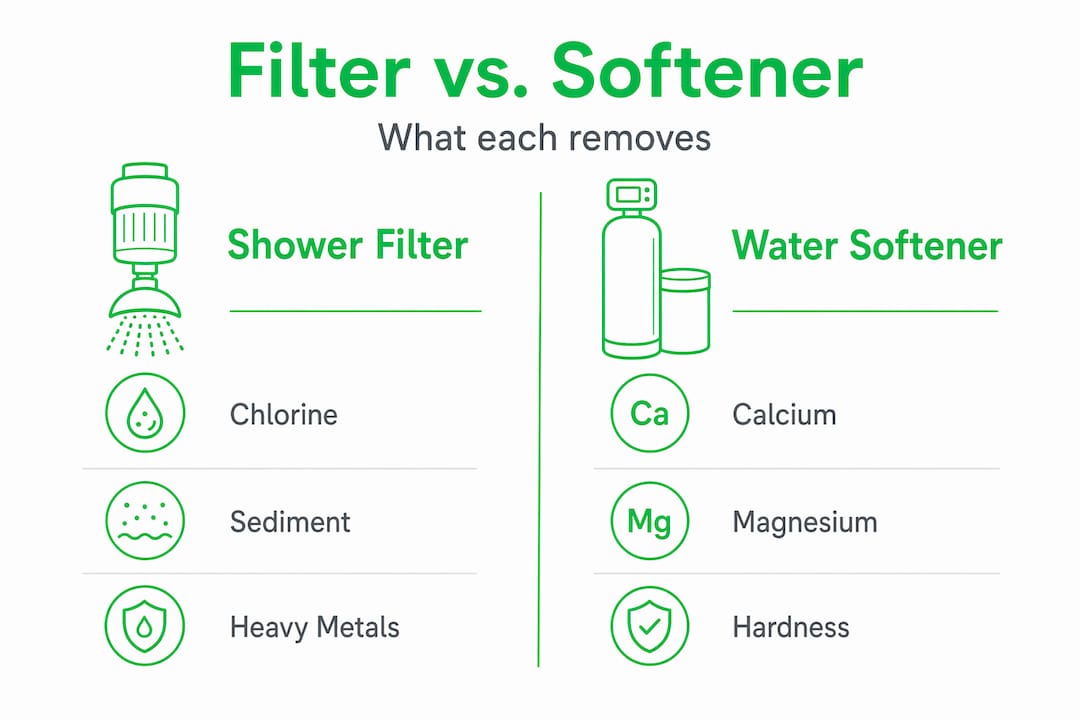
Whole-house water softeners cost around $1,500 installed and require professional setup. For homeowners with severe hard water, they are worth every dollar. For renters, they are simply not an option.
The good news for renters is that point-of-use shower filters are genuinely practical. You screw them onto your existing shower arm, no tools required, and take them with you when you move. They will not fix your hardness problem, but they will remove the chlorine that is stripping your skin barrier every morning. That is a meaningful win on its own.
Pro Tip: If you rent and have hard water, pair a shower filter with a hard water skin routine that uses a gentle, pH-balanced cleanser. You will see better results than either approach alone.
Key features to evaluate when choosing water softener heads
Once you know your water chemistry, you can evaluate products without getting distracted by marketing claims.
Filtration media: what actually works
The media inside the filter cartridge determines what gets removed and how well. Here is what to look for:
- KDF-55: A copper-zinc alloy that removes chlorine and heavy metals through a redox reaction. Works well at higher water temperatures, making it ideal for showers.
- Catalytic carbon: The right choice if your utility uses chloramines. Standard carbon filters are often ineffective against chloramines because the contact time in a shower setup is too short. Catalytic carbon handles this chemistry much better.
- Vitamin C (ascorbic acid): Neutralizes both chlorine and chloramines on contact. Highly effective, especially in combination with other media. This is the core technology behind Vitacleanhq’s product line.
- Activated carbon: Good for taste and odor improvement, but less reliable for chlorine removal at shower temperatures and flow rates.
One thing the industry rarely tells you: stage count does not predict performance. A filter with 15 stages and vague media descriptions will often underperform a simpler filter packed with high-concentration KDF-55 or catalytic carbon. Media quality and concentration drive results, not the number of layers.
Certification: the one thing you should not skip
NSF/ANSI 177 certification is the objective standard for chlorine reduction in shower filters. Some brands claim testing or certification without actually holding it. Before you buy, check the NSF product database directly at nsf.org. It takes 30 seconds and protects you from wasting money on an unverified product.
Flow rate and pressure
Some filters reduce water pressure, especially in homes with already-low pressure. Check the filter’s rated flow rate (measured in gallons per minute, or GPM) against your current showerhead. Most standard showers run at 2.0 to 2.5 GPM. If a filter is rated below your current flow, you will notice the difference.
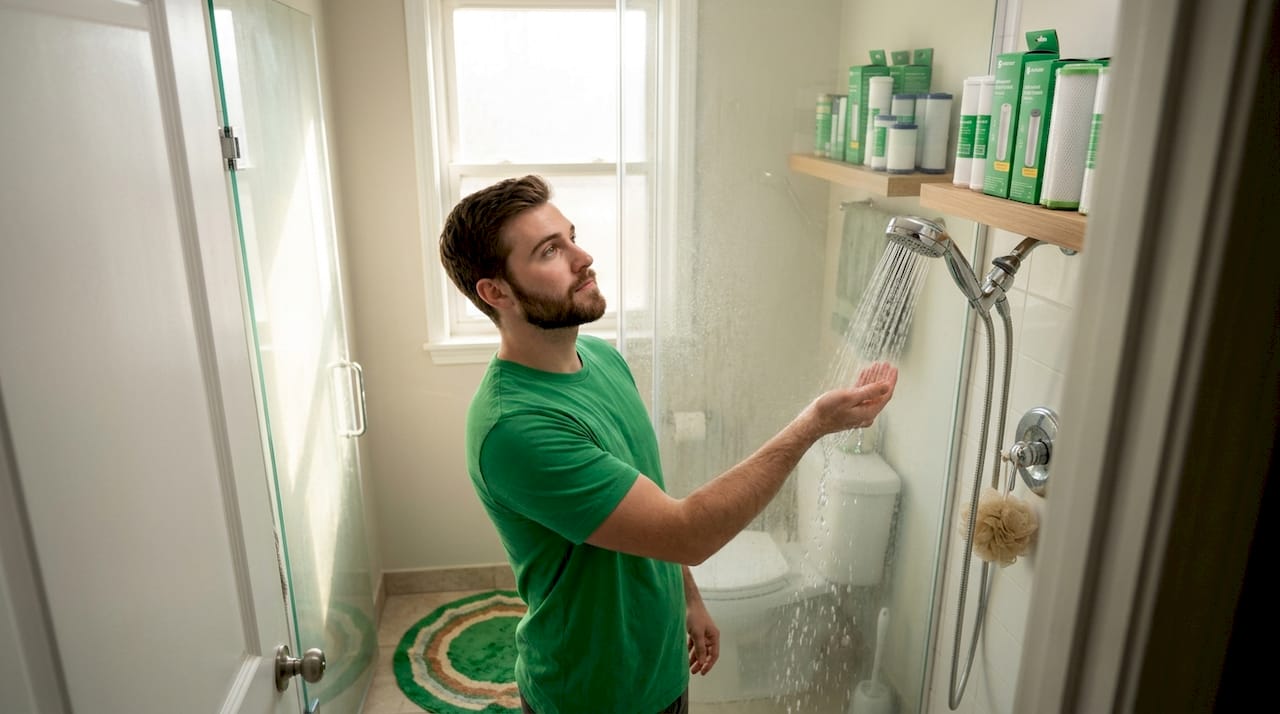
Pro Tip: If you have low water pressure, look for filters specifically labeled “low pressure compatible” or check that the GPM rating matches your current setup. A pressure drop of even 0.5 GPM makes a shower feel noticeably weaker.
How to install a water softener shower head
Most filtered shower heads install in under ten minutes. Here is the standard process:
- Turn off the water supply to your shower, or simply make sure no one runs it during installation.
- Remove the old showerhead by turning it counterclockwise by hand. If it is stuck, use a wrench with a cloth to protect the finish.
- Clean the shower arm threads with a dry cloth to remove any old tape or mineral deposits.
- Wrap the shower arm threads with plumber’s tape (also called Teflon tape) in a clockwise direction. Two to three wraps is enough to create a watertight seal.
- Screw on the new filtered shower head by hand first, then tighten gently with a wrench. Do not overtighten.
- Turn the water back on and check for leaks at the connection point. A slow drip usually means the tape needs another wrap.
- Run water for 30 to 60 seconds before your first use to flush any loose media from the new cartridge.
For renters, the process is identical. You are not modifying any plumbing. When you move out, reinstall the original showerhead and take your filter with you. Non-permanent filter setups like inline filters or screw-on heads are specifically designed for this kind of portability.
Pro Tip: Save the original showerhead in a labeled bag under the sink. Landlords occasionally dispute move-out inspections over missing fixtures, and having the original ready to reinstall takes the issue off the table entirely.
Maintaining your shower filter for consistent results
A shower filter you forget to maintain is almost as bad as no filter at all. The cartridge media saturates over time, and once it does, your water quality drops back to baseline without any warning sign other than your skin and hair telling you something changed.
What to watch for:
- Skin feeling dry or tight again after months of improvement
- Return of a chlorine smell in the shower
- Visible discoloration or sediment in the water
- Reduced water pressure from mineral buildup inside the cartridge
Replace cartridges every 3 to 6 months, or at around 8,000 to 10,000 gallons of use. If your household showers frequently or your water is particularly hard, lean toward the shorter end of that range. Hard water accelerates media clogging inside the filter, which shortens cartridge life and makes proactive replacement more important.
To clean the showerhead housing itself, soak it in white vinegar for 20 to 30 minutes every month or two. This dissolves mineral scale that builds up around the nozzles and keeps your spray pattern consistent. Rinse thoroughly before reattaching.
Budget around $20 to $50 per cartridge replacement, depending on the brand and media type. Subscription plans, like the one Vitacleanhq offers, take the guesswork out of timing by shipping replacements on a schedule matched to your usage. For ongoing guidance on filter maintenance routines, Vitacleanhq’s blog covers replacement schedules in detail.
My honest take after years of watching people get this wrong
I have seen the same mistake play out hundreds of times. Someone buys a flashy multi-stage filter with a beautiful product page, installs it, and then wonders why their hair still feels straw-like after two months. Nine times out of ten, the problem is one of three things: they have hard water above 7 GPG and a filter cannot fix that, their utility uses chloramines and the filter uses standard carbon, or they never replaced the cartridge.
My strongest advice is to test before you buy. A $5 test strip saves you from buying the wrong product entirely. And when you are reading water softener shower head reviews, look past the star ratings and find comments that mention specific water hardness levels or utility types. Those are the reviews written by people whose situation might actually match yours.
I also think the vitamin C filtration approach is underrated. It neutralizes both chlorine and chloramines on contact, which means it works regardless of what your utility uses. For anyone who does not want to research their utility’s chemistry, it removes that variable completely. The skin and hair benefits of consistent chlorine removal are real and well-documented, and you tend to notice them within a couple of weeks.
If you have genuinely hard water, do not expect a shower filter to solve it. Use the filter for chlorine removal and address the hardness separately with a water softener if you own your home. That combination gets you the best of both approaches.
— Sara
Transform your shower with Vitacleanhq
If you have done the testing and know chlorine or chloramines are your main issue, Vitacleanhq has a direct solution worth looking at.
Vitacleanhq’s vitamin C shower filters neutralize chlorine and chloramines on contact, without complicated installation or plumbing changes. The wall-mounted vitamin C filter and handheld vitamin C option both install in minutes and are designed for renters and homeowners alike. For ongoing filter performance, the filter refill subscription ships replacement vitamin C filter cartridges on a schedule so you never forget. Healthier skin and hair start with what your water does to them every single day.
FAQ
What is the difference between a shower filter and a water softener?
A shower filter removes chlorine, sediment, and some heavy metals but does not remove hardness minerals. Only a whole-house ion exchange softener removes calcium and magnesium from water.
How often should I replace a shower filter cartridge?
Replace cartridges every 3 to 6 months or after approximately 8,000 to 10,000 gallons of use, whichever comes first. Hard water shortens cartridge life, so replace more frequently if your hardness is above 7 GPG.
Can renters use water softener shower heads?
Yes. Screw-on shower head filters and inline filters require no tools or plumbing modifications, making them ideal for renters. They address chlorine and sediment without any permanent changes to the shower setup.
Does NSF certification matter when buying a shower filter?
It matters a lot. NSF/ANSI 177 certification is the verified standard for chlorine reduction in shower filters. Some brands falsely claim certification, so check the NSF product database directly before purchasing.
Does vitamin C filtration work for both chlorine and chloramines?
Yes. Vitamin C (ascorbic acid) neutralizes both chlorine and chloramines on contact, which makes it one of the most versatile filter media options available, especially for households that do not know which disinfectant their utility uses.