
How to Refresh Dull Hair in Shower: Quick Routine
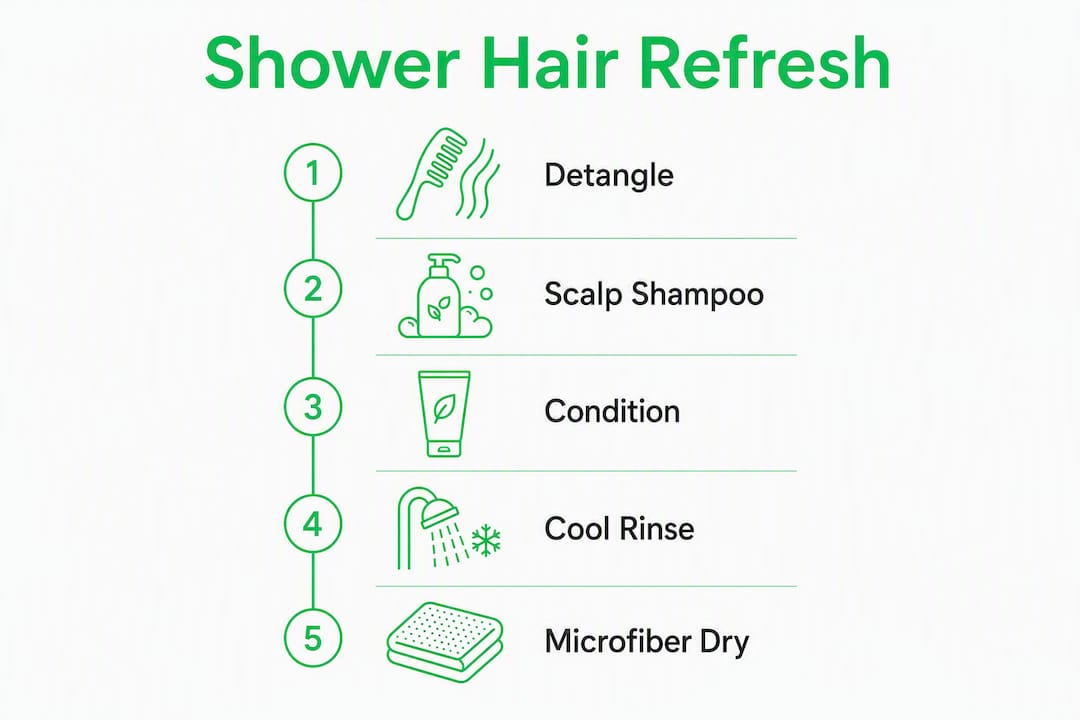
To refresh dull hair in the shower right now, do these five things: detangle before you step in, shampoo only your scalp, apply conditioner from mid-lengths to ends using downward milking motions, finish with a brief cool rinse, then blot dry with a microfiber towel. That sequence alone handles most cases of lifeless hair.
- Detangle first — brush or wide-tooth comb before water touches your hair; wet tangles trap product and prevent even distribution
- Shampoo the scalp only — suds rinse through the lengths without stripping fragile ends
- Condition mid-lengths to ends — milk the conditioner down each section with your palms; passive application barely moves the cuticle
- Cool rinse — cold water seals the cuticle and reduces frizz immediately after conditioning
- Blot, don’t rub — a microfiber towel or cotton tee cuts friction that reopens the cuticle you just sealed
- Optional boost — if your water smells of chlorine or leaves a film, add a Vitamin C filter step before shampooing
Pro Tip: Milking motions with conditioner physically encourage the cuticle to lie flat. Celebrity stylist Gustav Fouche, a Wella judge with extensive experience, calls it the single most effective technique for instant glass-like shine — more effective than switching products.
Table of Contents
- How to Refresh Dull Hair in the Shower, Minute by Minute
- Why Does Hair Look Dull After Showering?
- Which In-Shower Products Actually Restore Shine?
- Drying and Finishing Techniques That Protect Shine
- How Shower Water Quality Affects Hair Dullness
- How Long Does This Take, and What Does It Cost?
- Vitacleanhq Makes the Water Side of This Routine Easy
- Key Takeaways
- The Routine Comes First — Then the Filter
- Useful Sources and Further Reading
How to Refresh Dull Hair in the Shower, Minute by Minute
A timed routine removes the guesswork.
- Before water (1–2 min): Detangle with a wide-tooth comb or brush. Pre-shower detangling increases treatment effectiveness because conditioner distributes evenly on smooth, unknotted strands.
- 0:00–1:00 — Pre-rinse with lukewarm water: Wet hair thoroughly. Lukewarm water opens the cuticle enough to clean without stripping natural oils.
- 1:00–2:30 — Scalp shampoo: Apply shampoo to roots only. Massage with fingertips for 30–60 seconds. The suds travel down the lengths during rinsing. Use a clarifying shampoo here only if you have visible buildup or haven’t clarified in three to four weeks.
- 2:30–5:00 — Conditioning: Apply conditioner from the ears down. Work it through in downward milking motions, section by section. Leave on 1–3 minutes for a standard refresh. For a deeper treatment, apply a mask instead and leave on 5–10 minutes.
- 5:00–5:30 — Cool rinse: Switch to cool water for 15–30 seconds. You’ll feel the hair go from slippery to slightly smoother — that’s the cuticle closing.
- Optional filter step: If your tap water contains chlorine, use a Vitamin C shower filter before shampooing. It neutralizes free chlorine at the point of use, so your shampoo and conditioner work on clean hair rather than mineral-coated strands.
Signs you’ve done it right: hair detangles easily post-rinse, no slippery residue remains, and the surface feels smooth when you run a finger downward.
| Step | Time | Goal |
|---|---|---|
| Detangle | Before shower | Even product distribution |
| Scalp shampoo | 1:00–2:30 | Clean roots, preserve ends |
| Condition (milking) | 2:30–5:00 | Seal cuticle, add gloss |
| Cool rinse | 5:00–5:30 | Lock cuticle flat |
| Blot dry | Post-shower | Prevent friction damage |

Why Does Hair Look Dull After Showering?
Four things work against you every time you shower, and knowing which one is your problem tells you which fix to prioritize.
Cuticle condition is the biggest factor. The cuticle is the outer layer of each strand, made of overlapping scales. When those scales lift or roughen, they scatter light instead of reflecting it. Alkaline products raise the hair’s surface charge, increasing friction and roughness. Keeping rinse products near hair’s natural pH of approximately 4.5–5.5 helps the cuticle stay flat and reflect light cleanly.
Product and mineral residue blocks that reflection further. Surfactants, silicones, and hard-water minerals all leave films on the shaft. Clarifying once or twice a month resets the surface without stripping it the way daily clarifying would. Think of it as clearing the lens rather than replacing it.
Water chemistry is the cause most people miss. Chlorine and chloramines oxidize the proteins in the cuticle, leaving an ashy, matte film. Hard-water calcium and magnesium deposit on the shaft and physically block light. These deposits also prevent conditioner from penetrating, so your products feel less effective over time. More on shower water contaminants and their specific effects on hair is worth reading if you suspect your tap water is the culprit.
Which In-Shower Products Actually Restore Shine?
The right ingredient at the right step matters more than brand or price point.
- Sulfate-free shampoo for daily or frequent washing; sulfates clean effectively but strip moisture from already-dry ends
- Clarifying shampoo once or twice a month to remove buildup; overuse strips natural oils and worsens dullness
- Bond-building conditioner or mask for damaged, high-porosity hair that absorbs moisture fast but loses it just as quickly
- Lightweight glossing conditioner with humectants or silicones for normal hair; a zero-residue shampoo paired with a glossing conditioner establishes long-lasting shine without weighing hair down
- Acidic rinse (diluted apple cider vinegar or a formulated pH-balancing rinse) after shampooing to close the cuticle before conditioning
- Quick in-shower gloss mask left on 3–5 minutes for an immediate boost on flat, lifeless hair
Pro Tip: Use your conditioner as an active glossing step, not a passive one. Divide damp hair into sections and work the product down each one with firm, downward palm pressure. Fouche’s milking technique closes the cuticle by physically pressing scales flat — passive slathering does not.
Drying and Finishing Techniques That Protect Shine
What you do in the two minutes after the shower often undoes everything you just accomplished.
Blot-drying with a microfiber towel reduces friction dramatically compared to rubbing with a standard bath towel. Rubbing lifts the cuticle scales you just sealed with the cool rinse. Squeeze and press instead.
Detangle damp hair with a wide-tooth comb, starting at the ends and working upward. Pulling from the root snaps fragile wet strands. Air-dry when you can. If you use a blow dryer, keep it on low heat and finish with the cool-shot button to re-seal the cuticle before the hair fully sets.
For styling products, choose lightweight leave-ins that smooth without coating. Heavy oils at the root cause buildup that dulls shine within a day or two.
Pro Tip: Sleep on a silk or satin pillowcase. Cotton creates friction overnight that roughens the cuticle and undoes the shine you built in the shower. It’s the cheapest overnight treatment available.
How Shower Water Quality Affects Hair Dullness
If your routine is solid but dullness keeps returning, your water is likely the problem.
- Chlorine and chloramines oxidize cuticle proteins and leave a matte, ashy film; Vitamin C neutralizes free chlorine at the point of use, converting it to harmless compounds before it contacts your hair
- Hard-water minerals (calcium, magnesium) deposit on the shaft and form a physical barrier that blocks light and prevents conditioner from penetrating
- Filter types: Vitamin C shots provide fast, point-of-use chlorine neutralization; ceramic media reduce sediment and some contaminants; multi-stage systems combine both
- Signs you need a filter: water smells of chlorine, hair dulls suddenly after a municipal treatment change, or you see a white film on shower surfaces
The benefits of shower filters for hair and skin go beyond shine — reduced chlorine exposure also helps with scalp irritation and color fade.
Pro Tip: Pair a Vitamin C filter with a monthly clarifying session. The filter handles ongoing chlorine; the clarifier removes any mineral residue that accumulates between filter changes. Together, they reset the hair surface so every conditioning step actually works.
How Long Does This Take, and What Does It Cost?
| Fix | Time | Cost Category |
|---|---|---|
| Quick refresh routine | 5–10 min | Free (technique only) |
| In-shower mask/treatment | 10–20 min | Low–medium (drugstore to salon-grade) |
| Monthly clarifying session | 20–30 min | Low (drugstore clarifier) |
| Shower filtration system | One-time install | Higher upfront; subscription refills ongoing |
The 5–10 minute routine fixes most dullness caused by technique errors or light buildup. If dullness returns within a day or two despite good technique, that’s a water-quality signal. A filter becomes a practical mid-term investment at that point, especially since it reduces how often you need to clarify. Bond-building masks and salon-grade treatments show structural improvement after repeated use, not just one session.
Try the quick routine for two to four washes first. If shine holds, you’re done. If it doesn’t, check your water.
Vitacleanhq Makes the Water Side of This Routine Easy
Chlorine and hard-water minerals are the one part of the dullness equation you can’t fix with conditioner alone. That’s where Vitacleanhq’s filtration line comes in.

Vitacleanhq’s Vitamin C filter shots neutralize free chlorine at the point of use, so every shampoo and conditioning step works on clean, uncoated strands. The handheld and wall-mounted options install in minutes with no tools, making them practical for renters and homeowners alike. For ongoing performance, the filter refill subscription keeps your filtration consistent without the hassle of remembering to reorder. Ceramic filter options are also available for sediment reduction. Fewer mineral deposits mean less frequent clarifying, better conditioner penetration, and noticeably shinier results from the same routine you’re already doing. Browse the full range at Vitacleanhq and pick the setup that fits your shower.
Key Takeaways
A consistent in-shower routine — detangle, scalp shampoo, milking conditioner, cool rinse, microfiber dry — fixes most dullness; add a Vitamin C filter when water quality is the underlying cause.
| Point | Details |
|---|---|
| Technique beats product | Milking conditioner downward physically seals the cuticle; passive application does not. |
| Cool rinse is non-optional | A 15–30 second cool rinse locks the cuticle flat and visibly reduces frizz. |
| Clarify monthly, not daily | Once or twice a month removes buildup without stripping natural oils. |
| Water quality matters | Chlorine and hard-water minerals create a matte film that no conditioner can fix from inside. |
| Vitacleanhq filtration | Vitamin C shots and refillable filters neutralize chlorine and reduce mineral buildup at the source. |
The Routine Comes First — Then the Filter
Most dull-hair complaints I see come down to one of two things: passive conditioning (slathering and rinsing in 30 seconds) or water quality that quietly undoes good technique. The routine in this article fixes the first problem for free, today.
Where I’d push back on the conventional advice is the tendency to jump straight to products. A $40 glossing treatment applied with bad technique on chlorine-coated hair will underperform a $6 drugstore conditioner applied correctly on filtered water. Technique and water quality are the foundation; products are the amplifier.
Try the timed routine for two to four washes before buying anything. If shine holds between washes, you’ve solved it. If dullness returns quickly, especially if your water smells of chlorine or leaves residue on your shower walls, that’s your signal to look at filtration. Vitacleanhq’s resources on hard water and hair condition are a good next read if you’re at that stage.
Useful Sources and Further Reading
- Optimal Shower Techniques for Healthy, Shiny Hair — CyShower
- Shiny Hair Starts in the Shower — Viori
- How to Fix Really Damaged Hair — Wella
- How to Get Shiny Hair in 10 Simple Steps — Davines
- How to Get Shiny Hair — Color Wow
- My Everything Shower Routine for Soft Skin and Shiny Hair — Reflect Beauty
- Tricks to Revive Flat, Lifeless Hair — HAIRLOVE
- Detangling Before Braiding: Natural Hair Prep Guide — Afro Magic Braiding
- Shower Water Contaminants: Effects on Hair and Skin — Vitacleanhq
- Benefits for Your Hair and Skin When Using Shower Filters — Vitacleanhq
- Hard Water Is Damaging Your Hair Condition — Vitacleanhq
To check whether municipal water treatment in your area may be affecting your hair, request your local water quality report from your utility provider or visit the EPA’s Consumer Confidence Report page.