
How to Detox Hair During Shower: Step-by-Step Guide
TL;DR:
- Hair detox in the shower removes mineral buildup, product residue, and excess oils, restoring scalp health and hair vitality. Using chelating shampoos, clay masks, and vinegar rinses in the correct order with adequate dwell time ensures effective cleansing and moisture restoration. Water quality significantly impacts detox results, so using a shower filter prolongs the benefits and maintains scalp and hair health.
Hair detox during your shower is the process of removing buildup from minerals, product residue, and excess oils to restore scalp health and hair vitality in a single routine. The best hair detox methods combine chelating agents like disodium EDTA, clay masques, and apple cider vinegar rinses applied in a specific sequence. Skipping this process lets copper, calcium, and styling product residue accumulate on the scalp, which blocks moisture absorption and weakens hair fibers over time. Vitacleanhq’s approach to shower wellness addresses this at the source by targeting water quality before buildup even begins.
How to detox hair during shower: what products actually work?
Chelating shampoos are the foundation of any effective shower detox routine. They contain agents like disodium EDTA, which bind to metallic ions and lift them off the hair shaft. Advanced detox shampoos can remove up to 99% of product buildup, 95% of excess sebum, and 76% of copper deposits in a single wash. That level of performance means one well-chosen product can replace several steps in a basic cleansing routine.
Here are the core product categories that deliver real results:
- Chelating shampoos: Formulated with disodium EDTA or citric acid to bind and remove mineral deposits from hard water, copper, and calcium. These are the strongest option for people in hard water areas.
- Clarifying shampoos: Designed to strip product residue and excess sebum without the metal-binding chemistry. Best for people whose buildup comes mainly from styling products rather than water minerals.
- Clay masques: Act like magnets to draw out deep-seated impurities beneath the scalp surface, complementing shampoo detox. Kaolin and bentonite clay are the most widely used types.
- Apple cider vinegar rinse: A diluted rinse that balances scalp pH and loosens residue. Undiluted use risks scalp irritation, so always mix one part vinegar with three parts water.
- Leave-in metal purifying treatments: Targeted treatments that can remove up to 54.1% of copper and 50.9% of lead from hair fibers. These work as a supplement to shampoo, not a replacement.
Pro Tip: If you live in a hard water area, start with a chelating shampoo rather than a standard clarifying formula. The mineral-binding chemistry makes a measurable difference in how clean your scalp feels after one wash.
Step-by-step shower routine for hair detox
A structured sequence matters more than any single product. Applying treatments in the wrong order reduces their effectiveness significantly.
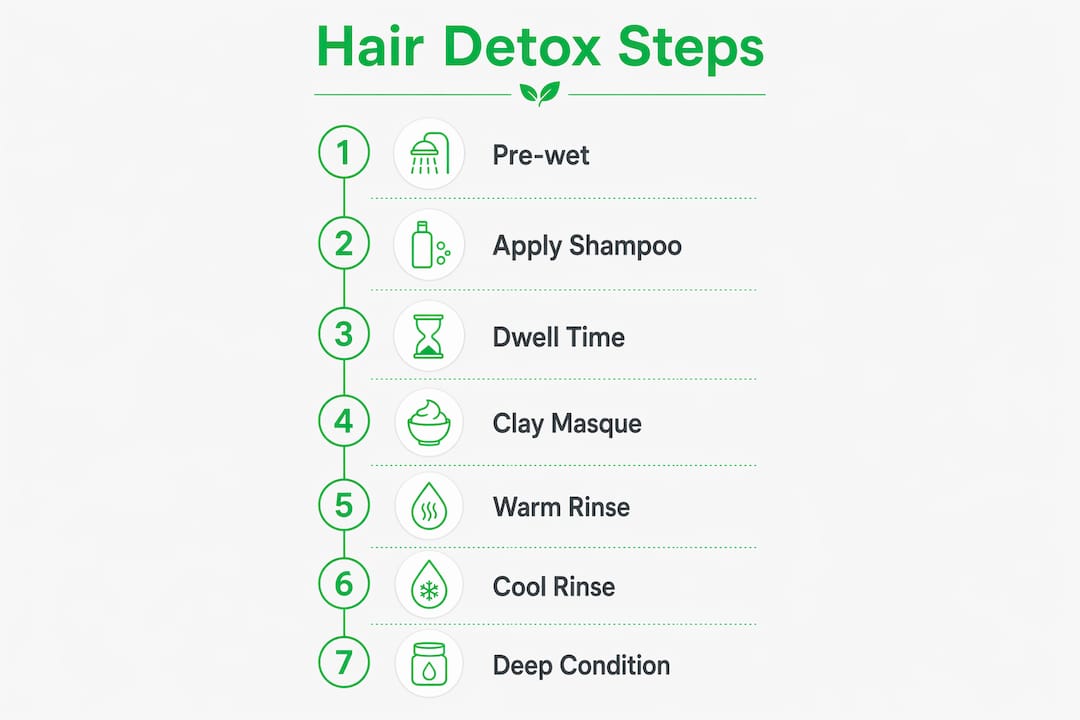
Step 1: Pre-detox preparation
Wet your hair thoroughly with warm water before applying any product. Warm water opens the hair cuticle and softens buildup, which makes the chelating agents more effective. If your hair is very dry or color-treated, apply a lightweight oil like argan or jojoba to the lengths before stepping into the shower. This creates a protective barrier that prevents the detox shampoo from stripping too much moisture from the mid-lengths and ends.
Step 2: Apply your chelating or clarifying shampoo
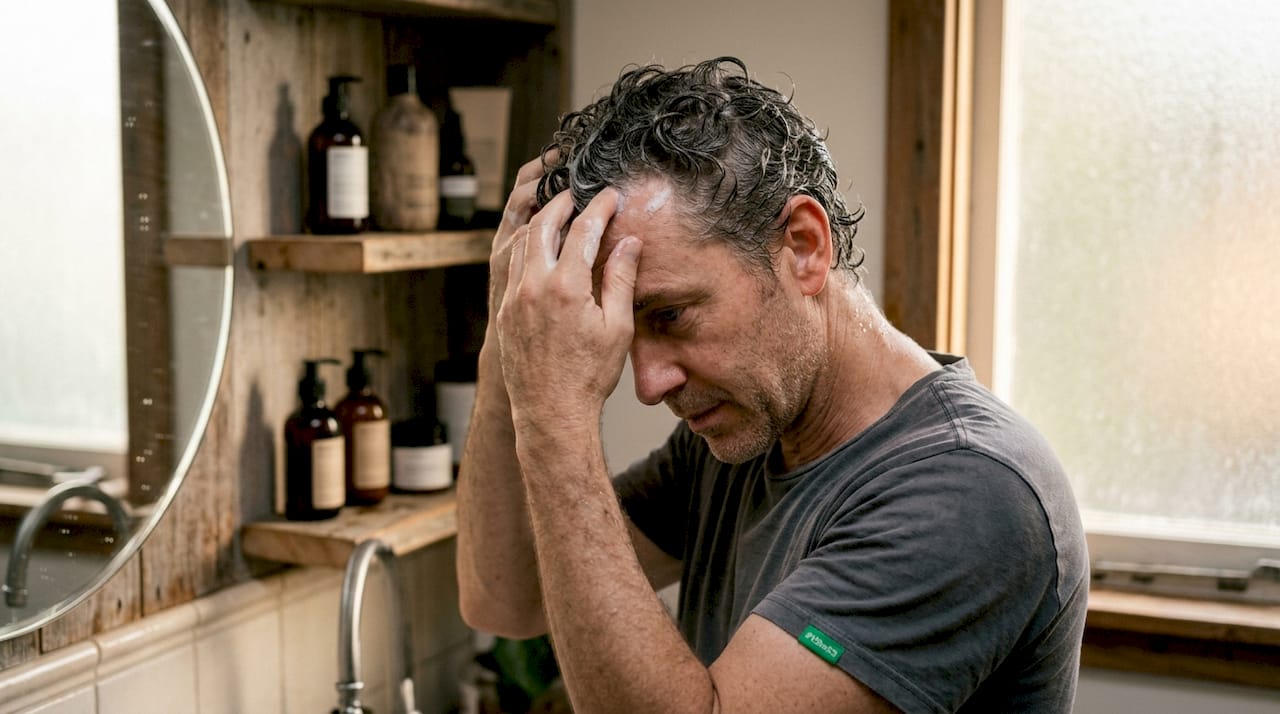
Apply the shampoo directly to your scalp and work it in with your fingertips using small circular motions. Cover the entire scalp, not just the crown. The massage action increases blood circulation and helps the product penetrate the follicle opening where sebum and mineral deposits collect most heavily. Use enough product to create a full lather across the scalp.
Step 3: Allow the correct dwell time
Chelating agents need 3–5 minutes of contact time to bind metallic ions and lift them from the hair shaft. This is the step most people skip. Rinsing immediately after lathering cuts the chelation process short and leaves a significant portion of mineral buildup behind. Set a timer if needed. This single habit change produces a noticeably cleaner result.
Step 4: Apply a clay masque or apple cider vinegar rinse
After rinsing the shampoo, apply a clay masque to the scalp if your goal is deep pore cleansing. Leave it on for 5 minutes, then rinse with warm water. Alternatively, pour a diluted apple cider vinegar rinse over your scalp and hair, let it sit for 2 minutes, and rinse. Do not use both in the same session. Choose one based on your primary concern: clay for oily scalp and deep impurities, ACV for residue and pH balance.
Step 5: Rinse with warm water, then cool water
Rinse all product out with warm water first. Then finish with a cool water rinse to seal the cuticle and prevent redepositing of impurities. The temperature shift is a small step with a real structural benefit. Sealed cuticles reflect more light, reduce frizz, and lock in the results of the detox.
Step 6: Apply deep conditioner
Chelating agents strip protective moisture along with the buildup. Deep conditioning immediately after detox is non-negotiable to restore hydration and prevent dryness or brittleness. Apply a deep conditioner from mid-length to ends, leave it on for 3–5 minutes, and rinse with cool water.
Pro Tip: Avoid applying deep conditioner directly to the scalp after a clay masque. The scalp has just been cleared of excess oil. Applying conditioner there can clog follicles before they have a chance to rebalance.
Common mistakes that reduce your detox results
Most people who feel their detox routine is not working are making one of a small number of consistent errors. Identifying the mistake is faster than switching products.
- Rinsing too soon: Leaving chelating shampoo on for less than 3 minutes means the disodium EDTA never fully binds to mineral ions. The product washes away before it finishes its job.
- Water temperature errors: Using hot water throughout the entire shower keeps the cuticle open during rinsing, which allows impurities to redeposit. Finishing with cool water closes the cuticle and locks in cleanliness.
- Overusing detox shampoo: Running a full chelating routine more than once a week strips the scalp’s natural oils and can cause dryness, flaking, and increased oil production as a rebound effect. Once every 2–4 weeks is the standard recommendation for most hair types.
- Skipping conditioner: Detox shampoos are designed to remove. They do not replace moisture. Skipping the deep conditioning step leaves hair brittle and prone to breakage.
- Ignoring scalp signals: Persistent flaking, itchiness, or tightness after detox indicates the routine is too aggressive for your scalp type. Reduce frequency or switch to a gentler clarifying formula.
“Mineral buildup from hard water can cause breakage and irritation. Chelating shampoos and shower filters help mitigate these effects by removing the source of damage before it accumulates.”
Adjusting frequency based on water hardness is practical advice that most guides overlook. People in cities with very hard water may need a chelating routine every two weeks. People with soft water and minimal product use may only need it once a month.
How to maintain scalp health and hair vitality after detox
A single detox session resets your scalp. Consistent habits after that session determine how long the results last.
- Condition regularly: Use a hydrating conditioner after every wash, not just after detox sessions. This keeps the moisture barrier intact between deeper cleansing cycles.
- Incorporate scalp-balancing ingredients: Witch hazel applied to the scalp after washing helps regulate oil production and soothes irritation without stripping. A few drops on a cotton pad applied to the scalp works well.
- Limit heat styling immediately after detox: The hair cuticle is more vulnerable in the 24 hours after a chelating treatment. Avoid blow dryers on high heat and flat irons during this window.
- Address your water quality directly: Mineral buildup from hard water is a recurring source of the same deposits you just removed. Shower filters, including Vitamin C and ceramic options, reduce mineral load before water reaches your hair.
- Set a detox schedule: Monthly detox sessions prevent buildup from reaching the level where it causes visible damage. People with heavy product use or very hard water may benefit from a session every two to three weeks.
Shower water quality is the variable most people overlook entirely. You can run a perfect detox routine and still see buildup return quickly if your tap water is high in calcium and copper. Vitacleanhq’s Vitamin C shower filter shots neutralize chlorine and reduce mineral deposits at the source, which extends the time between necessary detox sessions. Pairing good technique with cleaner water is the most effective long-term approach to scalp and hair health.
Key takeaways
Effective hair detox during a shower requires the right products applied in the correct sequence, with adequate dwell time and deep conditioning to restore moisture after cleansing.
| Point | Details |
|---|---|
| Dwell time is critical | Leave chelating shampoo on for 3–5 minutes to fully bind and remove mineral deposits. |
| Cool water seals results | Finish every detox rinse with cool water to close the cuticle and lock in cleanliness. |
| Deep conditioning is required | Apply deep conditioner immediately after detox to restore moisture stripped by chelating agents. |
| Frequency matters | Detox once every 2–4 weeks to prevent buildup without over-stripping the scalp’s natural oils. |
| Water quality extends results | Using a shower filter reduces mineral redeposit and prolongs the benefits of each detox session. |
What I’ve learned from years of detoxing hair in hard water
The most common mistake I see is treating hair detox like a regular shampoo session. People lather, rinse in 60 seconds, and wonder why their hair still feels coated. The chemistry of chelation requires time. Disodium EDTA does not work instantly. It needs those 3–5 minutes to form stable complexes with copper and calcium ions. Rushing that step is the single biggest reason people feel their detox routine is not delivering.
The second thing I have come to believe strongly: your water is working against you if you are not filtering it. I have seen people run flawless detox routines with excellent products, only to have the same mineral buildup return within two weeks because their shower water is extremely hard. The detox removes what is there. The water puts it back. Addressing both sides of that equation is what actually produces lasting results.
My practical advice for busy schedules is to run a full chelating routine once a month and use a good clarifying shampoo every two weeks in between. That rhythm keeps buildup from reaching a level where it causes visible damage. Pair it with a shower wellness routine that includes a quality filter, and you will notice a real difference in how your scalp feels between sessions.
The product market for detox hair treatments has improved significantly. Formulas that once required salon application are now available for home use and deliver clinical-level results. That is genuinely good news for anyone dealing with hard water damage or heavy product buildup.
— Sara
Cleaner water, better detox results with Vitacleanhq
Your detox routine is only as effective as the water running through it. Hard water deposits minerals back onto your scalp the moment you rinse.
Vitacleanhq’s Vitamin C shower filter shots neutralize chlorine and reduce mineral load before water contacts your hair. The ceramic filter range offers an additional layer of mineral reduction for households with very hard water. Both options install in minutes and work with existing shower setups. Vitacleanhq also offers a filter refill plan so your filtration stays effective without the guesswork of remembering when to replace cartridges. Cleaner water means your detox results last longer between sessions.
FAQ
What does hair detox actually remove?
Hair detox removes mineral deposits like copper and calcium, excess sebum, and product residue that accumulate on the scalp and hair shaft. Advanced detox shampoos can eliminate up to 99% of product buildup and 76% of copper in a single wash.
How often should you detox your hair in the shower?
Most hair types benefit from a full detox session once every 2–4 weeks. People in hard water areas or with heavy product use may need to cleanse every two weeks.
Can you use apple cider vinegar as a hair detox rinse?
Yes, a diluted apple cider vinegar rinse effectively balances scalp pH and removes residue. Always dilute one part vinegar with three parts water. Undiluted use causes scalp irritation and dryness.
Does shower water quality affect hair detox results?
Hard water redeposits calcium and copper onto hair after every wash, which shortens the time between necessary detox sessions. Shower filters that reduce mineral content help extend the results of each detox routine.
Is deep conditioning required after every hair detox?
Deep conditioning after a chelating or clarifying treatment is required, not optional. Chelating agents strip protective moisture along with buildup, and deep conditioner restores the moisture barrier to prevent brittleness.