
Chlorine Effects on Skin: What You Need to Know
TL;DR:
- Chlorine’s impact on skin mainly involves chloramines formed from reaction with sweat and oils, causing irritation. Most skin reactions are irritant dermatitis, not true allergies, particularly affecting sensitive individuals with compromised barriers. Preventative habits like showering before and after swimming, filtering tap water, and moisturizing effectively protect skin from long-term damage.
If you’ve ever stepped out of a pool with tight, itchy, or red skin, you’ve experienced the chlorine effects on skin firsthand. But here’s what most people get wrong: chlorine itself isn’t always the main culprit. The real story involves a chain of chemical reactions happening on your skin that most articles skip entirely. Whether you’re a regular swimmer, someone with sensitive skin, or just concerned about your daily shower water, understanding what’s actually happening to your skin barrier changes how you protect it.
Table of Contents
- Key takeaways
- How chlorine affects your skin’s natural barrier
- Who is most at risk from chlorine skin irritation
- Practical prevention and management
- Chlorine versus other common skin irritants
- Long-term skin care for frequent chlorine exposure
- My take on the chlorine fear factor
- Protect your skin from chlorine every day
- FAQ
Key takeaways
| Point | Details |
|---|---|
| Chloramines cause more harm | Chlorine reacting with sweat and oils forms chloramines, which irritate skin more than chlorine alone. |
| Most reactions are irritation, not allergy | True chlorine allergy is extremely rare; most skin responses are irritant contact dermatitis. |
| Sensitive skin faces higher risk | People with eczema, psoriasis, or a compromised skin barrier experience stronger and longer reactions. |
| Prevention is straightforward | Showering before and after swimming and moisturizing immediately after cuts irritation significantly. |
| Tap water chlorine adds up | Daily shower exposure to chlorinated water accumulates and can worsen chronic skin dryness. |
How chlorine affects your skin’s natural barrier
Most people assume the redness and dryness they feel after a swim is a direct result of chlorine contact. The mechanism is more layered than that. Chlorine is an oxidizing agent, which means it breaks down organic material on contact. On your skin, that includes sebum, the natural oil your body produces to keep the skin barrier intact and hydrated.
When chlorine strips away sebum, it leaves your skin’s outermost layer, the stratum corneum, exposed and vulnerable. Repeated chlorine exposure causes cumulative microdamage to the lipids and proteins in this layer, increasing transepidermal water loss and triggering inflammation. That’s the dry, tight feeling you notice within minutes of getting out of the water.
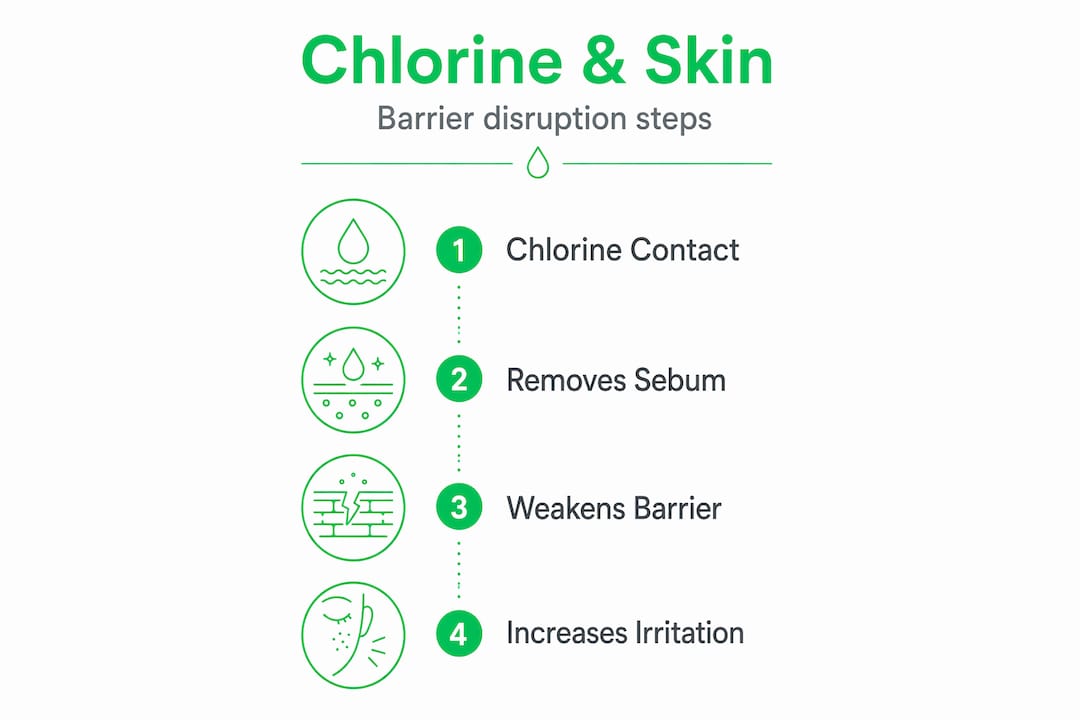
But the more aggressive irritant isn’t chlorine itself. It’s chloramines. When chlorine in pool water reacts with sweat, body oils, and other organic material, it forms chloramines as a byproduct. Chloramines cause stronger irritation than chlorine alone and are responsible for the sharp chemical smell you notice in heavily used pools. That strong “chlorine smell” is actually a warning sign of high chloramine concentration, not just a sign of a clean pool.
The skin symptoms that follow are classified as irritant contact dermatitis, not a true allergic reaction. This distinction matters because the treatment approach differs entirely. Irritant dermatitis means your skin barrier has been physically disrupted. An allergic reaction involves an immune response to a specific trigger. Most chlorine reactions are inflammatory responses due to barrier disruption, which means the focus should be on restoring the skin rather than avoiding chlorine entirely.
Common chlorine exposure skin symptoms include:
- Redness and flushing that appears during or shortly after swimming
- Dry, tight, or flaking skin that worsens over the following hours
- Itchy patches, sometimes with a rash or hives-like appearance
- Acne-like breakouts from clogged or inflamed follicles
- Swelling or tenderness in areas with thinner or more sensitive skin
Pro Tip: If a pool smells strongly of chlorine, that’s actually a sign of high chloramine levels from poor maintenance or heavy use. A well-maintained pool with proper chemistry should have a faint, clean scent, not an overwhelming chemical one.
Who is most at risk from chlorine skin irritation
Not everyone who swims regularly ends up with irritated skin. The severity of chlorine-related skin issues depends heavily on your baseline skin health, exposure frequency, and a few factors most people overlook.

People with eczema or psoriasis are particularly vulnerable. Their skin barriers are already compromised, meaning chlorine and chloramines penetrate more easily and cause faster, more intense reactions. Frequent swimming in chlorinated pools can trigger flare-ups of eczema and psoriasis, and the recovery time between exposures is often longer than for people with healthy skin. If you already notice your skin reacting to hard water and eczema, chlorinated water will likely compound the problem.
Sensitive skin in general, even without a diagnosed condition, responds more strongly to oxidative stress. Children and older adults also fall into higher-risk categories because their skin barriers are naturally thinner or less resilient.
There are a few less obvious risk factors worth knowing:
- Swimsuit friction: Tight swimwear creates friction that compromises the skin barrier in specific areas, making those spots more susceptible to chlorine penetration and irritation.
- Pool maintenance quality: Poorly maintained pools with unbalanced pH or high chloramine buildup are far more irritating than well-managed ones. The concentration and chemical form of chlorine compounds determines how damaging the exposure is.
- Exposure duration: A 20-minute lap session affects skin differently than a two-hour recreational swim. Time in the water directly correlates with barrier disruption.
- Daily tap water exposure: This one surprises people. Chlorine in tap water contributes to dryness and irritation, especially with chronic exposure. If you’re showering in chlorinated water every day and also swimming regularly, the cumulative effect on sensitive skin is significant.
Practical prevention and management
The good news is that most chlorine skin irritation is preventable with a few consistent habits. You don’t need to stop swimming. You need a better routine around it.
-
Shower before you swim. Rinsing your skin with fresh water before entering the pool saturates your skin cells with clean water, reducing how much chlorinated water they absorb. It also removes surface oils and sweat that would otherwise react with chlorine to form chloramines.
-
Apply a protective barrier. Applying a thin layer of coconut oil, petroleum jelly, or a dedicated swim barrier cream before getting in the water creates a physical buffer between your skin and the pool chemicals. This is especially useful for people with eczema or known sensitivity.
-
Shower immediately after swimming. Showering after swimming removes chlorine and chloramine residue before it has time to continue breaking down your skin barrier. Don’t wait until you get home.
-
Moisturize while skin is still slightly damp. Applying a fragrance-free moisturizer within a few minutes of showering locks in hydration and starts the barrier repair process. Look for ingredients like ceramides, glycerin, or hyaluronic acid products that actively restore moisture rather than just coating the surface.
-
Use a gentle cleanser, not a harsh soap. Scrubbing with a strong soap after swimming strips whatever natural oils remain. A mild, sulfate-free cleanser is enough to remove chemical residue without adding more barrier damage.
-
Address your shower water. If your daily shower water contains chlorine, you’re dealing with chlorine irritation remedies that only address half the problem. Filtering your shower water reduces baseline exposure and gives your skin a chance to recover between pool sessions.
Pro Tip: For people with eczema or psoriasis, applying a thin layer of barrier cream or ointment before showering in chlorinated tap water works the same way it does before swimming. It’s a small habit that makes a measurable difference over time.
Chlorine versus other common skin irritants
Understanding where chlorine sits on the spectrum of skin irritants helps you make informed decisions rather than overcorrecting.
| Irritant | Mechanism | Typical symptoms | Severity |
|---|---|---|---|
| Pool chlorine/chloramines | Oxidation, sebum stripping, barrier disruption | Redness, dryness, itching, rash | Mild to moderate |
| Tap water chlorine | Cumulative barrier disruption with daily exposure | Dryness, sensitivity, eczema flares | Mild, worsens over time |
| Sodium lauryl sulfate (soap) | Disrupts lipid bilayer in skin barrier | Dryness, irritation, contact dermatitis | Mild to moderate |
| Strong cleaning products | Direct chemical burns, cytotoxicity | Redness, peeling, blistering | Moderate to severe |
| Fragrances/preservatives | Immune-mediated allergic contact dermatitis | Hives, rash, swelling | Varies |
Sodium hypochlorite concentration and exposure time are the key variables that determine whether a chlorine-based compound is safe or damaging. Dilute concentrations used in pools and tap water are far less aggressive than undiluted bleach, but they’re not harmless with repeated exposure.
The important distinction between chlorine irritation and a true allergic reaction is that allergic contact dermatitis involves the immune system producing antibodies to a specific substance. Chlorine reactions don’t work that way. Balancing disinfectant levels in pools is key because higher chlorine doesn’t mean safer water. It often means more chloramine formation and more irritation, not less.
Long-term skin care for frequent chlorine exposure
If you swim multiple times a week or shower daily in chlorinated tap water, the effects compound. Chronic exposure leads to persistent dryness, scaling, and a gradual increase in skin sensitivity that many people mistake for aging or a new skin condition.
Here’s what long-term chlorine exposure actually does to skin over time:
- Transepidermal water loss increases. A damaged stratum corneum can’t hold moisture effectively, leading to chronically dry, tight skin regardless of how much moisturizer you apply.
- Inflammation becomes baseline. Repeated barrier disruption keeps pro-inflammatory cytokines activated, which can worsen existing conditions and make skin more reactive to other irritants too.
- Eczema and psoriasis flares become more frequent. For people with these conditions, chronic chlorine exposure without proper skin care often shortens the time between flare-ups.
- Skin recovery slows. Optimal post-exposure skin care focuses on restoring lipids and reducing cytokine activation. If you’re not doing this consistently, your skin’s ability to repair itself between exposures gradually declines.
The goal isn’t to avoid water. It’s to give your skin what it needs to recover. That means consistent moisturizing, barrier-supportive ingredients, and reducing unnecessary chlorine exposure where you can, particularly in your daily shower. You can also explore shower water chlorine risks to understand the full picture of what unfiltered water does beyond just skin dryness.
If symptoms persist despite good skin care habits, include swelling, blistering, or spread beyond areas of direct water contact, that’s worth a conversation with a dermatologist. Persistent reactions could indicate a secondary condition or an additional sensitizer in the water or your products.
My take on the chlorine fear factor
I’ve seen a lot of people panic about chlorine and abandon swimming entirely, which frustrates me because it’s almost always an overcorrection. In my experience, the fear of chlorine is often bigger than the actual problem, and the real issue is almost always chloramines and poor pool maintenance, not chlorine itself.
True chlorine allergy is extremely rare. What I see consistently is irritant contact dermatitis that’s entirely manageable with the right habits. The people who struggle most aren’t the ones swimming the most. They’re the ones who skip the pre-swim rinse, don’t moisturize after, and shower daily in unfiltered tap water without thinking about it.
What I’ve found actually works is treating chlorine exposure like a skin care event, not an emergency. Rinse before, moisturize after, and filter your shower water. Those three steps alone resolve most complaints I hear. The swimmers who maintain healthy skin long-term aren’t doing anything complicated. They’re just consistent.
The chloramine point is genuinely underestimated. If your pool smells strongly chemical, that’s the problem. A well-run pool with balanced chemistry is far gentler on skin than a poorly maintained one. Advocating for better pool maintenance, or choosing facilities that take it seriously, is one of the most underrated pieces of skin care advice for regular swimmers.
— Sara
Protect your skin from chlorine every day
Your pool routine gets a lot of attention, but your daily shower is where chlorine exposure quietly adds up. Every shower in unfiltered tap water deposits chlorine directly onto your skin, compounding the barrier damage that pool sessions start. Vitacleanhq’s Vitamin C shower filters neutralize chlorine and chloramines at the source, so your skin gets clean water instead of chemical-laden tap water. The ceramic filter collection offers another layer of filtration for whole-shower purification. With a filter refill subscription, you stay protected without thinking about it. If you’re serious about reducing chlorine’s role in your skin issues, starting with your shower is the most practical first step.
FAQ
What are the main chlorine exposure skin symptoms?
The most common symptoms are redness, itching, dryness, and rash-like patches that appear during or after contact with chlorinated water. Symptoms may also include hives, acne-like breakouts, and swelling in sensitive areas.
Is chlorine bad for eczema?
Yes. Chlorine and chloramines strip the skin barrier, which is already compromised in people with eczema, making flare-ups more frequent and harder to resolve. Filtering shower water and moisturizing immediately after exposure helps reduce the impact.
How does chlorine affect skin differently than a true allergy?
Chlorine causes irritant contact dermatitis by physically disrupting the skin barrier, not by triggering an immune response. True chlorine allergy is rare; most reactions are inflammatory and respond to barrier repair rather than allergy treatment.
Does tap water chlorine affect skin the same way pool chlorine does?
The mechanism is the same but the concentration is lower. However, daily tap water exposure accumulates over time and can contribute to chronic dryness and sensitivity, especially in people with eczema or thin skin barriers.
What is the fastest way to relieve dry skin from chlorine?
Shower immediately after chlorine exposure to remove residue, then apply a ceramide or hyaluronic acid moisturizer while skin is still slightly damp. Consistent use of a chlorine-filtering shower head also reduces baseline skin dryness over time.