
Hair Care Routine Checklist: Your 2026 Guide
TL;DR:
- A consistent hair care routine with four core steps—cleansing, conditioning, deep treatment, and heat protection—boosts hair health. Customizing the routine by hair type, porosity, and scalp condition is essential for optimal results. Proper water quality and avoiding common mistakes further support healthier, stronger, and shinier hair.
A hair care routine checklist is a structured set of daily and weekly steps that, when followed consistently, produces healthier, stronger, and shinier hair. Most people skip key steps or apply products incorrectly, which cancels out the benefits of even the best formulas. Dermatologists and stylists agree that four core steps cover the vast majority of hair health needs: gentle cleansing, proper conditioning, weekly deep treatment, and heat protection. This guide breaks down every step in a practical hair care routine guide you can actually stick to, including how to personalize it for your specific hair type, scalp condition, and lifestyle.
1. What belongs on your hair care routine checklist?
A complete hair care routine checklist covers five non-negotiable steps. Each one targets a different layer of hair health, from the scalp to the ends.
- Cleanse with a scalp-focused shampoo. Apply shampoo directly to the scalp, not the lengths. Massage it in, then let the lather rinse through the rest of your hair as it runs down.
- Condition mid-lengths to ends. Skip the scalp entirely. Apply conditioner only from mid-shaft to the ends and leave it on for 2–3 minutes before rinsing. Applying it to the scalp adds weight and oil without benefit.
- Deep condition weekly. Use a hair mask or deep conditioner once a week to restore moisture and protein. This step is especially important for color-treated or heat-styled hair.
- Protect before heat. Apply a heat protectant spray or cream before using any hot tool. This single step prevents the majority of heat-related breakage.
- Massage and brush your scalp. Scalp massage stimulates circulation and removes buildup, creating a healthier environment for hair growth.
Pro Tip: Blot your hair dry with a microfiber towel instead of rubbing it with a regular cotton towel. Friction from rough cotton causes breakage and frizz by disrupting the hair cuticle.
2. How to customize your routine by hair type, porosity, and scalp condition
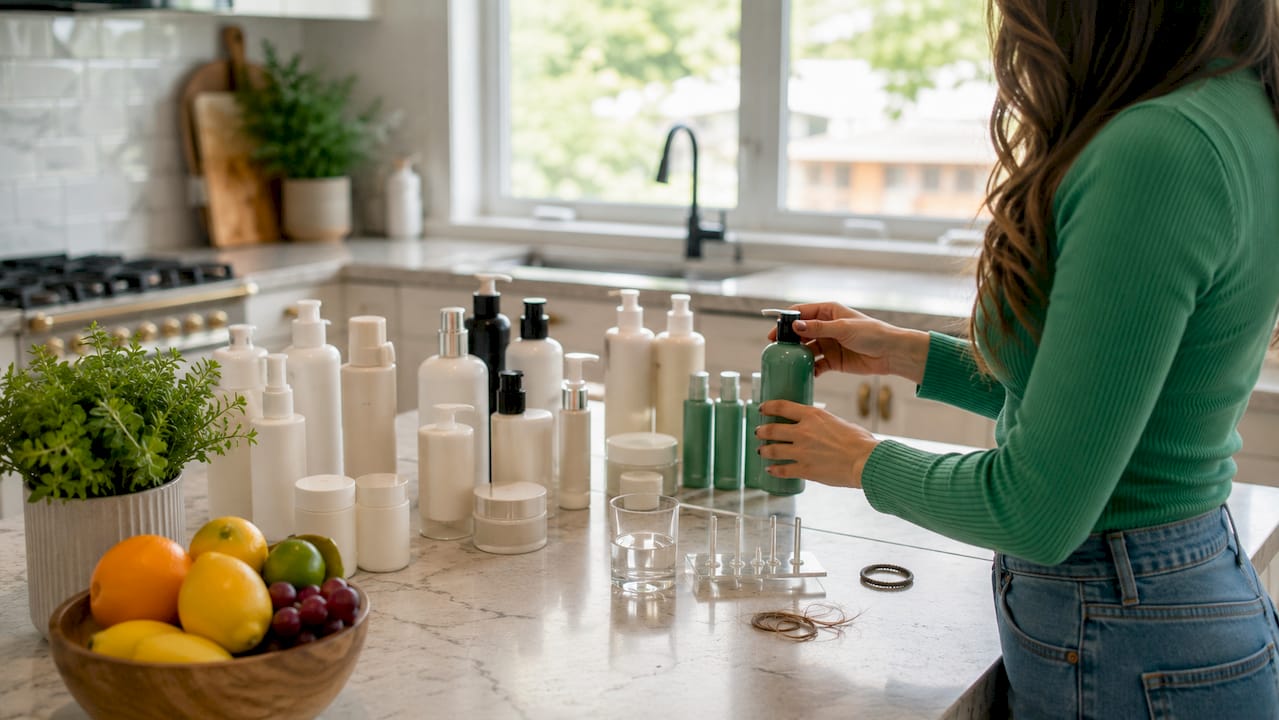
Generic hair care plans fail because they treat all hair the same. Effective routines account for four variables: hair type, porosity, density, and scalp condition. Understanding each one changes which products you use and how often you use them.
Hair type determines your natural texture, from straight to coily. Straight hair distributes scalp oil faster, so it tends to need more frequent washing. Coily and curly hair holds less moisture and can go longer between wash days.
Porosity describes how well your hair absorbs and retains moisture. High-porosity hair absorbs products quickly but loses moisture just as fast. It benefits from protein treatments and heavier leave-in conditioners. Low-porosity hair resists moisture absorption, so lightweight products and heat-assisted conditioning work better.
Scalp condition is the most overlooked variable. An oily scalp needs washing every 1–2 days. A dry or sensitive scalp does better with less frequent washing and gentle, sulfate-free formulas.
| Variable | Oily or frequent-wash profile | Dry or infrequent-wash profile |
|---|---|---|
| Scalp condition | Wash every 1–2 days | Wash every 5–10 days |
| Hair porosity | Lightweight conditioners | Heavy creams, protein masks |
| Hair density | Volumizing formulas | Moisturizing, smoothing products |
| Hair type | Straight, fine | Coily, thick, color-treated |
Pro Tip: Assess your porosity at home by dropping a clean strand of hair into a glass of water. If it sinks quickly, you have high porosity. If it floats, you have low porosity. This one test changes your entire product selection.
3. How to build a weekly hair care regimen
A weekly hair care regimen removes the guesswork from daily decisions. Structure your week around wash days, treatment days, and rest days.
- Wash day (2–3 times per week for most scalp types). Shampoo, condition, and apply any leave-in products. Washing frequency depends on your scalp, not your hair length. Oily scalps may need washing every other day. Dry scalps and coily hair can stretch to 7–10 days between washes.
- Deep treatment day (once per week). Apply a hair mask after shampooing on one of your wash days. Leave it on for at least 10 minutes under a shower cap for better absorption.
- Scalp massage (every wash day or daily). Spend 3–5 minutes using gentle, circular motions with your fingertips or a scalp brush. This technique enhances follicle health and can reduce the urge to wash daily by redistributing natural oils.
- Clarifying wash (every 2 weeks). Use a clarifying shampoo biweekly to remove product buildup and reset scalp health. Use it cautiously if your scalp runs dry, as it can strip moisture.
- Heat-free days (non-wash days). Avoid hot tools on days you do not wash. Styling dry hair with heat causes cumulative damage that no conditioner fully repairs.
- Nighttime protection (every night). Sleep on a silk or satin pillowcase. Silk pillowcases reduce friction during sleep, which prevents tangles, frizz, and breakage by morning. Alternatively, loosely braid your hair or use a silk bonnet.
- Gentle detangling (before every wash). Detangle dry hair before wetting it. Wet hair is more elastic and breaks more easily under a brush. Start from the ends and work upward.
The cumulative effect of this schedule compounds over months. Hair that feels rough and dull in week one often shows noticeable improvement in texture and shine by week six.
4. Common hair care mistakes that undermine your routine
The most common hair care errors are not about using the wrong products. They are about applying the right products incorrectly or skipping steps that seem minor but are not.
- Overwashing. Many people wash daily because of oiliness, but proper scalp brushing reduces the need for frequent washing by distributing oils and removing buildup without water. Daily washing strips the scalp’s natural barrier.
- Applying conditioner to the scalp. Conditioner on the scalp clogs follicles and adds grease without moisturizing the hair shaft where it is needed. Keep conditioner from mid-length to ends only.
- Rubbing hair dry with a cotton towel. Cotton creates friction against the cuticle. The result is frizz and breakage that looks like damage from heat tools, even when you have not used any.
- Skipping heat protectant. One session with a flat iron or blow dryer on unprotected hair causes structural damage to the cuticle. Heat protectants form a barrier that absorbs and distributes heat before it reaches the hair shaft.
- Using too many products. Layering five or six products creates buildup that weighs hair down and blocks moisture from penetrating. A simplified routine with a sulfate-free shampoo, conditioner, weekly mask, and heat protectant outperforms a cluttered shelf every time.
- Ignoring scalp health. Dermatologist Dr. Kristina Collins stresses that brushing stimulates scalp circulation, removes buildup, and supports hair growth. Treating only the hair while ignoring the scalp is like watering leaves instead of roots.
For a deeper look at how to build habits that actually stick, the healthier hair routines guide at Vitacleanhq covers practical adjustments for 2026 hair care standards.
Key takeaways
A consistent hair care routine built around four core steps, cleansing, conditioning, deep treatment, and heat protection, delivers better long-term results than any single product or trend.
| Point | Details |
|---|---|
| Four steps cover most needs | Cleansing, conditioning, deep treatment, and heat protection form the foundation of any effective routine. |
| Personalize by four variables | Adjust your routine based on hair type, porosity, density, and scalp condition, not hair type alone. |
| Wash frequency follows scalp health | Oily scalps need washing every 1–2 days; dry or coily hair can extend to 7–10 days between washes. |
| Nighttime habits matter | Silk pillowcases and gentle pre-wash detangling prevent breakage that daytime products cannot fix. |
| Simplicity beats complexity | A short, consistent routine with the right products outperforms a complicated one with too many steps. |
Why I stopped chasing the perfect product and started trusting the process
After years of watching people rebuild their hair health, the pattern is always the same. The people who see the most improvement are not the ones with the most expensive shampoos. They are the ones who do the same four steps, every week, without skipping.
The biggest misconception I see is that hair problems require more products. In reality, most issues, from dryness to breakage to dullness, come from applying products incorrectly or washing too often. Conditioner on the scalp, rough towel drying, and daily heat without protection do more damage than most people realize.
The other thing worth saying plainly: results take time. Hair grows roughly half an inch per month. You will not see the full benefit of a new routine for at least 8–12 weeks. Patience is not optional. It is part of the method.
Knowing your four key variables, type, porosity, density, and scalp condition, removes most of the frustration. When you stop guessing and start matching products to your actual hair profile, the routine becomes much easier to maintain. And a routine you actually maintain is always better than a perfect one you abandon after two weeks.
— Sara
How your shower water affects your hair care results
Your hair care routine can only do so much if the water you wash with is working against you. Chlorine and hard water minerals in unfiltered tap water strip moisture from the scalp and hair shaft, leaving hair dry, brittle, and prone to breakage. Vitacleanhq’s Vitamin C shower filter shots neutralize chlorine and reduce impurities at the source, so every wash day starts with gentler, cleaner water. Pairing filtered water with your existing routine reduces scalp irritation and helps conditioners and masks absorb more effectively. For more on how your shower affects scalp health, the scalp health guide at Vitacleanhq explains the connection in detail.
FAQ
How often should I wash my hair?
Washing frequency depends on scalp condition, not hair length. Oily scalps benefit from washing every 1–2 days, while dry scalps and coily hair can go 7–10 days between washes.
Where should I apply conditioner?
Apply conditioner from mid-length to ends only, and leave it on for 2–3 minutes before rinsing. Applying it to the scalp adds oil and weight without moisturizing the hair shaft.
Do I really need a heat protectant every time?
Yes. A single heat styling session on unprotected hair damages the cuticle. Heat protectants form a barrier that absorbs and distributes heat before it reaches the hair shaft, preventing cumulative breakage.
What is hair porosity and why does it matter?
Porosity describes how well your hair absorbs and holds moisture. High-porosity hair needs heavier products and protein treatments. Low-porosity hair responds better to lightweight formulas and heat-assisted conditioning.
Can scalp massage actually help hair grow?
Scalp massage with circular motions improves circulation and removes buildup around follicles. Dermatologist Dr. Kristina Collins confirms this supports a healthier environment for hair growth over time.