
2026 Shower Filtration Trends for Healthier Skin and Hair
Most people assume a shower filter is just a basic chlorine trap bolted onto a showerhead. That assumption is costing them real results. Multi-stage filtration systems with 10 to 20 or more stages now dominate the 2026 market, combining technologies that go far beyond what older single-stage filters could ever achieve. If you’ve been on the fence about upgrading your shower setup, this guide will show you exactly what’s changed, what benefits are actually backed by evidence, and how to pick the right system for your skin, hair, and wellness goals.
Table of Contents
- What’s new in shower filtration in 2026?
- How do advanced filters benefit your skin and hair?
- Breakthroughs: Red light therapy and the spa-like shower revolution
- What can’t shower filters do? Limits and edge cases
- Choosing the right system for your goals
- Next steps: Experience the benefits of advanced shower filtration
- Frequently asked questions
Key Takeaways
| Point | Details |
|---|---|
| Multi-stage tech dominates | Shower filters with 10-20+ stages now provide broad contaminant reduction for cleaner, healthier showers. |
| Visible skin and hair benefits | Most users notice softer hair and clearer skin within weeks of switching to an advanced filter. |
| Red light therapy trending | 2026’s newest filters add red light for spa-like wellness, though long-term data is still emerging. |
| Know the limitations | Modern shower filters help with chlorine and irritation but don’t fully soften water or eliminate all contaminants. |
| Choose based on your needs | Pick your filter by matching your specific water issues and wellness goals to available features and certifications. |
What’s new in shower filtration in 2026?
The gap between a basic filter and a premium 2026 model is wider than most people realize. Today’s leading systems stack multiple filtration media in sequence, each targeting a different contaminant or water quality issue. Multi-stage filtration is now standard, with certified reductions across chlorine, chloramines, heavy metals, and sediment all in a single unit.
Here’s what you’ll typically find inside a top-tier 2026 shower filter:
- Activated carbon: Captures chlorine, volatile organic compounds, and odors
- KDF-55 media: Reduces heavy metals like lead and mercury using a redox reaction
- Calcium sulfite: Highly effective at neutralizing chlorine even in cold water
- Vitamin C (ascorbic acid): Neutralizes both chlorine and chloramines on contact
- Ceramic balls: Soften water feel and may support skin pH balance
Beyond filtration media, emerging shower filter technologies now include red light therapy panels, high-pressure nozzle engineering, and smart filter-life indicators. Certifications like NSF/ANSI 177 have become a baseline expectation rather than a premium feature, making it easier to compare products with confidence. You can check 2026 shower filter reviews to see how top models stack up on independent testing.
| Feature | Basic filter | Advanced 2026 filter |
|---|---|---|
| Filtration stages | 1 to 3 | 10 to 20+ |
| Chloramine reduction | Minimal | Moderate to high |
| NSF/ANSI 177 certified | Rare | Common |
| Red light therapy | No | Available on select models |
| Filter life indicator | No | Yes (many models) |
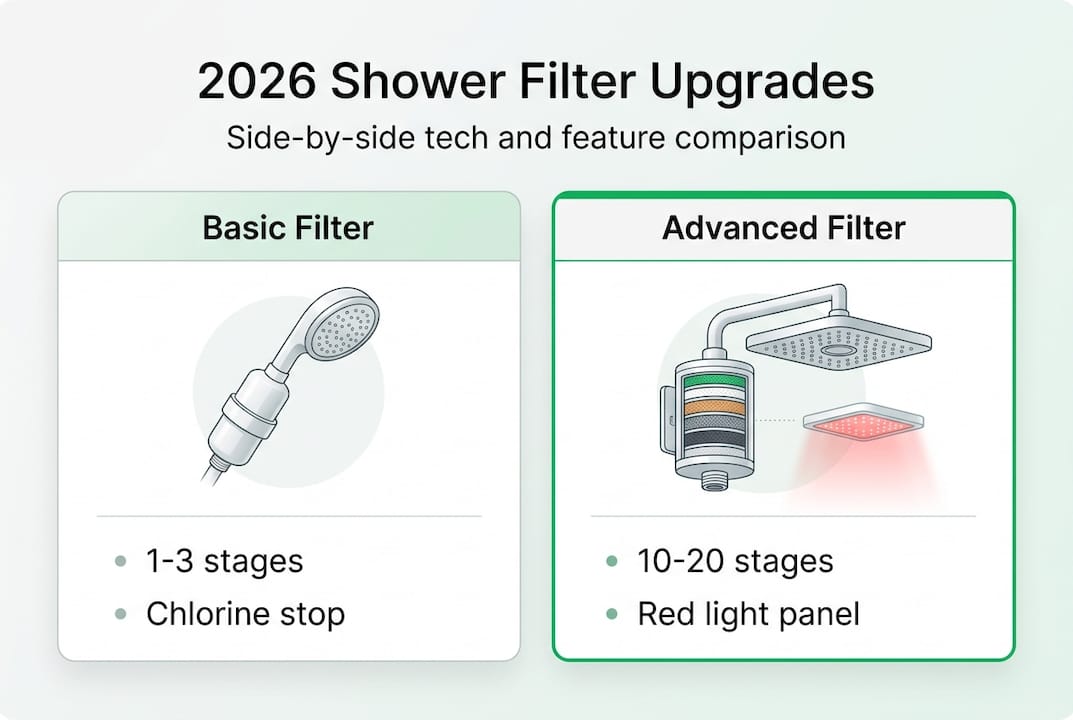
User adoption is climbing fast. Skin and hair improvement reports are driving word-of-mouth growth, and the wellness angle is pulling in buyers who previously saw shower filters as a plumbing accessory rather than a self-care investment.
How do advanced filters benefit your skin and hair?
Seeing how advanced these new filters are, let’s look at the difference they make for your daily self-care. The short answer: the results are measurable, and most people notice them within one to two weeks.
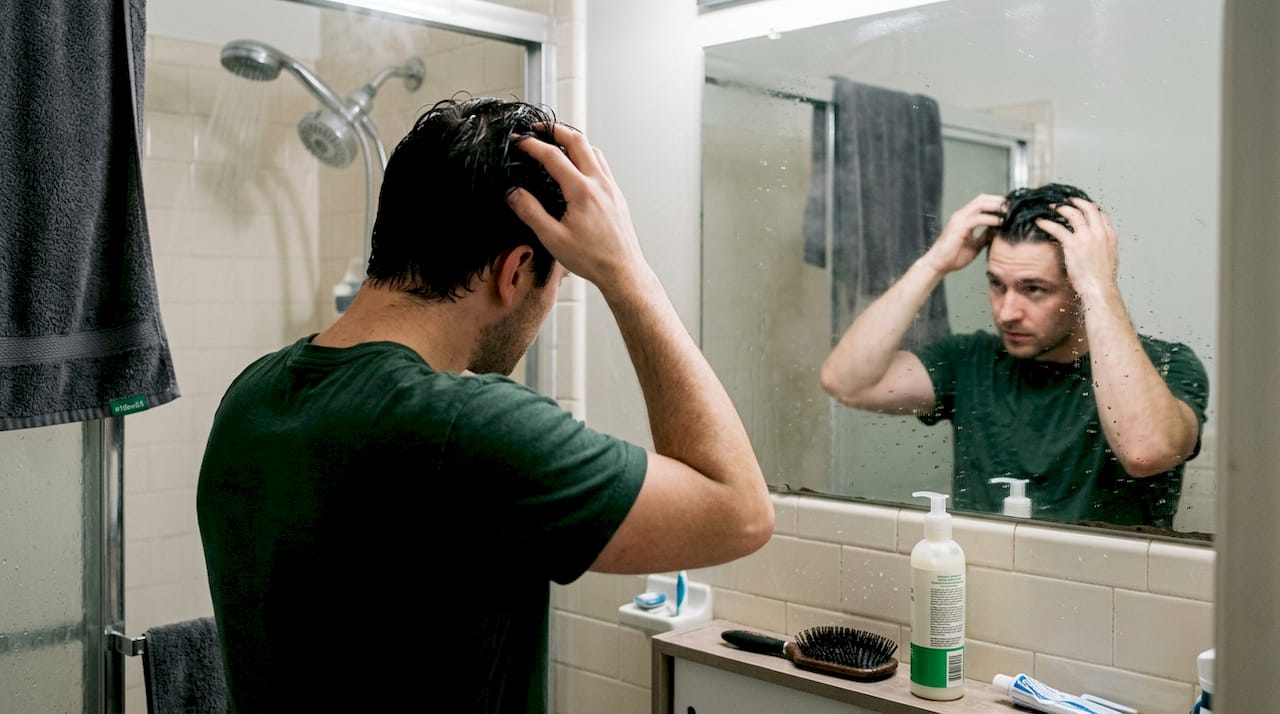
Unfiltered tap water carries chlorine, chloramines, and trace heavy metals that strip your skin’s natural moisture barrier and roughen the hair cuticle. Removing those irritants lets your skin and scalp function the way they’re supposed to. Reduced dryness, irritation, and shedding are among the most consistently reported outcomes, with one clinical test showing an 81% reduction in hair shedding among users of a filtered showerhead.
Here’s what most users report after switching to a quality filter:
- Softer, shinier hair with noticeably less breakage
- Reduced scalp flaking and itchiness
- Calmer, less reactive skin, especially for those prone to eczema or redness
- Fewer breakouts along the jawline and back
- Improved moisture retention between showers
“After two weeks with a filtered showerhead, my skin stopped feeling tight after every shower. I hadn’t realized how much the water was affecting me.” This kind of feedback is consistent across user testimonials and studies reviewed by major consumer outlets.
The shower filter benefits extend to scalp health too. Healthier follicles mean stronger hair growth over time, which is why dermatologists are increasingly recommending filtration as a first step for clients dealing with thinning or brittle hair. You can also explore how skin hydration improvements compound over weeks of consistent use.
Pro Tip: If you have hard water effects at home, pair your filter with a leave-in conditioner to maximize hair softness while your filter handles the water quality side.
For a deeper look at what’s possible, see how a filtered showerhead can transform skin and hair over a consistent routine.
Breakthroughs: Red light therapy and the spa-like shower revolution
But there’s more on the horizon. The spa-like element is drawing serious attention in 2026, and red light therapy integration is the feature generating the most buzz.
Red light therapy uses wavelengths between 650 and 850 nanometers to penetrate the skin and stimulate cellular activity. In clinical settings, it’s been linked to improved collagen production, reduced inflammation, and even hair follicle stimulation. The HigherDose red light showerhead is one of the first consumer products to combine multi-stage filtration with built-in red light panels, turning your morning shower into something closer to a professional treatment.
| Feature | Standard filtered showerhead | Red light therapy model |
|---|---|---|
| Chlorine removal | Yes | Yes |
| Skin radiance support | Indirect (via filtration) | Direct (via 650-850nm light) |
| Hair growth stimulation | Possible (scalp health) | Targeted (follicle activation) |
| Price range | $30 to $150 | $200 to $400+ |
| Clinical evidence | Strong | Promising, early stage |
Scientific evidence for red light therapy is promising but still developing, particularly for shower-specific applications. Most robust studies come from clinical devices used in controlled settings, not consumer showerheads. That said, early user reports from the Wired review of HigherDose describe noticeable improvements in skin tone and texture after consistent use.
Pro Tip: If you’re drawn to red light therapy models, look for units that specify wavelength output (650nm for skin, 850nm for deeper tissue). Vague marketing claims without wavelength data are a red flag.
For those tracking 2026 shower filter innovations, red light integration represents the clearest signal that the category is moving from utility product to wellness device.
What can’t shower filters do? Limits and edge cases
For all the benefits, it’s crucial to understand what these filters can’t do. Setting realistic expectations protects you from disappointment and helps you make a smarter purchase.
First, shower filters are not water softeners. They don’t remove the calcium and magnesium ions that cause true hard water. TDS and microplastics are not fully removed by standard shower filters. A typical result might be a drop from 26 ppm to 24 ppm in total dissolved solids, which is a minor change. If hard water is your primary concern, a whole-home softener is a separate investment.
Here are the key limitations to keep in mind:
- Chloramine removal is partial: Vitamin C and KDF media reduce chloramines, but not as completely as they handle free chlorine
- High-flow models trade filtration contact time: At 2.5+ GPM, water moves through the filter faster, which can reduce effectiveness
- Filter replacement is non-negotiable: A clogged or expired filter can actually concentrate contaminants rather than remove them
- Microplastics require specialized media: Most standard filters don’t address this emerging concern
Skipping a filter replacement on schedule is one of the most common mistakes users make. An overdue filter doesn’t just stop working. It can become a source of the very problems you were trying to solve.
Pro Tip: Set a calendar reminder for your filter replacement date the day you install a new one. Check out replaceable filters designed for easy swaps so you never miss a cycle.
If you have chlorine sensitivity, understanding these limits helps you choose a filter with the right media combination rather than assuming any filter will solve the problem.
Choosing the right system for your goals
So, how do you confidently decide which filter will actually fit your priorities? Here’s a framework that cuts through the noise.
- Define your primary goal. Are you focused on skin health, hair quality, a spa-like experience, or all three? Your answer narrows the field significantly.
- Test your water first. Knowing whether you have free chlorine, chloramines, or hard water tells you which filtration media you actually need. Home test kits are inexpensive and widely available.
- Check for NSF/ANSI 177 certification. This is the benchmark for shower filter performance. Top brands like Sonaki, Jolie, and HigherDose blend certified performance with real-world results.
- Factor in maintenance costs. A filter that costs $40 upfront but needs monthly replacement cartridges adds up fast. Calculate the annual cost before committing.
- Match flow rate to your plumbing. If your home has lower water pressure, a high-pressure option engineered for flow optimization will serve you better than a standard model.
- Consider added features. Red light therapy, aromatherapy chambers, and adjustable spray settings all add value if they align with your wellness routine.
For those prioritizing chlorine and chloramine neutralization, vitamin C filter options offer one of the most effective and skin-friendly approaches available. The chlorine removal workflow behind vitamin C filtration is straightforward and highly effective across a wide range of water types.
Next steps: Experience the benefits of advanced shower filtration
With the facts in hand, you’re ready to take the next step toward healthier, more enjoyable showers. The research is clear, the technology is here, and the results people are seeing in 2026 are real.
At Vitaclean, we’ve built our entire product line around giving you cleaner, gentler water without complicated installation or ongoing hassle. Our Vitamin C Shots Shower Filters neutralize chlorine and chloramines on contact, making them one of the most effective options for sensitive skin and hair. Pair them with our shower accessories to customize your setup, and keep your system performing at its best with our easy filter refills and subscription options. Whether you’re starting fresh or upgrading an existing setup, we have a solution sized for your goals and your bathroom.
Frequently asked questions
Do shower filters remove hard water in 2026?
Shower filters can ease some hard water symptoms like skin dryness and rough hair texture, but they don’t fully soften water. TDS reduction is minimal, typically dropping only a few parts per million, so a dedicated water softener is still needed for true hard water treatment.
How long do modern shower filters last?
Most 2026 models have a filter life of 3 to 12 months depending on your water quality and how often you shower. Always follow the manufacturer’s replacement schedule to keep performance consistent.
Does red light therapy in shower filters really work?
The science behind red light therapy is genuinely promising for skin and hair, but shower-specific clinical trials are still limited. Early user results are encouraging, and the technology is worth watching as more data emerges.
How much does it cost to maintain a high-quality shower filter?
Annual maintenance costs typically fall between $50 and $200 depending on your filter type, brand, and how frequently you replace cartridges. Subscription services can reduce that cost while keeping your filter on schedule.